
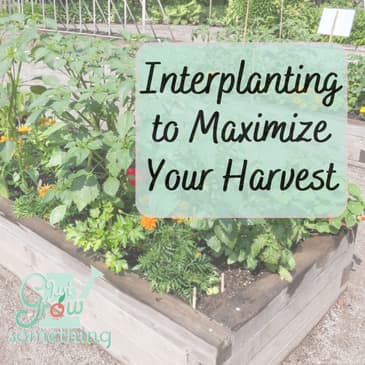
There is a fine line in gardening between overcrowding the plants and making efficient use of space. If we do it right, the plants benefit from each other and we can get way more out of our garden than we ever dreamed. But if we step over that line, we end up with plants competing with each other for space, water, sunlight, and nutrients and our yield is dramatically reduced.
As we start planning our gardens for the year it’s time to take a look at the space we have to work with and plan out our gardens to effectively use that space to our advantage. Today on Just Grow Something we’re talking interplanting or intercropping. This technique not only allows for you to grow more in the exact same space, but can also reduce weeds and conserve water. Let’s dig in.
References and Resources:
Companion Planting Chart | Just Grow Something
CDFA - FREP - CA Fertilization Guidelines - Lettuce Nitrogen Uptake and Partitioning
Nitrogen fixation in peas (Pisum sativum) (lincoln.ac.nz)
Some vegetables require less water than others | OSU Extension Service (oregonstate.edu)
Cornell Guide to Companion Planting.pdf (unl.edu)
Just Grow Something Gardening Friends Facebook Group
Check out how you can become a patron on Patreon
Hosted by Simplecast, an AdsWizz company. See pcm.adswizz.com for information about our collection and use of personal data for advertising.
00:00:00
This is positively farming media.
00:00:04
When I started my first garden way back in 2004, I had very
00:00:09
little space to work with. I picked a little corner next to
00:00:11
my shed in the backyard that I thought I could protect from the
00:00:15
dog and keep my three young children out of unless I wanted
00:00:18
them in there, and it ended up being maybe an 8 foot by 5 foot
00:00:23
space. I packed quite a bit into that
00:00:25
corner and about. I don't know, 1/3 of what I
00:00:28
planted actually survived and produced something.
00:00:31
There is a fine line in gardening between overcrowding
00:00:35
the plants and making efficient use of space.
00:00:38
If we do it right, the plants benefit from each other and we
00:00:42
can get way more out of our garden than we ever dreamed.
00:00:46
But if we step over that line, we end up with plants competing
00:00:49
with each other for space, water, sunlight and nutrients,
00:00:53
and our yield is dramatically reduced.
00:00:55
As we start planning our gardens for the year, it's time to take
00:00:59
a look at the space we have to work with and plan out our
00:01:02
gardens to effectively use that space to our advantage.
00:01:05
Today on just Grow something we're talking about
00:01:08
interplanting. This technique not only allows
00:01:11
for you to grow more in the exact same space, but can also
00:01:15
reduce weeds and conserve water. Let's dig in.
00:01:20
Hey, I'm Karen. I started gardening in a small
00:01:22
corner of my suburban backyard and now 18 years later, I've got
00:01:25
a degree in horticulture and operate a 40 acre market farm.
00:01:28
I believe there is power in food and that everyone should know
00:01:32
how to grow at least a little bit of their own.
00:01:34
On this podcast I share evidence based techniques to help you
00:01:37
plant, grow, harvest, and store all your family's favorites.
00:01:41
Consider me your friend in the garden.
00:01:43
So grab your garden journal and a cup of coffee and get ready to
00:01:46
just grow something. Don't forget to answer the
00:01:57
question of the month for January.
00:01:59
You can use the link in the show notes to leave me a voice
00:02:01
message. Answer the Q&A in the episode
00:02:03
description if you're listening in Spotify, jump into the Just
00:02:07
Grow Something Gardening Friends Facebook group and post it
00:02:09
there. Or send me an e-mail to grow at
00:02:12
just growsomethingpodcast.com. The question of the month for
00:02:16
January 2024 is how do you plan your garden each season?
00:02:22
You have until January 31st to give me your answer and have it
00:02:25
included in the February episode.
00:02:28
Of course we're talking all things garden planning and the
00:02:31
techniques that go along with them over the next few weeks,
00:02:33
and that means I'll be opening up registration for my Garden
00:02:37
planning course here shortly. To get in on the early bird
00:02:41
registration list for my plan Like a Pro course, use the link
00:02:45
in the show notes or go to justgrowsomethingpodcast.com/courses
00:02:50
and drop your name and e-mail there and you will be the first
00:02:53
to get the info and have access to early bird bonuses.
00:02:58
In that course we talk in detail about how to use techniques like
00:03:02
what we're talking about today in your garden plan year after
00:03:06
year to have a much more bountiful and reliable harvest.
00:03:10
I would love to see you in there.
00:03:11
When we start, in just a few weeks, just
00:03:14
growsomethingpodcast.com/courses. So interplanting, Intercropping,
00:03:21
and companion planting. These all essentially fall under
00:03:25
the same heading. As far as planting techniques
00:03:28
go, most people think of companion planting as being
00:03:32
focused solely on the mutual benefits that each plant
00:03:35
provides, like repelling insects or attracting beneficial
00:03:39
insects. Which is true in essence, but it
00:03:42
really does fall under the heading of interplanting, so
00:03:45
we're just going to use that terminology for all of it.
00:03:48
Interplanting is a really great way to maximize space in the
00:03:53
garden, and it has the added benefit of leaving less of the
00:03:56
soil exposed, so we're reducing weeds and conserving water.
00:04:02
If we can plant things together that give other mutual benefits
00:04:05
along the way, or we can avoid planting things that might
00:04:09
disrupt each other, then all the better.
00:04:12
Intercropping is technically used in larger scale farming
00:04:17
where rows are alternated with different crops, so we're just
00:04:21
gonna stick with the term interplanting for our purposes.
00:04:25
So with interplanting you are growing two or more crops right
00:04:30
alongside each other for basically their entire life
00:04:33
cycle. We could look at this strictly
00:04:36
from a space saving point of view, but these plants could
00:04:40
also complement each other in terms of insect repelling
00:04:43
properties or other benefits. And that's again where we get
00:04:47
the term companion planting. No matter what you call it, the
00:04:50
idea is the same. We plant two or more crops
00:04:54
together that have complementary growth habits and nutrient
00:04:58
requirements that don't attract the same types of insect pests
00:05:03
or diseases and that won't crowd or over shadow each other.
00:05:07
So we're either planting smaller crops with taller ones for an
00:05:11
entire season, or we're doing relay planting where one younger
00:05:14
crop is planted into another one that's already on its way to
00:05:18
being harvested. In this way, like the second
00:05:21
crop gets a little bit of a head start while the first one is
00:05:23
still in the ground and you're maximizing the use of the space.
00:05:26
This can be done with just about any crop combination, so long as
00:05:31
they don't compete with each other too much for nutrients or
00:05:34
sunlight or space at crucial times.
00:05:39
If you're having trouble visualizing this, think about
00:05:41
the Three Sisters method of growing.
00:05:44
This is a classic version of interplanting.
00:05:47
The Three Sisters are corn, squash, and beans.
00:05:51
The idea is to plant your corn and allow it to begin to grow,
00:05:55
then plant a pole bean at the base of the corn and a winter
00:05:58
squash between the Rose. The beans fix nitrogen into the
00:06:03
soil that the corn uses to grow. The bean uses the corn as a
00:06:07
trellis to climb, and the squash vines across the ground and
00:06:12
covers the soil between the corn and the beans, choking out weeds
00:06:16
and cooling the soil while helping retain moisture.
00:06:19
The crops are helping each other reach maturity while reducing
00:06:23
the number of weeds and the amount of water needed because
00:06:26
the soil is no longer exposed. Now, how do we determine what
00:06:34
would be good crops to interplant together in the
00:06:37
garden? How do we know what does well
00:06:39
together and what doesn't? If we picture a forest or a
00:06:43
Meadow and really take a look at what's growing there, what do we
00:06:47
see? We see lots of different types
00:06:49
of plants all intermingle together.
00:06:52
Nothing's growing in straight lines, and they're not all the
00:06:54
same size. The tall ones are among the
00:06:57
short ones. The ones that need more water
00:06:59
may be paired with those that don't need as much or all the
00:07:02
ones that need all the water are bunched together and the drought
00:07:06
resilient ones are along the edge.
00:07:08
Those that need more sunlight are scattered along the edges of
00:07:12
the wooded areas, while the ones that do well in the shade are
00:07:14
nestled in among the trees. And what don't you see?
00:07:19
Bare soil. If there is bare soil, it is
00:07:22
very quickly taken over by advantageous species that fill
00:07:25
in the space. In the garden we call those
00:07:28
weeds. So if we take our cue from
00:07:31
Mother Nature, what are we looking for in our garden?
00:07:35
Plants that would allow them to work well together.
00:07:38
Remember, the typical vegetable garden contains annual plants
00:07:43
that are from a wide variety of regions from across the world,
00:07:48
so they're not all naturally going to fit together like the
00:07:52
native plants in a Meadow or a forest.
00:07:54
We have to put them with their best companions, and we do this
00:07:58
by considering a few different things.
00:08:04
So the first thing to think about is height and width.
00:08:08
Know the mature height of the crop that you're thinking of
00:08:10
planting together, and also know about how wide they get.
00:08:14
Choose plants that complement each other so that one either
00:08:18
purposely shades the other or they don't shade each other at
00:08:22
all. Depending on your goal and the
00:08:23
amount of time that they're going to be growing together
00:08:25
side by side, you might choose to pair tall plants with shorter
00:08:29
ones, or you may decide to pair plants that have about the same
00:08:33
final height and width as one another together.
00:08:37
Now, along with height, we also need to consider the growth
00:08:40
rate, the rate at which these plants will grow.
00:08:43
Even if the final height of the plants is about the same, if one
00:08:47
of them grows much more quickly than the other one, well,
00:08:50
there's the potential for shading.
00:08:52
There again, this isn't necessarily a bad thing,
00:08:54
especially if one is more heat loving than the other.
00:08:58
We just need to have the information so that we can make
00:09:00
an informed decision. Again, it all depends on our
00:09:02
goal. Another aspect to consider is
00:09:05
growth pattern. Does the plant grow short and
00:09:09
compact or is it tall with a bushy canopy?
00:09:13
Does it sprawl along the ground? Does it require a trellis?
00:09:17
Think about the plants growth across the entire season or the
00:09:22
entire time it's in the garden space.
00:09:25
If it's not a full season crop, and plant it with other plants
00:09:29
that will complement or at the very least not interfere with
00:09:33
each other. The next thing is water
00:09:35
requirements. Knowing the water needs of each
00:09:39
plant means that you can take advantage of your unique garden
00:09:43
circumstances more easily. If you live in an area, for
00:09:46
example, that has frequent droughts and you'll be watering
00:09:50
quite frequently, you may want to group your thirstiest plants
00:09:54
together so that you're only watering certain beds daily and
00:09:58
can allow the other beds to be watered less frequently.
00:10:01
This is also helpful if you're limited on how far you are from
00:10:05
your water source or how far out you can water from your source.
00:10:08
You may choose the beds that are closest to your water source for
00:10:11
your thirstiest plants and leave the other beds for the less
00:10:14
demanding ones. Or you might pair shallow rooted
00:10:18
plants that like lots of water like lettuce, with much deeper
00:10:23
rooted plants that can scavenge water from much further down the
00:10:26
soil like tomatoes, and that way you don't have to water the bed
00:10:31
as much because only half of the plants are pulling that water
00:10:34
from the top 4 to 6 inches of the bed.
00:10:37
Another thing to consider would be the nutrient requirements of
00:10:40
the plants. Try not to pair crops together
00:10:43
that demand the same nutrients at the same time unless you know
00:10:48
you have enough nutrients to go around or you plan to amend the
00:10:52
soil appropriately. Now this can be a little bit
00:10:55
tricky because most plants tend to need more nitrogen in the
00:11:01
early stages of growth because they're relying on that nitrogen
00:11:05
for leaf development. But most of our fruiting plants
00:11:08
quickly switch that up, and they need more in the way of
00:11:11
potassium for flowering and fruiting, and so the nitrogen
00:11:15
demand drops by comparison. Our leafy greens, on the other
00:11:18
hand, tend to need that nitrogen for their entire growth cycle,
00:11:22
and some of them rely on it even more so in the final 30 days of
00:11:26
their growth. So This is why it's OK to pair
00:11:30
something like lettuce with tomatoes.
00:11:32
You either do this in the spring by planting the lettuces early,
00:11:37
and then as those lettuces start to get close to maturity, you
00:11:40
can interplant the baby tomato plants, which means the lettuces
00:11:44
demand for nitrogen has already decreased at the time right when
00:11:47
the new baby tomato plants are gonna need it.
00:11:50
Or you can plant in the late summer when the tomatoes are
00:11:54
already fully established, and then plant those lettuces
00:11:58
underneath, in which case the tomatoes nitrogen demand has
00:12:01
already decreased and that allows the young lettuces to
00:12:03
take up what they need at the beginning of their life cycle.
00:12:05
We wouldn't want to do this with spinach, however.
00:12:09
Spinach needs nitrogen the most in the final 30 days before
00:12:13
harvest, so while this would work with tomatoes in the fall,
00:12:17
we wouldn't want to pair them in the spring unless we were
00:12:20
prepared to add a nitrogen amendment to that bed.
00:12:22
Now believe it or not, asparagus and tomatoes actually makes
00:12:25
sense here. Asparagus as a perennial gets a
00:12:27
very early start in the spring, and it requires a good amount of
00:12:30
Phosphorus and even more in potassium than it does nitrogen.
00:12:35
And the harvest window would actually be coming to a close by
00:12:39
the time the weather warms up enough to plant tomatoes in and
00:12:41
around the asparagus bed. So neither crop is going to
00:12:44
impede on the other in terms of nutrients.
00:12:47
And as a bonus, you would keep the weeds down around the
00:12:50
asparagus by filling the space with the tomato plants.
00:12:53
So it's all about knowing what each plant needs at what stage
00:12:57
of its growth. This kind of leads us also into
00:13:00
days to maturity, which sort of goes along with growth rate.
00:13:04
But if you plan to grow certain plants together, it's good to
00:13:10
know when they will vacate that bed.
00:13:12
Especially if you're planning to plant one fast maturing variety
00:13:17
early on and then interplant a slower growing one with it, you
00:13:22
want to know that the faster maturing variety will be
00:13:24
harvested before the slower growing one gets choked out or
00:13:28
gets overshadowed. This is also important
00:13:32
information if you plan on doing any succession planting in that
00:13:34
bed, but we will talk more about succession planting in next
00:13:37
week's episode. Another consideration would be,
00:13:45
do they attract the same pests or harbor the same diseases?
00:13:50
Are they in the same plant family now?
00:13:54
This may not be as big of a deal as you might think in terms of
00:13:58
pests, depending on where you are.
00:14:00
I used to be really vigilant about rotating my crops year to
00:14:05
year to avoid insect pests, and I made sure I didn't plant all
00:14:09
of my cucumbers and my squashes in the same area in order to
00:14:13
avoid squash bugs and cucumber beetles from getting all of my
00:14:16
plants. But even though I'm on 40 acres
00:14:21
and I have four different one acre plots scattered across that
00:14:25
acreage, with as much as a quarter mile between them as the
00:14:28
crow flies, I guarantee that if I plant my cucumbers in the
00:14:33
front field and the summer squashes in the pond field and
00:14:36
the pumpkins in the midfield, the squash bugs are going to
00:14:40
find all of them. So I don't worry about that as
00:14:43
much anymore. I'm going to get cabbage worms
00:14:47
no matter what, so I have no problem interplanting my kale
00:14:51
among my cabbage. I just cover them all.
00:14:54
It's a little bit of a different story for me though, when it
00:14:57
comes to diseases. Certain things that we're prone
00:15:01
to here in West Central Missouri, like powdery mildew in
00:15:05
the late spring, are going to happen on cucumbers more often
00:15:09
than not. For me, I just mitigate it the
00:15:11
best I can. It doesn't tend to spread too
00:15:15
much to my zucchini plants though, for example, even if
00:15:18
they're planted in the same area.
00:15:20
But something like early blight, which is very easy to get in my
00:15:26
tomatoes but can be battled successfully in that crop, would
00:15:30
be almost devastating to my potatoes if it were to spread to
00:15:34
those. So in that sense, I keep those
00:15:37
members of the same plant family away from each other, even
00:15:41
though I have no problem growing my Peppers and my eggplant near
00:15:44
my tomatoes. So this one is going to really
00:15:48
depend on what you're growing and where you garden.
00:15:53
If you have diseases that spread among your brassicas really,
00:15:57
really easily, then maybe don't plant your kale amongst your
00:16:01
cabbage. Keep them in different beds and
00:16:03
grow lettuce with the cabbages instead.
00:16:06
If you've experienced lettuce mosaic virus, you may not want
00:16:10
to plant lettuce and spinach together.
00:16:12
This is going to be very dependent on your garden, and
00:16:15
likely it's going to be a factor of trial and error or honestly
00:16:19
just having one bad year where you learn from your plants what
00:16:23
you should and shouldn't do. We cannot anticipate every
00:16:26
problem, so don't be afraid to experiment, but try to keep
00:16:31
those things in mind before you start pairing plants together.
00:16:35
And then finally, we have to talk about allelopathy.
00:16:38
Some plants will give off chemicals that are detrimental
00:16:42
to the other plants around them. Sometimes it's not all plants,
00:16:46
only certain families of plants, and there aren't a ton of these.
00:16:49
But it's good to know what they are so we're not planting those
00:16:53
with ones that they might harm or slow the growth of.
00:16:56
For example, brassicas like broccoli, kale, and cabbage do
00:17:00
have some ellipathic properties to them, and they can stunt the
00:17:04
growth of tomatoes if they are planted together.
00:17:07
Sunflowers are another example. Great companions to some plants,
00:17:10
not so much to others. I will leave a link to my
00:17:14
companion planting chart download in the show notes.
00:17:17
If you've not downloaded that before, it's got some of the
00:17:20
tips and tricks for companion planting and intercropping,
00:17:23
along with a short chart of the most common garden plants that
00:17:29
are friends and foes of each other.
00:17:31
I keep a copy printed in my garden journal so I don't make
00:17:34
mistakes when I'm planning out my garden every year.
00:17:38
Once we consider our goals and we look at all the things we
00:17:41
just talked about, height and growth pattern of the plants,
00:17:44
their water and their nutrient needs.
00:17:46
Growth rate? Days to maturity?
00:17:48
Then it makes it much easier to figure out what goes best
00:17:52
together and what doesn't. So using all this information,
00:18:01
let's look at a few ways we can inter plant our garden to make
00:18:05
better use of the space while at the same time leaving less soil
00:18:09
exposed. I plant sweet peas in the very
00:18:13
early spring here and I plant spinach seeds in the bed
00:18:16
directly below the pea trellis. Once those peas have sprouted
00:18:20
and are actively climbing legume plants like peas, beans and
00:18:24
Clover contain nitrogen fixing bacteria.
00:18:28
These bacteria live in nodules in the plant roots.
00:18:32
So the bacteria convert nitrogen gas from the air into a form
00:18:37
that the plants can use to make proteins.
00:18:40
This benefits the pea plants while they're growing, but it
00:18:42
also benefits the spinach. Once those pea plants are done
00:18:46
producing, if I cut them down and I leave the roots intact,
00:18:49
that's also leaving the nitrogen nodules in the soil.
00:18:53
So as those nodules breakdown, because now they're no longer
00:18:57
feeding the pea plants, they're releasing that nitrogen and then
00:19:01
the spinach plants can take up that nitrogen right when it
00:19:04
needs it most. Remember we said spinach is most
00:19:07
demanding of nitrogen in the final 30 days before harvest.
00:19:12
Now in most instances I will already have been harvesting
00:19:16
spinach at the same time that I'm harvesting my peas.
00:19:18
But these nodules essentially allow the pea plants to produce
00:19:23
their own nitrogen source, which leaves the existing soil
00:19:27
nitrogen available to the spinach until the peas are done
00:19:29
and cut down. So not only are the peas helping
00:19:32
the spinach in terms of nutrients, but the spinach is
00:19:36
acting as a living mulch for the peas.
00:19:38
It's suppressing weeds and it's keeping the soil cool at the
00:19:40
root zone where the peas need it.
00:19:42
It's also helping to conserve moisture.
00:19:45
It's a space saving inter planting technique that also
00:19:49
serves as sort of a companion planting trick that benefits
00:19:53
both the plants. Of course there are examples of
00:19:57
intercropping that is really nothing but saving space, right?
00:20:01
These are plants that don't necessarily benefit each other,
00:20:04
but they don't disrupt each other either.
00:20:06
One really good example is garlic and Peppers.
00:20:09
If you grow garlic, you know garlic takes up space in the
00:20:12
garden for a full six months. We plant ours in the late fall
00:20:16
and we don't harvest until the early summer, but once it's all
00:20:20
harvested. That bed is a great space for a
00:20:23
summer crop because my garlic is always planted in full, full
00:20:27
sun. So planting some pepper plants
00:20:30
in between the rows of garlic while they're still maturing is
00:20:34
not going to impede on the garlic.
00:20:36
And when the garlic gets harvested, now there's plenty of
00:20:39
space for those pepper plants to take off and have all of that
00:20:42
space to themselves. So in our area, we plant pepper
00:20:47
plants, or at least weed. I do.
00:20:48
Here our pepper plants go in the ground around mid-May, sometimes
00:20:53
maybe the third week in May depending on our weather.
00:20:55
Garlic is harvested around mid June, so it works out perfectly.
00:20:59
They're really only together for about 3 to 4 weeks at the most.
00:21:04
If you really want to maximize that space, once all that garlic
00:21:08
is harvested and those Peppers are starting to get larger, you
00:21:12
can plant leafy greens like lettuces in the understory of
00:21:17
those Peppers in the late summer to transition that back to a
00:21:20
fall crop again, like we do with, you know, lettuce and
00:21:23
tomatoes. You can also think about
00:21:26
planting shallow rooted plants like radishes or lettuce in
00:21:31
between deeper rooted plants like tomatoes.
00:21:35
Or you can put tall plants like tomatoes or corn or pole beans
00:21:40
on a trellis on the South or West side of the garden if
00:21:43
you're in the northern hemisphere of course, And then
00:21:46
plant a less heat tolerant crop on the north or east side so it
00:21:50
can take advantage of some afternoon shade.
00:21:52
Put green onions in between all of your broccoli or your cabbage
00:21:56
plants. Plant squish Chard alongside
00:21:59
your turnips, parsley and basil in with your tomatoes, spinach
00:22:02
alongside strawberries. Each individual bed does not
00:22:05
need to be dedicated to one single crop.
00:22:08
Interplanting can not only help you maximize space in the
00:22:12
garden, but can also help combat those weeds and better utilize
00:22:16
the moisture. And sometimes, if they're good
00:22:18
companions with each other, they can help repel insect pests too.
00:22:21
So if we can fill that space in without overcrowding the plants,
00:22:27
we are leaving less open space, which also means we are using
00:22:30
less mulch, which is reducing our expenses.
00:22:34
It also means that we're leaving less space available for those
00:22:36
weeds to pop up, which is also decreasing our effort in the
00:22:40
garden. Interplanting can seem a little
00:22:47
bit intensive at first. It's going to take some trial
00:22:49
and error in the garden to see what works best with your plants
00:22:53
and your particular layout. There might be a tendency to
00:22:57
either overcrowd the plants at first or not plant them closely
00:23:01
enough, so be sure to keep good records.
00:23:04
Annotate the spacing of each plant compared to the ones next
00:23:07
to them. Did that spacing work?
00:23:09
Often times we give plants way more room than what they need,
00:23:12
and that can be detrimental too. Like I said, it's a fine line.
00:23:16
Experiment with what you want to grow and keep good records, and
00:23:20
you're bound to find the combinations that work best for
00:23:22
you and your garden. Until next time, my gardening
00:23:25
friends. Keep on cultivating that dream
00:23:27
garden and we'll talk again soon.
00:23:29
Thanks for listening to another episode of the Just Grow
00:23:31
Something Podcast. For more information about
00:23:34
today's topic and to find all the ways you can get in touch
00:23:36
with me or support the show, go to justgrowsomethingpodcast.com.
00:23:41
Until next time, My gardening friends keep learning and keep
00:23:44
growing.