
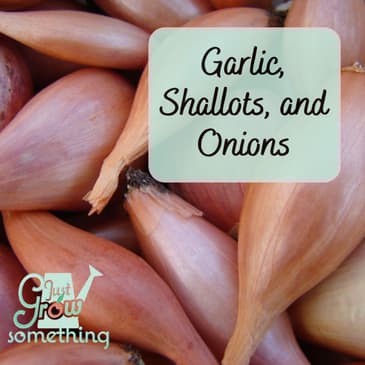
Now is the time to be getting our garlic, shallots and even onions planted in some places. If you can give me one good hour in the garden this month, you can set yourself up for big flavor next summer.
Today on Just Grow Something were going to walk through planting garlic and shallots and some tips on where it’s okay to even plant onion sets for a summer harvest. We’ll talk about when to plant for your location, how to prep the bed, which onions and shallots make sense to plant now, troubleshooting and I'll answer your most frequently asked questions about planting these crops. Let’s dig in.
References and Resources
Newsletter sign up: JustGrowSomethingPodcast.com/news
Episode 40: Garlic - https://justgrowsomethingpodcast.com/episode/ep-40-growing-garlic
Episode 133: Growing Onions - https://justgrowsomethingpodcast.com/episode/ep-133-growing-onions
Episode 220 Planting Onions in Fall for a Summer Harvest - https://justgrowsomethingpodcast.com/episode/planting-onions-in-fall-for-a-summer-harvest-ep-220
Episode 221 Tips for Planting Garlic by Climate Type - https://justgrowsomethingpodcast.com/episode/garlic-planting-tips-by-climate-ep-221
YouTube Video for Fall Planted Onions - https://youtu.be/qVv6AgPCvdI
Sprout Mountain Farm fall planting onions - https://www.sproutmountainfarms.com/category/untreated-onion-sets
Hosted by Simplecast, an AdsWizz company. See pcm.adswizz.com for information about our collection and use of personal data for advertising.
00:00:00
I know many of us are sort of worn out from the summer garden
00:00:04
right now, and fall is just sort of trotting in really slowly in
00:00:09
some spaces, but now is the time to be getting our garlic, our
00:00:13
shallots, and even onions into the garden in some places.
00:00:17
If you can give me one good hour in the garden this month, you
00:00:21
can absolutely set yourself up for really big flavor next
00:00:25
summer, plus a few bonuses along the way.
00:00:28
So today on Just Grow Something, we're going to walk through
00:00:31
planting garlic and shallots and some tips on where it's OK to
00:00:35
even plant onion sets for a summer harvest.
00:00:38
We'll talk about when to plant for your location, how to prep
00:00:42
the bed, and details about planting, which onions and
00:00:45
shallots make sense to plant now, troubleshooting, and will
00:00:49
answer your most frequently asked questions about these
00:00:52
crops. Let's dig in.
00:00:53
Hey, I'm Karen and what started as a small backyard garden 20
00:00:56
years ago turned into a lifelong passion for growing food.
00:01:00
Now as a market farmer and horticulturist, I want to help
00:01:03
you do the same. On this podcast, I am your
00:01:06
friend in the garden teaching evidence based techniques to
00:01:08
help you grow your favorites and build confidence in your own
00:01:11
garden space. So grab your garden journal and
00:01:14
a cup of coffee and get ready to just grow something.
00:01:20
Quick reminder, if you are not on my e-mail list, get on that
00:01:24
list by going to justforsomethingpodcast.com/news.
00:01:28
I send out an e-mail each Friday on one specific topic and I get
00:01:32
the chance to get into some pretty good details about
00:01:35
subjects that maybe don't warrant an entire episode to
00:01:38
themselves. Or sometimes additional details
00:01:41
about a topic that we covered on the show.
00:01:43
But then, you know, maybe that part got cut in editing or
00:01:46
something. It's also a really easy way for
00:01:48
you to give me suggestions for topics or ask me questions
00:01:52
directly by just replying to those emails.
00:01:55
I read every reply that I get. So just
00:01:58
growsomethingpodcast.com/news and I will leave a link to that
00:02:02
in the show notes. So if you are completely new to
00:02:09
growing any of these crops, I'm going to leave links to full
00:02:13
crop specific episodes for garlic and onions, plus the very
00:02:17
detailed episode on planting onions in the fall in the show
00:02:21
description. There's a lot of good
00:02:22
information in those episodes and they really are worth the
00:02:26
listen. O this is honestly the time of
00:02:28
year when I am just begging for the first frost to hit and
00:02:33
please just take out all of my plants because I'm tired, right?
00:02:38
Our last frost date, our last normal frost date is usually
00:02:42
like October 20th. And so yeah, we're past that now
00:02:48
and we still haven't had our first frost.
00:02:50
And you know, looking at the 10 day forecast, it doesn't look
00:02:53
like it's, you know, anywhere near frosting anytime soon.
00:02:58
And so I am still picking, you know, tomatoes and Peppers and
00:03:02
cutting celery and cucumbers. And I'm kind of over it.
00:03:09
And so when we're tired like this, it might seem like, you
00:03:13
know, getting out there and prepping a bed or two to be able
00:03:17
to get these things like garlic and onions into the ground.
00:03:20
It just sounds like a lot of effort.
00:03:21
And maybe we're just not into it.
00:03:23
But trust me when I say the effort is worth it is a really
00:03:28
good quick win in the spring without really having to do much
00:03:34
at all. OK.
00:03:35
If you can dedicate 1 area where you can go through and you can
00:03:39
do some cleanup and you can do some bed prep and get these
00:03:43
crops in, you will absolutely be thankful for it in the spring.
00:03:47
And it doesn't necessarily have to be like one entire bed.
00:03:51
If you are trying to do more in terms of intercropping next
00:03:56
season, then garlic and onions and shallots are things that are
00:04:00
really good for tucking in along the ends of beds that will be
00:04:04
planted to other mixed crops in the spring.
00:04:07
These can also be tucked into the corners of like your raised
00:04:10
planters. And so you're still having
00:04:13
places where you can plant all of your other crops because you
00:04:17
will know where these are. These will already be popping up
00:04:20
in the spring before you're ready to plant anything else.
00:04:23
So it's not like you're going to forget where they are.
00:04:25
OK. And again, you can just do full
00:04:27
beds of these if you want to or intermix them.
00:04:29
There are loads and loads of options here for just getting
00:04:33
these out into the garden. And that also includes doing
00:04:35
some things in pots, if you can put them in a protected area or
00:04:39
if you're not quite in such a cold zone.
00:04:42
OK, so we're going to start with garlic because October is kind
00:04:47
of prime time in a lot of the Northern Hemisphere for planting
00:04:51
garlic. Now, some of these things, if
00:04:53
you are in a colder zone, say maybe zone 4 or colder right
00:04:57
now, you might have missed the window.
00:05:00
Don't panic because you might still be able to do something
00:05:04
with these. So long as your ground is not
00:05:07
frozen by now, you very well may be beyond your first frost.
00:05:11
And that's, that's OK. We just don't want the ground
00:05:14
solidly frozen yet, OK? We want to get them in at the
00:05:18
right time so that they get a chance to go ahead and, and
00:05:23
root. But not all is not lost if if
00:05:27
you think you've missed the window, OK, garlic should go
00:05:31
into the ground in the fall because it needs vernalization.
00:05:36
This is like a cold period. Otherwise those bulbs are not
00:05:41
going to differentiate. You're not going to get those
00:05:44
multiple cloves in the bulb. So it roughly needs like a month
00:05:50
or two at temperatures between 32 and 50°F in order to be able
00:05:57
to properly differentiate like that.
00:05:59
So this chilling naturally happens if we planted in the
00:06:03
fall. If you really are in an area
00:06:07
where it has just gotten too late to do this, you can do a
00:06:11
spring planting, but you're going to have to artificially
00:06:14
chill those cloves first. So you will need to put them
00:06:18
like in your refrigerator for a good 6 to 8 weeks prior to
00:06:22
planting them out in the spring. They're still going to be
00:06:25
smaller more than likely, but at least you'll get those
00:06:28
differentiated bulbs instead of just like one giant clove, which
00:06:32
if you've ever planted garlic in the spring and it didn't get
00:06:35
that, that vernalization period, you know exactly what I'm
00:06:38
talking about. You get like one giant clove of
00:06:40
garlic and that's it. You don't get the individuals OK
00:06:44
in terms of what type you should be planting.
00:06:47
Hard neck garlic is really generally better for the colder
00:06:50
climates and the bonus to this is that you get that edible
00:06:54
scape in the late spring that you can cut off and you can use
00:06:57
that before you even harvest the garlic.
00:06:59
Soft neck tends to be better in milder climates.
00:07:04
Softneck also tends to store longer.
00:07:07
So if you're in an area like I am where we're zone 6B, we are
00:07:12
practically like smack dab in the middle of the growing zones.
00:07:17
I can actually plant both and do both very successfully.
00:07:22
How they grow tends to be based on what our winter temperatures
00:07:28
are like. So sometimes we have very, very
00:07:31
mild winters and our soft neck does phenomenally well and the
00:07:35
hard neck is just kind of so so. And then there are other years
00:07:38
where we have a really, really harsh winter and the hard neck
00:07:43
does phenomenally well and the soft neck just kind of does so.
00:07:46
So here in recent years, I think the soft neck has really sort of
00:07:51
won out just because number one, soft neck tends to be a larger
00:07:56
head of garlic. So if you like a lot of cloves
00:07:59
in your garlic, then soft neck is the way to go if you can get
00:08:02
away with it in your climate. But we also do the hard neck too
00:08:06
because it generally has a stronger flavor.
00:08:08
So soft neck is going to store longer and it's also what you
00:08:12
use to make braids in most instances.
00:08:14
If you want to do a garlic braid, the soft neck is easier
00:08:16
to work with and the hard neck, although it tends to be smaller,
00:08:22
does tend to have a stronger flavor.
00:08:24
So we just like to do both. Now do you need to order
00:08:30
certified disease free garlic? Yes and no.
00:08:35
OK. That is the recommendation.
00:08:38
And if it's your first time ever growing garlic, then I would
00:08:41
recommend yes. If you can do that, then by all
00:08:44
means do it. It's going to give you a better
00:08:48
level of initial success. You're not going to worry about
00:08:51
bringing a disease into your garden that you don't already
00:08:53
have. And you know that it has been
00:08:57
cured properly in order to be able to, you know, sprout
00:09:00
properly. You know it hasn't been sprayed
00:09:03
with anything that would prevent it from sprouting.
00:09:06
This is the only problem. Well, not the only problem.
00:09:08
One of the problems with buying garlic in the grocery store and
00:09:14
trying to grow it, often times it is sprayed with a hormone to
00:09:18
keep it from sprouting and that obviously defeats the purpose if
00:09:23
we want them to sprout. OK, you can do better if you're
00:09:26
buying like certified organic bulbs in the grocery store.
00:09:31
But if the price of like seed garlic sends you reeling because
00:09:36
it is fairly expensive, I think this year the sources that I
00:09:40
have seen, they've gone up to close to, you know, $28.00 for a
00:09:46
pound of seed garlic, which is really, really high.
00:09:50
And I get it. They're certified that, you
00:09:53
know, they don't have a disease. And so, you know, it's a good
00:09:55
way to start. But if you have a farmer close
00:10:00
to you that you trust, if there is somebody at the farmers
00:10:02
market that you shop with or you have ACSA through who grows
00:10:06
things in organic matter and you know, they can tell you no,
00:10:10
we've had no diseases. Yes, this is OK for you to
00:10:12
plant. You likely can find seed garlic
00:10:16
a lot less expensively if you just get them straight from your
00:10:19
local farmer. So, but if you really want to
00:10:21
make sure that you're getting off to your best start, then
00:10:23
yes, certified disease free actual seed garlic is a really
00:10:28
good idea. The classic rule of thumb
00:10:31
basically for garlic is you want to plant it about three to six
00:10:36
weeks before the ground freezes. Now it's like, oh, when is that
00:10:41
going to be? Because you never really know,
00:10:42
right? So just aim for when your soil
00:10:45
temperatures are around 50°F and they're starting to drop.
00:10:50
So in my colder regions, yeah, late September, maybe early
00:10:55
October. If you haven't gotten your
00:10:57
garlic in, you really probably want to do that.
00:11:00
Once we get further South or we get into those warmer regions,
00:11:04
we're talking October into November.
00:11:05
I have planted our garlic and our onions as late as the third
00:11:11
week in November and had no problem with them, you know,
00:11:15
getting rooted in. The key here is that you really
00:11:18
just want enough time for the roots to get established, but
00:11:24
you don't want to plant so early that you're getting a ton of
00:11:28
leafy top growth and then you have a hard freeze that kind of
00:11:32
kills it off. The hard freezes obviously
00:11:34
aren't going to damage these bulbs, but you don't want all
00:11:37
that green at the top because that can actually, you know,
00:11:40
improve your chances or increase your chances of there being some
00:11:44
damage to the bulb underneath. The one thing to remember mostly
00:11:48
about where you plant your garlic is that garlic does not
00:11:52
like having its feet wet. OK, It doesn't want to be wet
00:11:57
all the time. So we want a sunny bed because
00:12:00
you are going to want the full sun.
00:12:02
You want to make sure that it is well drained.
00:12:04
This is why raised planters, raised beds are really, really
00:12:07
great for this because you tend to have better drainage.
00:12:11
If you can work in some finished compost for organic matter and
00:12:15
even some fertility, that is really going to do well.
00:12:18
For garlic, it really likes that organic matter.
00:12:21
This is especially important if you have very heavy soil.
00:12:26
You want to probably prioritize drainage over fertility if you
00:12:31
have to choose between them, if you have really heavy soil,
00:12:35
because you know the bulbs just are not going to get to the
00:12:39
mature size or the right size if they're in really heavy, sort of
00:12:43
mucky, wet soil, OK. You do want to make sure though
00:12:47
that you are sort of rotating these crops away from other alum
00:12:53
crops. So if you have a bed where you
00:12:55
grew onions this year, you likely do not want to rotate in
00:13:00
any garlic. Now, the one caveat to this is
00:13:03
if you do a lot of heavy inter planting and intercropping like
00:13:06
I do, then you're less likely to need to worry about rotating
00:13:12
these crops because we're mixing all of those crops in and
00:13:15
against each other, especially when they're in different, you
00:13:18
know, plant families, then we're minimizing that disease risk.
00:13:21
But if you have seen anything like any type of a white rod or
00:13:25
basil rod or anything in any of your alliums before, then make
00:13:28
sure that you're rotating those beds and absolutely start with
00:13:31
clean seed stock. That's going to be your number
00:13:34
one disease prevention step. So any allium diseases
00:13:38
whatsoever, however, then yes, go for that certified seed
00:13:41
garlic. OK, When you go to plant garlic,
00:13:44
you're going to break those bulbs into their individual
00:13:48
cloves right before planting. This is not something that you
00:13:51
want to do ahead of time, and you want to try to keep as much
00:13:54
of that papery wrapper intact on each one of those cloves.
00:13:58
And sometimes it's just going to come off.
00:14:00
That's just how it goes, especially if you have saved
00:14:04
your own garlic to replant. That's another thing too.
00:14:07
If you have grown garlic this year and you, you know, you want
00:14:12
to go ahead and use your own, then that's fine.
00:14:15
Just make sure that you are choosing the largest, healthiest
00:14:20
cloves that you have and then save the smaller ones for use in
00:14:24
your kitchen. OK, so just like when we're
00:14:26
saving seeds and we we see the specimen that is the biggest and
00:14:32
the best and the most beautiful, and that is the one that we save
00:14:36
our seeds from because that's the genetics that we're trying
00:14:38
to reproduce. Same thing goes with the garlic.
00:14:41
If you're planting from very small bulbs or small cloves,
00:14:46
then you're likely going to get small garlic.
00:14:48
So pick the biggest and the best to go ahead and plant those.
00:14:52
Make sure that you plant with the pointy end up.
00:14:54
You want that basil plate where the the root system is to be
00:14:58
facing down, and then you're going to cover each one of those
00:15:03
cloves with about one to two inches of soil, which is going
00:15:07
to put it roughly about two to three inches deep, depending on
00:15:10
how you have prepped your bed. If you do it all in a furrow and
00:15:14
you drop them down and then you cover up, then yeah, it's going
00:15:18
to be about two to three inches. If you just poke holes, which is
00:15:21
what I tend to do, and drop them in, then you're looking at about
00:15:25
two inches or so down and then just patting it covered up.
00:15:29
If you are in a very cold zone or you have soil that is really
00:15:35
prone to frost heave, meaning as that freeze thaw cycle continues
00:15:40
through the winter, it tends to push things up out of the
00:15:43
ground, you might need to plant a little bit more deep.
00:15:47
So 3 to 4 inches might actually be how you want to plant your
00:15:52
garlic. OK.
00:15:53
If you're in a milder zone, then yeah, shallower is fine.
00:15:56
One to two inches is going to be OK.
00:15:59
You just want to space them about four to six inches apart
00:16:03
in rows that are about 8 to 12 inches apart.
00:16:07
Or you can do it in a grid like the square foot gardening method
00:16:11
or whatever and just do them in, in, in blocks that way.
00:16:15
And that's what I tend to do. I just, I just space them, you
00:16:18
know, four or six. Usually it's about 6 inches
00:16:21
across because I have a dibbler that my husband built for me
00:16:25
where each little, I don't know spacer I guess is 6 inches from
00:16:30
each other and the whole thing is 4 feet wide if I remember
00:16:36
correctly. So I just go 6 inches by 6
00:16:40
inches all the way down. That's how I do my onions the
00:16:43
same way. OK, so it's, it's just because
00:16:45
I'm planting so many, it makes sense for me just to use the
00:16:48
same dibbler and just to do the same thing over and over again.
00:16:51
In terms of water, you just want to water once basically after
00:16:56
you're planting it just to set up of the soil.
00:16:58
And then you know, if you're in a very dry zone through the
00:17:04
winter times, then you might need to water occasionally.
00:17:09
You, you know it since it's not actively growing.
00:17:12
Again, we don't want that to be super saturated all the time.
00:17:16
We don't want their feet wet, but you don't want it to be bone
00:17:19
dry either. So if either your your soil
00:17:22
conditions are really dry, unusually for you for, for the
00:17:25
winter, then you might want to once, once a month give it some
00:17:28
water. Otherwise, generally speaking,
00:17:30
you can just let you know the rainfall or the snowfall take
00:17:34
care of it for you in the in the winter time.
00:17:36
The one thing that you also do though, is you want to mulch.
00:17:40
OK, This is your insurance policy whether especially if you
00:17:45
were in a cold area, if you were in a very warm area, you may not
00:17:48
necessarily need to mulch, but you know me and my feelings on
00:17:54
mulch. This is going to protect your
00:17:56
soil no matter what. So 3 or 4 inches of clean straw
00:18:00
or shredded leaves over the bed immediately after planting is
00:18:06
really going to help buffer those winter temperature swings.
00:18:10
So it's going to prevent that sort of freeze thaw heating.
00:18:13
It is also going to help to keep those spring weeds at Bay
00:18:16
because we don't want that competition with our garlic when
00:18:20
they're just starting to sprout in the springtime.
00:18:23
OK. If you are in a very, very cold
00:18:26
area, then you likely want to add as much as 6 inches of straw
00:18:32
to help with keeping it insulated.
00:18:34
But you are going to have to pull it back in the spring to
00:18:38
help warm that soil up and just leave a thin layer to suppress
00:18:42
those weeds, OK. You might see a little bit of
00:18:46
growth on these depending on when you plant them, and a
00:18:48
little bit of growth is fine. We don't want there to be like 4
00:18:54
inches or 6 inches of growth before we start to see our
00:18:57
really hard freezes. So if that does happen, that's
00:18:59
an indication for you the next time that maybe you want to wait
00:19:02
and plant a little bit later. Once we get to the spring and
00:19:07
you start seeing those shoots coming up and they're about 6 to
00:19:10
8 inches tall, that is when we saw a top dress or side dress
00:19:14
with some sort of a nitrogen source and then keep that
00:19:17
moisture sort of steady as the bulbs start to grow.
00:19:21
And then we want to back off the water as we approach the
00:19:23
harvest. So if you go back and listen to
00:19:25
that garlic episode, it's going to have a lot more information
00:19:28
about, you know, how what to do in the spring and how to harvest
00:19:31
and those types of things. We're just worried right now
00:19:33
about getting them in the ground and getting them off to a really
00:19:37
good start. Yeah, let's talk onions and
00:19:41
shallots. And if you're wondering what the
00:19:42
difference is between onions and shallots, because I never really
00:19:46
had an idea before, basically onions grow individually,
00:19:52
whereas shallots grow in clusters similar to garlic.
00:19:58
Like, you know, you see the individual cloves of garlic,
00:20:01
that's sort of how shallots grow.
00:20:02
They kind of grow in these clumps.
00:20:05
Shallots generally have a milder, a little bit more
00:20:08
delicate flavor compared to onions, which tend to be a
00:20:11
little bit sharper. And then of course, because
00:20:13
they're growing in this little cluster, shallots have more of a
00:20:17
teardrop shape and they have a light purplish flesh where, you
00:20:22
know, onions are typically round or maybe kind of, you know,
00:20:25
squat. And they can obviously vary in
00:20:28
color. You got purple, red to yellow to
00:20:30
white, all of these things. OK, most people will go ahead
00:20:34
and plant shallots in the fall. The sets can be planted
00:20:40
basically after your first frost so that you get a late spring to
00:20:43
early summer harvest in a lot of climates.
00:20:46
These are ones where you want to space them about 3 to 6 inches
00:20:49
apart in rows that are 12 to 18 inches apart.
00:20:52
This is very, very similar to how we plant our garlic.
00:20:55
So again, I'm just going to do 6 by 6 for my entire grid.
00:20:59
But if you're planting these in little pockets of your raised
00:21:03
beds or in beds that are going to be mixed then later on down
00:21:06
the road, then just do them, you know, 3 to 6 inches apart in
00:21:09
whatever way that you can. The beautiful thing about all of
00:21:12
these things, the alums, they don't need any pollination.
00:21:14
They're not, you know, necessarily needing to be up
00:21:17
against others of their kind in order to be able to grow.
00:21:20
So you can pop them in wherever you want, just so long as
00:21:23
they're not too close together, you're not worried about how
00:21:26
them being too far apart. OK.
00:21:28
Now, if you do have really, really severe winters, then
00:21:33
shallots can be a little bit sensitive to this.
00:21:35
So if you are like zone 4 or colder, then you might consider
00:21:41
extra mulch or just waiting until the spring because you
00:21:45
absolutely can do this in the spring too.
00:21:47
I just like to get a jump on things.
00:21:50
It's one less thing that I have to worry about in the spring and
00:21:53
that is why I also do my onions. So for bulbing onions, the large
00:21:59
bulbing onions, most resources are going to recommend doing
00:22:03
them in the spring. But fall planting does have a
00:22:07
niche. OK, you can absolutely do some
00:22:10
bunching onions, right? They're all that.
00:22:12
There are like perennial and multiplier types.
00:22:16
That's the Egyptian walking onion is one of them.
00:22:20
But I do full blown onion sets in the fall and I basically
00:22:26
treat them the exact same way I do shallots or I do garlic.
00:22:30
And in some areas this is going to work for you.
00:22:33
In other areas, it's just going to give you like early green
00:22:37
onions. Or if they go a little bit
00:22:40
further, then you might get what we refer to as spring onions,
00:22:44
which means they're not really getting to that full size
00:22:46
maturity that you normally would harvest for a big summer bulb.
00:22:50
But these are still very good, like you still get like the
00:22:54
green top that you can use for green onions and you get an
00:22:58
immature onion that's maybe just not huge, but it's fresh and you
00:23:02
can use it right away. So we do both, right?
00:23:06
I will plant onion sets right now in the fall in the exact
00:23:09
same manner that I do the shallots and I do the the
00:23:14
garlic. So I'm trying to get them in,
00:23:18
you know, four to six weeks before the first really kind of
00:23:22
hard freeze. Usually this is around now in,
00:23:27
you know, warmer areas it it might be later.
00:23:30
Again, the same thing with the onions and the shallots is you
00:23:35
want the sets to establish some roots but you don't want them to
00:23:39
start to develop like any top growth before the winter.
00:23:42
I have planted again these sets as late as mid November in our
00:23:46
warmer years like what we're having now and had no problem.
00:23:50
It's really more about the soil temperature at this stage of the
00:23:53
game and less about the air temperatures and the daylight
00:23:56
hours. We just want them to get some
00:23:59
root growth on them before they go completely dormant.
00:24:03
And in my experience, you may see some top growth depending on
00:24:06
the air temperatures through the winter.
00:24:08
OK, I actually have a YouTube video titled Fall Planting
00:24:14
Onions, I think, and I will link to that one in the show notes
00:24:18
also. And you can see in that video, I
00:24:21
show the onions in January and you can see they have, you know,
00:24:25
long green tops on them, but they haven't been damaged.
00:24:29
They're, they're OK. So essentially you want to do
00:24:32
the same thing with your onions, your bold onions, as you do with
00:24:35
your garlic. You do want to mulch.
00:24:37
And again, that the mulch is going to be heavier the colder
00:24:40
your area is. And in some instances when they
00:24:44
come up in the spring, they, they may end up bolting
00:24:47
depending on what area of the country you're in or what zone
00:24:51
you are in. And that is OK.
00:24:52
They are still usable. But This is why I do both.
00:24:55
So I will plant the sets in the fall, and then I will plant from
00:24:59
seedlings in the spring. So I will start seedlings
00:25:03
indoors and I will transplant those out.
00:25:05
And that way I'm sort of, once again, covering all my bases to
00:25:07
make sure that I get what I need in terms of my onions.
00:25:13
OK, So what about some troubleshooting?
00:25:15
There are three easy ways that you can kind of, you know, cause
00:25:20
problems with any of these crops.
00:25:21
And the first one is planting too early because you're going
00:25:23
to get a lot of top growth that winter kills, and the
00:25:26
possibility of you damaging that bulb underneath is much higher.
00:25:30
The other way is to plant too late and you're going to get
00:25:33
poor rooting, which means that they may not survive the winter
00:25:37
because they have no way to take up any water or anything during
00:25:41
the winter time. They're just going to kind of
00:25:42
sit there and rot. The other thing is you can get
00:25:45
that frost heaving if it doesn't get a chance to root in at all.
00:25:48
As your soil goes through that freeze thaw cycle, they're more
00:25:52
likely to pop up out of the ground and be damaged.
00:25:54
And then the third way is that soggy soil.
00:25:57
None of these crops like having their feet wet.
00:25:59
So you know, make sure that it's well draining soil.
00:26:03
Try to plant when you know you're not getting a solid rain
00:26:07
going on in some areas. I know winter tends to be your
00:26:11
rainy season. So if you can get them in the
00:26:13
ground before that starts happening, that's your best
00:26:15
idea. Just use your timing cues and in
00:26:18
terms of, you know, the temperatures and, and when you
00:26:21
think your your frost or your ground is going to start to
00:26:23
freeze and use that as your guide as to when to get these
00:26:28
in. Again, mulch and winter care for
00:26:33
your onions is essentially the same as your garlic.
00:26:35
So when you're overwintering onions, you want to mulch to
00:26:38
help insulate these bulbs. It's also going to retain the
00:26:40
moisture. It's going to suppress the
00:26:42
weeds. The best mulch options kind of
00:26:45
depend on your climate and what materials you have available to
00:26:47
you. I always use straw.
00:26:49
We've also done shredded leaves. If you live somewhere where pine
00:26:53
trees are prevalent, pine needles are fine.
00:26:55
If you're in really cold zones, I definitely suggest the straw
00:26:58
and the shredded leaves. They tend to have the best
00:27:00
insulation. If you're in a warmer zone, you
00:27:03
may not need much mulch at all for any kind of cold protection,
00:27:07
mainly just for weed prevention. OK, So again, 3 to 4 inches,
00:27:12
just like with our garlic, if you are in a colder climate,
00:27:15
even more if you need to and you're going to have to pull
00:27:18
that back. And then, you know, if you're in
00:27:20
a zone like 7 through 9, two inches is probably plenty.
00:27:24
If you are in zones 3 through 6, your onion sets are going to
00:27:29
remain dormant during the winter and they're going to start
00:27:31
resuming growth very slowly in the early spring as the soil
00:27:36
starts to warm and then they're suddenly going to take off.
00:27:39
So if you can keep the soil lightly moist through the
00:27:41
spring, especially as the weather warms, then you're going
00:27:44
to be better off. If you're in zone 7 through 11,
00:27:48
your seedlings, your onion seedlings are going to continue
00:27:51
to grow over the winter and it's going to put on more growth as
00:27:56
the spring approaches. So again, water regularly, but
00:28:00
we don't want to over saturate the soil.
00:28:02
And then as far as feeding them, once that spring growth resumes,
00:28:08
then you're going to want to side dress just like with the
00:28:10
garlic, with a nitrogen rich fertilizer of some sort, blood
00:28:14
meal, composted manure, feather meal.
00:28:17
And that's going to promote that leafy growth.
00:28:20
You do want to stop feeding that nitrogen once those bulbs start
00:28:24
to swell. If you see bulbs starting to
00:28:26
heave up after it starts to thaw in a little bit in the in the
00:28:30
winter, toss some extra mulch on the bed, you know, in the
00:28:34
spring. Then you can decide if you want
00:28:35
to pull that mulch aside to warm up the soil or if you just want
00:28:39
to leave a thinner layer to keep the weeds down.
00:28:41
But you know, that's, that's the perfect way to to approach it.
00:28:48
OK so can you plant grocery store garlic?
00:28:53
Yes, but avoid it if it's if it's not organic for sure
00:28:58
because it likely has been treated to prevent that
00:29:00
sprouting. It can possibly carry diseases.
00:29:03
So if you are new to this game, please use certified seed or
00:29:06
garlic bulbs from a trusted grower.
00:29:09
If you've missed this fall window then plant in the early
00:29:13
spring, right? Consider pre chilling those
00:29:15
cloves, so about 6 to 8 weeks in the refrigerator to at least get
00:29:21
that differentiation of the bulbs.
00:29:24
You still might expect some smaller bulbs.
00:29:27
Mulch, mulch, mulch. Please 3 to 4 inches of straw or
00:29:30
shredded leaves. If you are in a really cold
00:29:32
region, then make sure that you are mulching heavier.
00:29:35
And at this point, once you get a good crop of garlic, then you
00:29:41
can hold those like your biggest and best healthiest bulbs from
00:29:46
the harvest to go ahead and plant again the next year.
00:29:50
If you haven't seen any diseases.
00:29:52
Now, can you grow your own sets, onion sets?
00:29:56
The answer is yes. Those onion sets are simply
00:30:00
onion seeds that were grown right into a little seedling and
00:30:04
they were allowed to start to form that little bulb and then
00:30:08
they were bent over and basically pinched off to prevent
00:30:13
them from continuing to grow. This is sort of forcing them
00:30:17
into a dormancy and making them essentially going to be a second
00:30:22
year onion when you plant them. So if you want to try doing your
00:30:27
own, you can save some of your spring seedlings if you grow
00:30:32
them from seed, plant half of them, allow the others to
00:30:35
continue to grow a little bit. Or you can plant them really,
00:30:38
really close together out in the garden if you want.
00:30:41
And then once they get to, you know, a nice little, I don't
00:30:45
know what size you would call that.
00:30:46
I mean like a Pearl onion, right?
00:30:48
Once they get to that size, pinch them over and get them to
00:30:52
stop growing, pull them and let them dry and then you have your
00:30:56
own sets to plant in the fall. I know it can be difficult to
00:30:59
find sets to plant. I will leave a link in the show
00:31:02
notes to where we always get ours and I've had great, great
00:31:06
luck with it. I just encourage you, you know,
00:31:08
garlic and onions both, it is sort of low effort because you
00:31:12
get to throw it in the ground and then just give it minimal
00:31:15
attention over the winter time and it's going to start bouncing
00:31:18
back up for you in the spring. It's like a no brainer.
00:31:21
Just make sure you're picking a sunny, well drained bed and
00:31:23
you're losing, you know, clean seed.
00:31:26
You're planting them at the appropriate depth and the
00:31:28
appropriate width away from each other and you're basically done
00:31:31
until spring, OK? Just make sure that you're
00:31:33
giving everybody a little mulch blanket too.
00:31:36
So don't forget just growsomethingpodcast.com/news to
00:31:41
get on my e-mail list. You never know what topic I'm
00:31:43
going to show up on Fridays in your inbox with, and all of the
00:31:48
links to all the different episodes that I referenced today
00:31:50
are all going to be in the show notes for you as well.
00:31:54
Until next time, my gardening friends, keep on cultivating
00:31:56
that dream garden, and we'll talk again soon.