
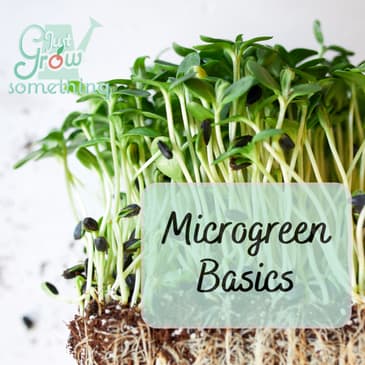
Microgreens can be grown at any time of the year with very little in the way of equipment and it is super easy to get started. For many of us home gardeners, the season for salad greens can be short. And I don’t know about you, but I still crave fresh greens in the wintertime. The easiest answer to supplementing our greens is to grow microgreens indoors.
So, today on Just Grow Something we’re getting started with growing microgreens; what supplies you need, which are the easiest ones for beginners to grow, and what you need to know about selecting seeds to use as microgreens. Let’s dig in.
Episode Resources and References:
Check out the selection of microgreens from today's sponsor, True Leaf Market!
Assessment of Vitamin and Carotenoid Concentrations of Emerging Food Products: Edible Microgreens
Just Grow Something Gardening Friends Facebook Group
Check out how you can become a patron on Patreon
Hosted by Simplecast, an AdsWizz company. See pcm.adswizz.com for information about our collection and use of personal data for advertising.
00:00:01
This is positively farming media.
00:00:04
Many of us home gardeners, the season for salad greens can be
00:00:07
short. Either you're in a climate that
00:00:09
gets way too hot in the summertime to grow decent
00:00:11
greens, or you're in a climate that has a very short growing
00:00:14
season and it gets too cold too quickly.
00:00:17
And even if you're in a more moderate climate where you can
00:00:20
grow through the winter, as the daylight hours shorten, the
00:00:22
plants begin to grow much more slowly.
00:00:25
And I don't know about you, but I still crave fresh greens in
00:00:28
the winter time. The easiest answer to
00:00:30
supplementing our greens is to grow microgreens indoors.
00:00:34
The microgreens can be grown at any time of the year with very
00:00:38
little in the way of equipment, and it is super easy to get
00:00:41
started. There are so many different
00:00:43
crops that can make great microgreens, there's bound to be
00:00:46
something that fits the palette of everybody in your family.
00:00:49
My favorites happen to be sweet peas and sunflowers, but I also
00:00:53
enjoy the spicy cake of some radish greens and the
00:00:55
nutritional kick of broccoli, which is a really good point.
00:00:59
Microgreens are exploding with nutrients.
00:01:02
According to a research study in the Journal of Agricultural and
00:01:06
Food Chemistry, microgreens contain higher concentrations of
00:01:10
vitamins and carotenoids than their mature counterparts, so
00:01:14
this is a great way to bump our nutrition in the winter months
00:01:17
when the variety of fresh foods coming from our gardens is
00:01:21
sorely lacking. And it's super easy to do so
00:01:24
today on Just Grow Something. We're getting started with
00:01:26
growing microgreens, What supplies you need, which are the
00:01:30
easiest ones for beginners to grow, and what you need to know
00:01:34
about selecting seeds to use as microgreens.
00:01:37
Let's dig in. Hey, I'm Karen and I started
00:01:39
gardening 18 years ago in a small corner of my suburban
00:01:42
backyard when we moved to A5 acre Homestead.
00:01:45
I expanded that garden to half an acre and I found such joy and
00:01:48
purpose in feeding my family and friends.
00:01:51
This new found love for digging in the dirt and providing for
00:01:53
others prompted my husband and I to grow our small homestead into
00:01:56
a 40 acre market farm. When I went back to school to
00:01:59
get my degree in horticulture, I discovered there is so much
00:02:02
power in food and I want to share everything I've learned
00:02:05
with as many people as possible. On this podcast, we explore crop
00:02:09
information, soil health, pests and diseases, plant nutrition,
00:02:13
our own nutrition, and so much more in the world of food and
00:02:16
gardening. So grab your garden journal and
00:02:18
a cup of coffee and get ready to just grow something.
00:02:23
Growing microgreens at home does not require any special tools or
00:02:27
equipment, and besides the seeds, you should be able to
00:02:30
find everything you need in your existing garden stash or around
00:02:34
the house. Anything you're missing can
00:02:36
easily be picked up at the store, and I promise there's not
00:02:39
much that you'll need to shop for.
00:02:40
A lot of the plants we already grow in the garden can be used
00:02:44
as microgreens, so you actually may already have the seeds on
00:02:47
hand too, and it's a really good way to like work through an
00:02:51
aging stash of seeds that may not be viable for much longer.
00:02:55
So how do we get started? First thing is the container.
00:03:04
Use shallow trays, seedling flats, or any similar container
00:03:08
with good drainage. You can even use something as
00:03:10
simple as a shallow takeout container, microwave trays from
00:03:14
frozen meals or clamshell Berry containers, anything that can be
00:03:18
thoroughly cleaned prior to use. The key is to make sure there is
00:03:23
a way for the water to get away from the roots, and these
00:03:26
containers can be shallow. In fact, in most cases shallow
00:03:29
containers are better for growing microgreens.
00:03:32
These greens will be harvested sometimes as quickly as five
00:03:35
days after sprouting, so you'll need much less growing medium
00:03:38
than if you were growing a full size plant.
00:03:41
Speaking of growing medium, that's item number two.
00:03:44
Use a sterile, well draining growing medium, like a soil less
00:03:48
peat based seed starting mix, potting mix, Coco cuar or a hemp
00:03:53
mat specifically for microgreens.
00:03:56
And keep in mind you want something that will retain some
00:03:59
moisture, but not so much that it attracts pests or encourages
00:04:03
root rot. The capacity to hold soil
00:04:06
moisture and how often you'll need to water your sprouting
00:04:09
greens will depend on what you use.
00:04:12
What you normally use for starting garden plants indoors
00:04:15
can also be used for growing your microgreens.
00:04:21
The third thing you'll need is the seeds.
00:04:23
You have a huge variety to choose from here radish, kale,
00:04:28
beets, Chard, lettuce, basil, broccoli, cabbage, peas,
00:04:32
alfalfa, celery, arugula, spinach, mustard, you name it.
00:04:37
My favorite for super fast growing microgreens is radish.
00:04:40
It sprouts quickly and it gains lots of size in just a few days.
00:04:45
Some of our favorite garden companions like marigolds,
00:04:47
nasturtium, and sunflowers are also great microgreens.
00:04:51
You really can try just about any plant you grow in the garden
00:04:55
that you would eat the whole plant of, so stay away from
00:04:58
things like tomatoes and Peppers.
00:05:01
If you wouldn't eat the stem or leaves of the mature plant, then
00:05:04
you likely shouldn't grow it as a microgreen.
00:05:06
Those members of the nightshade family contain high levels of
00:05:09
solanine and tropanes as young sprouts and they as can be
00:05:12
poisonous. Everything else though is fair
00:05:14
game. I've even tried popcorn as a
00:05:17
microgreen, which is surprisingly tender and very
00:05:20
sweet. Now, the only other things we
00:05:22
might need will be a spray bottle for misting our sprouts
00:05:26
and a good pair of scissors for harvesting.
00:05:28
Our final consideration is light.
00:05:31
Natural sunlight in a window, on a balcony or on a porch is
00:05:34
generally enough to grow microgreens.
00:05:37
In fact, I've found the places that don't seem to be great for
00:05:40
starting seedlings because the light isn't quite enough is
00:05:44
actually great for microgreens. It's enough light to get them to
00:05:48
sprout and grow, and it makes them a little leggy, which in
00:05:52
this instance is actually a good thing.
00:05:54
I found that it's easier to harvest microgreens without
00:05:57
getting any soil on them when they've stretched up a little
00:06:00
bit taller than usual. Now, if you don't have a good
00:06:02
sunny spot, you can absolutely supplement the natural light
00:06:05
with a source of artificial lighting.
00:06:07
Whether it's a small grow lamp or just a fluorescent bulb.
00:06:11
This is perfect if, like me, your kitchen window is full of
00:06:14
house plants and you need to grow your microgreens in a space
00:06:17
that's a little bit more out of the way, but maybe doesn't have
00:06:20
a natural source of light. In this way, microgreens are
00:06:24
perfect for indoor gardening. As our gardens wind down for the
00:06:31
season and we start having fewer options for freshly harvested
00:06:34
greens, microgreens become a perfect solution for keeping up
00:06:37
our nutritional impact. From using them for salads to
00:06:40
topping on pizza blended into smoothies or topping our soups,
00:06:44
microgreens really do give us a huge bang for our nutritional
00:06:47
buck. This week's sponsor, True Leaf
00:06:50
Market, has a huge selection of microgreen seeds to choose from,
00:06:54
including some of my favourites, sweet peas and sunflowers.
00:06:57
They also carry a variety of starter kits to make it easy to
00:07:01
get all your supplies all in one place.
00:07:04
Go to justgrowsomethingpodcast.com/micro
00:07:07
to quickly find true leaf selection of microgreen seeds,
00:07:11
mixes and kits. Just
00:07:13
growsomethingpodcast.com/micro or use the link in the show
00:07:17
notes for True Leaf Market. Now that we have the growing
00:07:24
medium, the containers, the seeds, and the appropriate
00:07:27
amount of light, how do we actually grow our microgreens?
00:07:31
In general, you're going to follow the germination
00:07:34
guidelines for the specific species of plant that you're
00:07:37
growing, just the same way you would if you were starting it as
00:07:41
a seedling. To transplant into the garden.
00:07:44
Some species need light to germinate, some need dark,
00:07:47
others require the seeds to be pre soaked.
00:07:49
So and that is since you're going to need a few cups for
00:07:52
soaking the seeds in water and a small colander to rinse the
00:07:55
seeds out once or twice before germination.
00:07:57
I usually use a Mason jar for soaking, it's just easy to see
00:08:01
what's going on. A couple examples of these that
00:08:04
need to be soaked are things like sweet peas, beets and Chard
00:08:07
and sunflower seeds. And keep in mind you'll be
00:08:10
growing these plants much more closely together than if you
00:08:13
were growing them to full size, and that will differ according
00:08:16
to the size of the seed. Place your potting mix, or the
00:08:24
medium of your choice in your chosen container and water it
00:08:27
thoroughly. Broadcast the seeds thickly on
00:08:31
the surface of that medium, with the seeds about an eighth of an
00:08:34
inch to 1/4 inch apart. The larger the seed, the more
00:08:38
space you're going to want between them, because that means
00:08:40
a larger seedling. Press the seeds firmly into the
00:08:43
medium for maximum soil contact, and then cover lightly with more
00:08:47
potting mix. Or medium or some vermiculite if
00:08:50
you're choosing to use a hemp mat or something similar.
00:08:53
This is for all but those plants that require light to germinate,
00:08:56
like celery. Those you don't want to cover,
00:08:59
use your spray bottle to keep the soil moist, but not soaked
00:09:03
until the seeds sprout. Using the spray bottle rather
00:09:06
than a watering can keeps the seeds from shifting around while
00:09:09
they're sprouting. Don't let them dry out, but
00:09:12
don't keep them sitting in water either.
00:09:14
The spray bottle is going to help with that too.
00:09:16
Microgreens can be germinated on heat mats, which will get them
00:09:20
to sprout more quickly, but a nice warm, sunny spot in a
00:09:23
window will do just fine. The ideal soil temperature is
00:09:26
around 75 Fahrenheit, or 24 Celsius.
00:09:31
After your plants have sprouted. Be sure they get a good amount
00:09:35
of light during the day, whether that's sunlight or artificial
00:09:38
light. 8 to 10 hours is great, but as few as 6 is fine.
00:09:42
Now again, here's that little trick.
00:09:44
When I'm growing microgreens under artificial lights, it's
00:09:47
usually advised to keep your growing lights closer to your
00:09:51
seedlings so that they don't stretch for light and they don't
00:09:53
get long and laggy. But for microgreens, I leave the
00:09:57
light up a little way higher than usual, because I want those
00:10:00
greens to stretch out just a little bit to make it easier for
00:10:04
me to cut them. Now, if you're growing in a
00:10:06
window, I would rotate your tray each day so they don't start to
00:10:10
lean toward one side or the other.
00:10:12
They'll grow at a more even pace.
00:10:15
The preferred air temperatures for greens, once they've
00:10:18
sprouted varies according to the seed, but in most instances room
00:10:22
temperature is fine, somewhere between 65 and 75 Fahrenheit, or
00:10:26
18 to 24 Celsius. At this point you can either
00:10:30
continue to miss them with water, or you can just water
00:10:33
them from the bottom up by placing the container inside
00:10:36
another one and just allowing the moisture to Wick up into the
00:10:39
growing medium. Just don't keep them constantly
00:10:42
soaked. Once your microgreens have
00:10:45
reached at least a few inches tall, then you can start to
00:10:48
harvest. Simply just take a sharp pair of
00:10:51
scissors and trim the greens off at the base just above the
00:10:54
growing medium. Cut them just prior to using
00:10:57
them to make them the freshest. Or you can cut them all at once
00:11:00
and then just store them in a clamshell in the refrigerator.
00:11:03
I prefer to cut them as I use them unless I'm just not getting
00:11:07
to them fast enough and they're getting a little tough.
00:11:08
And then I just cut them all at one time and throw them into the
00:11:11
fridge. When you harvest is really kind
00:11:14
of up to you. I prefer them very young and
00:11:16
tender, and generally speaking, you want to harvest them before
00:11:20
they get their first true leaves.
00:11:22
At that point, they do tend to get a little bit tough.
00:11:25
This can be as early as five days for some types, or as long
00:11:30
as 21 days for larger sprouts. Now, there are some that are
00:11:34
easier to grow than others, just like all plants, and so these
00:11:37
might be the ones that you want to start with if you are a
00:11:39
beginner radish super, super easy germinates really quickly.
00:11:43
It grows really quickly and it really isn't too fussy about its
00:11:47
conditions, so it's kind of that immediate satisfaction of
00:11:50
letting it sprout and just less than a week later you've got
00:11:53
something to eat. Another one that's really easy
00:11:55
to grow is Napa cabbage. It also sprouts really readily
00:11:58
with a really high germination rate, and it's ready in about 8
00:12:01
days. And even though peas need to be
00:12:04
soaked for about 12 hours or overnight before planting, pea
00:12:09
shoots generally have a really high germination rate and they
00:12:12
grow pretty quickly as well. They are one of my absolute
00:12:15
favorites. And as a bonus, you can get
00:12:18
multiple harvests from peas. So cut them back once and
00:12:21
usually they will grow again for at least one more harvest.
00:12:25
And if you're growing in low light conditions and you don't
00:12:27
have any supplemental light, bok choy is a good option.
00:12:34
Now, can you buy seeds that are specifically sold for microgreen
00:12:38
production? Yes, in many cases these are
00:12:40
organically grown or they've been tested to be sure that
00:12:43
they're free of any chemical treatments.
00:12:45
Or like the ones from True Leaf Market.
00:12:47
They are specially selected varieties that grow well as
00:12:50
microgreens, but the seeds in your seed stash are just as good
00:12:54
if they're organic seeds or if they're conventional seeds, but
00:12:57
they don't contain any fungicides or pesticides as a
00:13:00
coating. The label is going to tell you
00:13:02
if they've been coated with anything, and it's usually
00:13:05
pretty obvious because those coatings will be a bright color,
00:13:07
like an unnatural color. So feel free to use the seeds
00:13:11
that you've already got on hand to start your indoor microgreens
00:13:13
garden, but if you're unsure, then buy a microgreens blend to
00:13:17
start with. In either case, growing
00:13:19
microgreens is a great way to keep fresh, nutritious food on
00:13:24
your plate year round without any special equipment.
00:13:28
Until next time, my gardening friends.
00:13:30
Keep on cultivating that dream garden and we'll talk again
00:13:32
soon. You just finished another
00:13:34
episode of the Just Grow Something podcast.
00:13:36
For more information about today's topic, go to
00:13:39
justgrowsomethingpodcast.com where you can find all the
00:13:42
episodes, show notes, articles, courses, newsletter, sign up and
00:13:45
more. I'd also love for you to head to
00:13:47
Facebook and join our gardening community in the Just Grow
00:13:51
Something Gardening Friends Facebook group.
00:13:53
Until next time, my gardening friends keep learning and keep
00:13:56
growing.