
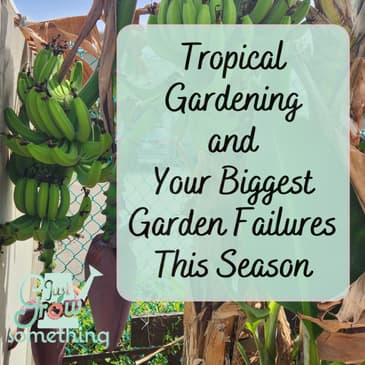
If you’ve been watching my social media accounts you’ve seen me posting about my recent trip to Puerto Rico. I was hoping to see what backyard gardeners were growing in a tropical region and also get an idea of what crops are economically significant to the region and I was actually surprised by what I learned.
Today on Just Grow Something we’re going to talk about what crops are prevalent in Puerto Rico and how we can duplicate some of that in our own homes even if we live somewhere that is decidedly NOT tropical. We’ll also reveal your answers to the October question of the month: what was your biggest failure in the garden this year? Let’s dig in!
References and Resources:
Insect Netting: https://amzn.to/3CeUkOs (aff)
Bird Netting: https://amzn.to/3NV6oag (aff)
Free Download: Onion Growing Fact Sheet
Beginner's Guide to Growing Onions
All About Puerto Rico Coffee - History and Best Brands | Puerto Rico & Caribbean Travel News
Coffee Obsession: More Than 100 Tools and Techniques with Inspirational ... - DK - Google Books
Most Common Papaya Plant Pests: Identification and Treatment Guide | Live to Plant
Regrowing Puerto Rico's Agriculture - WWF - Environment & Disaster Management
Hosted by Simplecast, an AdsWizz company. See pcm.adswizz.com for information about our collection and use of personal data for advertising.
00:00:00
If you've been watching my social media accounts, you've
00:00:02
seen me posting about my recent trip to Puerto Rico.
00:00:05
I was hoping to see what backyard gardeners were growing
00:00:09
in a tropical region and also get an idea of what crops are
00:00:12
economically significant to the region.
00:00:14
And I was actually surprised by what I learned today on Just
00:00:17
Grow Something. We're going to talk about what
00:00:19
crops are prevalent in Puerto Rico and how we can duplicate
00:00:23
some of that in our own homes, even if we live somewhere that
00:00:26
is decidedly not tropical. We'll also reveal your answers
00:00:30
to the October Question of the Month.
00:00:32
What was your biggest failure in the garden this year?
00:00:35
Let's dig in. Hey, I'm Karen, I started
00:00:38
gardening in a small corner of my suburban backyard and now 18
00:00:41
years later, I've got a degree in horticulture and operate a 40
00:00:44
acre market farm. I believe there is power in food
00:00:48
and that everyone should know how to grow at least a little
00:00:50
bit of their own. On this podcast, I share
00:00:52
evidence based techniques to help you plant, grow, harvest
00:00:55
and store all your family's favorites.
00:00:58
Consider me your friend in the garden.
00:01:00
So grab your garden journal and a cup of coffee and get ready to
00:01:03
just grow something. OK, let's start with the answers
00:01:15
to October's Question of the Month.
00:01:17
What was your biggest failure in the garden this year?
00:01:20
From my e-mail inbox, Shelly Orozco says my biggest failure
00:01:25
this year. It's the same as last year,
00:01:27
sweet potatoes. Last year I had them in a very
00:01:29
large planter and the vines were beautiful, but I didn't get any
00:01:32
potatoes. This year I bought 12 starts at
00:01:36
a local nursery and planted 3 each in five gallon buckets.
00:01:40
This year the vines never developed and gradually all died
00:01:43
off. Not sure what I'm doing wrong,
00:01:45
but I'm thinking I'll try regular potatoes next year.
00:01:48
But I love sweet potatoes and I really want to grow some.
00:01:51
And I feel that because I love sweet potatoes also, and this is
00:01:54
super frustrating in the case of having, you know, big, beautiful
00:01:59
vines and no tubers. Often I've seen where these
00:02:03
vines go crazy, but because of where they're positioned in the
00:02:06
garden, either in containers or in raised beds, the vines don't
00:02:10
have anywhere to root into along the way as they grow.
00:02:13
So wherever these vines touch soil, they will root.
00:02:16
And this can sometimes lead to more tubers, depending on where
00:02:19
you're growing. But if that doesn't happen, or
00:02:22
if you have a shorter growing season and there's not enough
00:02:25
time for those secondary tubers to develop, then the plants end
00:02:28
up putting up too much energy into growing vines and not
00:02:31
enough into growing the tubers. So if the vines are going crazy,
00:02:35
but you've dug around under there and you aren't seeing any
00:02:38
tubers developing, it's OK to cut those vines back to about 3
00:02:42
feet to encourage the root growth.
00:02:45
The other thing with sweet potatoes is nutrients.
00:02:47
So they need adequate amounts of phosphorus and potassium to grow
00:02:51
those nice big tubers. This is especially important
00:02:55
when we're talking about containers because the volume of
00:02:58
soil just may not contain enough nutrients to get those plants
00:03:02
all the way through the growing season without some subsequent
00:03:08
feeding along the way. The third thing that I've seen
00:03:12
is just not growing the right type of sweet potato vine.
00:03:14
There are plenty of occasions where someone buys these plants
00:03:17
in the garden center and they're told they are edible sweet
00:03:20
potatoes, when in fact they're the decorative type and they're
00:03:24
not going to grow a tuber or they're only going to grow very
00:03:26
tiny little tubers. These plants are bred to have
00:03:29
those big showy vines and intentionally not grow much in
00:03:33
tubers. So if you're like Shelly and you
00:03:35
haven't had any luck with sweet potatoes, think about those
00:03:37
three things and see if there's somewhere that you could improve
00:03:40
maybe for next season. But absolutely, I hope that
00:03:43
Shelly tries again From the Just Grow Something Gardening Friends
00:03:47
Facebook group. We had a lot of responses.
00:03:49
If you're not in there, the link will be in the episode
00:03:52
description. Just answer a few questions and
00:03:55
you're into a fabulously supportive group of fellow
00:03:58
gardeners. So what was their biggest
00:04:00
failure in the garden this year? Amy Davis said everything that
00:04:04
the grasshoppers demolished. Yeah, I've had that happen too.
00:04:08
There's been several years where I haven't gotten anything in the
00:04:10
way of green beans because the grasshoppers have demolished all
00:04:13
of them. My go to with this is absolutely
00:04:17
insect netting. Without fail, everything I
00:04:19
plant, as long as it doesn't need a pollinator, gets insect
00:04:23
netting. The moment that it is plant
00:04:25
doesn't matter. Plant planted.
00:04:27
The moment is planted. It doesn't matter whether or not
00:04:30
it's a transplant or if it's something that I'm growing
00:04:33
directly from seed. It goes in the ground and it
00:04:35
gets covered. It's not the prettiest thing in
00:04:37
the world. It can be a little ugly
00:04:39
sometimes depending on how you're doing it, but I would
00:04:41
rather have a productive garden than a pretty garden.
00:04:44
So I absolutely would recommend this for everybody if you were
00:04:49
having any kind of insect problem, specifically
00:04:52
grasshoppers, I will link in the show notes to the one that I
00:04:56
use. Now, if you're, you're growing
00:04:57
something that needs the pollinators, you can start them
00:05:00
off being covered. But then as soon as those plants
00:05:02
start to bloom, then you'll obviously need to uncover those
00:05:05
plants to let the pollinators in.
00:05:07
But hopefully by that point, the plants will be strong enough to
00:05:10
be able to combat, you know, the, the grasshoppers and be
00:05:14
able to, to give you a crop because they've made it to a
00:05:18
closer to maturity. So there's a little help for
00:05:20
you, hopefully. Tammy Engel said growing too
00:05:24
many cucumbers to keep up with and companion planting them with
00:05:28
my hot Peppers, which stunted the growth of my hot Peppers.
00:05:31
They took off after removing the cucumbers, but many didn't turn
00:05:35
ripe before frost. Next year, cucumber gets its own
00:05:38
space. So companion planting and
00:05:41
interplanting is always a trial and error sort of activity.
00:05:45
I think sometimes we hit on something that's really
00:05:48
effective and sometimes it just doesn't work out and we always
00:05:52
end up having to learn that the hard way.
00:05:54
I applaud you, Tammy, for giving that combo a try, though.
00:05:57
It seems like the kind of crawling habit of the cucumbers,
00:06:01
if you're letting them grow on the ground, would make an
00:06:02
excellent sort of ground cover for the Peppers as they grow.
00:06:06
It just probably didn't work out in terms of nutrient
00:06:09
availability. So a good rule of thumb when
00:06:13
we're trying new interplanting techniques is high, low, fast,
00:06:17
slow. So meaning plant the tall
00:06:20
growing plants with the lower growing ones and then plant the
00:06:23
faster growing plants with the slower growing ones.
00:06:26
And that way you kind of have a staggered usage and you also
00:06:29
have of of nutrients and you have staggered growth patterns.
00:06:33
But we also have to think about when these plants are using
00:06:36
their nutrients, right? So Peppers and cucumbers both
00:06:39
rely on phosphorus and potassium for producing their fruits.
00:06:43
So if I were to try this combo, I would plant an early crop of,
00:06:50
say, pickling cucumbers, the ones that tend to push out a ton
00:06:53
of little fruits over the course of, you know, several weeks, and
00:06:56
then they maybe start to die back a little bit.
00:06:59
And then I would plant the Peppers into the cucumber plants
00:07:02
a few weeks into harvesting, while the Peppers are generally
00:07:06
using nitrogen to put on that leafy growth.
00:07:09
So you have the cucumbers at that point pushing out their
00:07:12
blooms and their fruits. They're using up the phosphorus
00:07:15
and the potassium. They're not really relying as
00:07:17
much on the nitrogen where the Peppers at that point are
00:07:20
relying on the nitrogen to put out that leafy growth and to get
00:07:23
big and strong. So then the cucumbers would be
00:07:26
done and getting pulled by the time the Peppers needed that
00:07:30
phosphorus and potassium for their fruits.
00:07:33
But in the meantime, the vines would have provided a ground
00:07:35
cover to keep the weeds at Bay that would compete with the
00:07:38
Peppers, right? So and then you could replace
00:07:41
the the cucumbers with some leafy greens that would
00:07:43
appreciate the shade of the Peppers during the hottest part
00:07:46
of the day. Lots of ways to play around with
00:07:48
inter planting and companion planting and experimenting like
00:07:51
this is a great way to get more out of the same space.
00:07:54
It just sometimes takes a little bit of work to get to a winning
00:07:57
combo so keep trying. Tammy Charla Mcharg said my
00:08:02
garden failure this year was waiting too long to start melons
00:08:06
so they didn't have enough growing time in my climate zone
00:08:09
5B East Coast of Canada. I had two tiny fruit that didn't
00:08:14
ripen with everything else planned for the garden, they
00:08:16
were just lower on my priority list.
00:08:18
I'll try again at some point though.
00:08:20
The silly thing is I did the same thing two years ago.
00:08:23
Next time I really have to start much earlier.
00:08:26
Honestly this is not uncommon for lots of different things.
00:08:30
Melons for sure fall into this a lot, especially in short season
00:08:34
areas. But the same could be said for
00:08:36
sweet corn or okra or anything that is super frost sensitive or
00:08:40
that needs a lot of heat hours. This is when I find it really
00:08:45
helpful to lay everything out on a calendar during the offseason.
00:08:49
So not only do I know when everything needs to be
00:08:52
transplanted in order to get them to maturity, but I can
00:08:56
count backwards to figure out when to start them so they're
00:09:00
ready to go in on time. Now I totally get that.
00:09:03
You know, things not being as high of a priority as other
00:09:06
things, even if it is on your calendar.
00:09:08
That's happened to me the past two seasons with okra.
00:09:10
For some reason, even when planting fall crops, I've
00:09:14
underestimated how much time I needed for that crop to make it
00:09:17
to maturity before either of my frosts hit or the daylight hours
00:09:22
dipped, and I didn't end up getting anything out of those
00:09:24
crops. And failure of fall crops seems
00:09:27
to be a little bit of a theme this season, Cody Ruth said.
00:09:31
Not a single one of my fall plants made it after carefully
00:09:34
planting and seed starting in the heat of the summer.
00:09:37
I thought I'd get much more assistance from Mother Nature
00:09:40
with the watering, but we haven't had a drop since July
00:09:43
and I had a surprise surgery that kept me from tending them
00:09:46
much while they were seedlings. Every single one dried up and
00:09:49
died. First of all, Cody, I hope you
00:09:52
have recovered well from your surgery.
00:09:54
Second, you are not alone. With the exception of my Napa
00:09:58
cabbage, kale, and collards, every single one of our fall
00:10:02
crops failed too, and that 100% was because of excessive heat
00:10:07
and 0 rainfall. We've just now seen our first
00:10:11
significant rainfall since July, just the past couple of days.
00:10:14
I think our total rainfall from like July through October was
00:10:17
less than two inches. So we were definitely and are
00:10:20
still definitely in a drought and nothing survived.
00:10:22
So I feel you, and so does Rich Flint, who said my biggest
00:10:27
failure was everything I planted for my fall garden.
00:10:30
But a hurricane and flooding will do that to you sometimes.
00:10:34
Yeah. Rich actually had posted a video
00:10:36
in the group of him preparing for the hurricane coming in and
00:10:40
he was harvesting from his shampoo plant.
00:10:43
If you have never seen shampoo ginger, it's a tropical plant
00:10:47
and it has this, like, pine cone shaped flower.
00:10:50
And when you squeeze this flower, you get this fragrant, I
00:10:54
don't know, juice, I guess you would call it, that can be used
00:10:58
as a shampoo and a hair conditioner.
00:11:00
It was actually really cool to watch.
00:11:02
I'm really sorry about the gardens, Rich, and I hope you
00:11:04
guys are recovering otherwise from all of that severe weather.
00:11:08
Matt Trusty said, not really much a failure, but I learned
00:11:12
you have to thin carrots. Yes, carrots are Divas.
00:11:16
They want all the space to themselves.
00:11:19
So, you know, unless you want tiny, skinny little skin,
00:11:23
scraggly, you know, carrots, they absolutely need to be
00:11:27
thinned. The easiest way to do this that
00:11:29
I have found is actually take a little pair of snips and just go
00:11:32
along the soil line and snip the tops off to the width or the the
00:11:37
spacing that you want them to be, which is generally speaking,
00:11:40
anywhere between two and four inches apart, depending on the
00:11:43
size of the carrot that you're growing.
00:11:45
Trying to pull them #1 is really tedious #2 you're disturbing the
00:11:49
roots next to the other guys. So it really is easiest just to
00:11:52
take some snips and go along and just cut those greens.
00:11:54
And you can do that a couple of different times.
00:11:56
So you can thin them in stages. The other way too, is to plant
00:12:00
them more thinly when you do plant them.
00:12:03
So, you know, a lot of people use seed tape, either a
00:12:06
purchased seed tape or stuff that you're, you can make
00:12:09
yourself where you either take, you know, toilet tissue or
00:12:13
something similar to that and you space the seeds out in the
00:12:16
tissue and then you lay it out in the garden and water it in
00:12:18
that way. You know what the spacing is.
00:12:21
Another way to do this is with sand.
00:12:22
So if you can mix your carrot seeds with the play sand and
00:12:27
then you use that to sprinkle your, your carrots in, in the
00:12:31
lime, you're going to have better spacing with the carrots
00:12:35
because it's it you're getting the sand in there too.
00:12:38
I hope that makes sense. But that's what I'm doing this
00:12:40
year. I'm planning on doing for my, my
00:12:42
fall over winter carrots is doing it that way.
00:12:45
So that's another, another trick to make sure that they're
00:12:47
planted more thinly than but I know that it's hard and they're
00:12:51
tiny. So snips take use the snips.
00:12:55
Sarah Boyson Hashman said Biggest failure was ourselves.
00:12:59
We busted butt to get all the plants good and strong and
00:13:02
replanted after the animals and hail kept damaging the garden.
00:13:06
But then everything was so late to produce anything and we were
00:13:09
in a busy season and not able to truly put away the bounty.
00:13:13
We got some put away, but most of it got fed to the chickens.
00:13:17
Now that is truly frustrating knowing you put so much effort
00:13:21
into the garden only to find when it comes time to reap the
00:13:24
bounty, other aspects of your life have taken over to the
00:13:27
point that you can't do anything with it.
00:13:29
You're not alone in this one either, Sarah.
00:13:31
I think this happens to a lot of us.
00:13:33
I'm just glad at least your chickens got to enjoy the
00:13:35
garden. Hopefully.
00:13:36
Bonus points for really tasty eggs.
00:13:39
And finally from YouTube, What was your biggest failure in the
00:13:43
garden this year? John Voichtech said was excited
00:13:46
to try our glass gem and Peaches and cream corn crops, but an
00:13:51
animal ate all of them just before they were ready for
00:13:54
harvest. Our biggest fail this year?
00:13:56
Brainstorming for better solutions for next season.
00:13:59
Yes, I absolutely get that one. We have spent years trying to
00:14:05
outsmart the raccoons and the deer, and at one point we
00:14:10
thought maybe it was, Oh well, maybe we just plant more so that
00:14:14
we have more to share. No, didn't work out that way.
00:14:18
As a matter of fact, the deer come through a lot of the time
00:14:20
and they just continue to eat the tops off of the plants as
00:14:24
they're trying to get to maturity.
00:14:26
And then once they do finally get to maturity, it seems like
00:14:29
quite literally the day before we're ready to go and harvest
00:14:33
because we know the corn is going to be right at its peak.
00:14:36
The raccoons will come through and quite literally just eat the
00:14:39
the ears right off of the plants.
00:14:41
Super frustrating. So what I did last year, which
00:14:44
absolutely worked and I think you can do this either in raised
00:14:48
containers or in an in ground bed and it should help.
00:14:52
I used bird netting and I quite literally wrapped the plants.
00:14:58
So I have 10 planter box direct planters out in one section of
00:15:04
my front yard and I used those. I designated those for my sweet
00:15:08
corn and planted all the sweet corn in there, planted them in
00:15:11
blocks so I was sure that they would get pollinated.
00:15:14
And then I used, as they got to maturity or you know, they got
00:15:18
tall enough, I used a bird netting and quite literally just
00:15:21
wrapped around the entire block of those plants.
00:15:25
It created a physical barrier where the deer and the raccoons
00:15:30
couldn't get in. I didn't lose a single ear of
00:15:34
corn after I did that. I had one that I lost and it was
00:15:38
before I wrapped the the corn up.
00:15:41
So if you can use and it's not the insect netting, it's
00:15:46
definitely bird netting. So it's much larger.
00:15:48
Although I guess the insect netting would probably work too
00:15:51
and just sort of wrap it around to give them like a physical
00:15:54
barrier that doesn't have to be something that is there
00:15:57
permanently. I know a lot of people will
00:15:58
actually like fence their gardens in.
00:16:01
I got too much garden for that and I got too many different
00:16:03
areas where I'm gardening for that.
00:16:05
So the bird netting seemed to to do the trick.
00:16:07
So I feel like we finally found a solution.
00:16:09
So hopefully that will help you. And then finally, Jacqueline
00:16:13
Whitmore said, I can't decide if my onions or my corn were my
00:16:17
biggest failure in the garden this year.
00:16:19
It was my second time trying corn.
00:16:22
My first time was an epic fail. However, the corn I did get was
00:16:26
the best I've ever tasted so I'll never not grow corn again.
00:16:30
I just need to figure it out. It was my first time growing
00:16:33
bulbing onions and although I got some tiny onions, I know I
00:16:37
can do better next year. I learned what not to do and I'm
00:16:40
looking forward to trying again. I hope you had an awesome,
00:16:42
restful vacation. I absolutely agree that fresh
00:16:46
picked, homegrown sweet corn cannot be beat.
00:16:49
It is absolutely worth the effort, but the struggle is
00:16:53
real. So you know, if your problem is
00:16:57
maybe not that the critters are getting to it, but it might be
00:17:01
pollination. You have to remember that corn
00:17:03
needs to be planted in blocks. So they don't rely on insects
00:17:07
for their pollination, but they do rely on the wind or air
00:17:11
movement. So when you start to get the
00:17:14
seeds that come out at the top, that's where the pollen is
00:17:19
located. And then when the ears start to
00:17:21
form, you have the silks coming out.
00:17:23
Every single one of those silks needs that pollen from the top
00:17:28
of the plant. So essentially, when the wind
00:17:30
blows the pollen from the top of this plant.
00:17:34
And if you're, if you're watching me on YouTube or on
00:17:35
Spotify, I'm doing all my hand movements right now.
00:17:38
But if you're just listening, think about, you know, what a
00:17:40
stock of, of corn looks like. The one that has the pollen at
00:17:45
the top is going, that pollen is going to fall down, but it's not
00:17:48
falling directly down. The wind is sort of blowing it
00:17:50
off, so it's going to go down at an angle, which means it's going
00:17:53
to pollinate the one next to it, right?
00:17:56
And then vice versa, that plants pollen is going to go to the one
00:17:59
next to it. So if your corn is not planted
00:18:02
fairly closely together in blocks, they're not all going to
00:18:06
get pollinated. So that usually is the biggest
00:18:08
problem for home gardeners trying to grow sweet corn is
00:18:12
that maybe you're only growing them in one or two rows and
00:18:15
there aren't enough of them together.
00:18:17
So I would always recommend at a minimum you're doing like a four
00:18:20
by four block so they can all pollinate each other.
00:18:23
In terms of the onions, I know you might have actually
00:18:27
commented on the onion planting video that I did is terms of
00:18:31
planting them in the fall. I also have lots of info on my
00:18:35
website if you just search for onions.
00:18:36
And I will also link my beginner's guide blog post for
00:18:41
growing onions and my downloadable quick reference
00:18:43
sheet in the show notes as well. My biggest failure this year had
00:18:48
to be the failure of our fall crops.
00:18:51
I have worked a lot of years toward getting the timing down
00:18:55
just right for our area because it is usually so incredibly hot
00:19:00
in the late summer at the time that I would need to be planting
00:19:04
those crops. But I also know that I have to
00:19:07
adjust that schedule based on the weather conditions.
00:19:11
And this year I just downright blew it.
00:19:13
Like I said, the only fall crops that did well are the Napa
00:19:16
cabbages, the collards, and the kale that are just killing it
00:19:19
out right there right now. But I got nothing in the way of
00:19:23
lettuces or other leafy greens, none of my brassicas, and I
00:19:27
totally failed to even plant my carrots or my beets.
00:19:31
Now the catch to all that is that it's still unseasonably
00:19:35
warm here right now, and we are finally getting some rain.
00:19:38
So I still have a chance to get some more things in the ground
00:19:41
that can overwinter and pop up in the spring, but I still have
00:19:44
to get my garlic and my onions in the ground because, you know,
00:19:48
I chose to go on vacation rather than getting those in on time.
00:19:51
So anything beyond that, I'm going to consider a bonus.
00:19:59
And as far as my vacation went, it was awesome.
00:20:02
It was restful. But I also tried to consume as
00:20:06
much about tropical gardening and the most common crops on
00:20:08
Puerto Rico as it could while I was there.
00:20:11
What I didn't see, though, was much of anything in the way of
00:20:16
actual vegetable gardens. I mean, we traveled from.
00:20:20
San Juan, which is kind of on the northeast end of the island.
00:20:23
And then we went all along the shore along the north side of
00:20:27
the island over to like the northwest corner and then down
00:20:31
the western shoreline and across the southern shore about to the
00:20:34
halfway point or so. And then we also traveled the
00:20:36
interior of the island a little bit on the southwest side just a
00:20:39
little. So it was only kind of 1, I
00:20:41
don't know, 1/3 of the island that we didn't really hit at
00:20:44
some point along the coast anyway.
00:20:46
And then a lot of the interior we didn't get to, but in all of
00:20:49
that time that we were traveling around, I didn't see a single
00:20:54
vegetable garden in terms of what I would recognize as a
00:20:58
garden, meaning, you know, growing tomatoes or cucumbers or
00:21:01
things that would actually do really well in that climate, you
00:21:04
know, squashes and, and all kinds of things didn't see a
00:21:07
want. And and there was like salad on
00:21:10
the menu when we went to eat places, but the salad consisted
00:21:14
of a bed of lettuce and like 2 slices of tomato.
00:21:17
And even my husband's uncle was like, this is not tomato because
00:21:20
it was so pale and it was so awful.
00:21:22
It made me miss my summer tomatoes.
00:21:25
And you know, it's not that the vegetables aren't utilized.
00:21:29
It's only certain vegetables, I think, that are utilized in a
00:21:31
lot of the cuisine on the island.
00:21:34
You know, the components of San Cocho, which is a Puerto Rican
00:21:37
type of a Stew, includes things like kombucha, squash and corn
00:21:42
on the cob and different root vegetables.
00:21:44
But I didn't see anybody actually growing any of that.
00:21:49
What I did see in a lot of backyards was a lot of the
00:21:54
tropical fruits. I think things that like really
00:21:57
grow, you know, plentifully and easily.
00:22:00
So star fruit. I had my first star fruit that
00:22:03
was so good, sweet but sort of citrusy with like a crunchy
00:22:09
texture, kind of like a firm melon.
00:22:11
Very very tasty. Saw a lot of bananas and
00:22:13
plantains in people's yards. Avocados, but not like the
00:22:18
little Haas avocados that I'm used to seeing in the grocery
00:22:21
store like avocado avocados as big as my hand.
00:22:25
I will do a video on this one because it was amazing.
00:22:27
Like the main fruit part was larger than my palm and then you
00:22:31
had the like longer lobe port part that was longer than my
00:22:35
fingers. They were massive Acerola
00:22:38
cherries or Barbados cherries. These are very sweet.
00:22:42
They have 3 seeds in them, which I noticed as I was consistently
00:22:45
spitting the seeds out. Those were just kind of randomly
00:22:48
growing in people's yards, canepas, which was something my
00:22:51
husband was very excited to show me.
00:22:53
These are small, round green, what we referred to as a droop.
00:22:58
So a stone fruit that has like a pulp that has a little like a
00:23:02
single seed in the inside. So think of like a like a, a
00:23:06
Peach, but much, much smaller. And it does have a sweet pulp in
00:23:09
the inside, but it's ripe. But it needs to be truly ripe
00:23:12
otherwise it'll pull all of the moisture out of your mouth if
00:23:15
you eat it before it's ripe. These were growing everywhere,
00:23:18
breadfruit or what they call pana.
00:23:21
I decided I really like breadfruit.
00:23:23
It has a texture like potato, very filling, has a lot of
00:23:28
fiber. So heads up, if you start eating
00:23:30
a lot of bread, fruit and you're not used to it, yeah, it might
00:23:33
clean you out. So just keep that in mind.
00:23:36
And then coconuts, you know, just randomly growing in
00:23:38
people's yards, which I got to have coconut water straight from
00:23:41
the coconut, a little straw. It was actually kind of cool.
00:23:44
Some things that we're also growing that I didn't get a
00:23:46
chance to try, like passionfruit, guava, papaya,
00:23:49
mango and Jobo, which is similar to mango.
00:23:52
And some of these things aren't actually even native to the
00:23:55
island, but they've been grown there for so long, they're just
00:23:58
kind of synonymous with Puerto Rico.
00:24:00
Some of the other staples like juca and batata, which is sweet
00:24:04
potato, right? Those are things that can also
00:24:06
grow there. But again, I didn't see anybody
00:24:08
doing a lot of this sort of dedicated space in their yards.
00:24:12
Interestingly, many of the specialty crops that Puerto Rico
00:24:16
is known for aren't actually even economically significant to
00:24:20
the island. I mean, less than 1% of the
00:24:24
island's gross national product comes from agriculture, which is
00:24:28
kind of astonishing to me because it's so easy to grow a
00:24:32
lot of things there. So let's talk about four of the
00:24:37
tropical crops that are grown in Puerto Rico that we might think
00:24:40
of as synonymous with the island and how we can grow those in our
00:24:44
own yard, even if we are nowhere near tropical.
00:24:47
And we will start with one of my favorites, coffee.
00:24:55
So we got the chance to visit a coffee Hacienda that is now
00:25:00
managed as both a historical site and a nature preserve, and
00:25:03
got to see how the coffee used to be produced there.
00:25:06
Coffee has a long history in Puerto Rico, having been
00:25:09
introduced in the early 1700s while under Spanish rule,
00:25:13
originally just being grown to be consumed locally.
00:25:17
But by the end of the century, Puerto Rico was producing over
00:25:20
1 lbs. Of coffee per year and that
00:25:24
number continued to increase to where by the mid to late 1800s,
00:25:29
Puerto Rico was the 7th largest coffee producer in the world.
00:25:33
But that changed quite a bit when the US annexed the island
00:25:37
and there was a series of natural disasters that leveled
00:25:40
much of the agricultural areas. So when the Domino's Sugar
00:25:44
Company rolled in, the focus quickly shifted from coffee to
00:25:48
sugar cane. I learned a lot about Puerto
00:25:50
Rico's history on this trip and how their agriculture has
00:25:53
shifted according to who is in charge of the island.
00:25:57
It's interesting, to put it mildly.
00:25:59
So coffee plants require partial shade, consistent rainfall and a
00:26:05
well draining, slightly acidic soil.
00:26:07
So Puerto Rico's mountainous and shaded areas meet this demand
00:26:11
beautifully. So coffee actually can flourish
00:26:15
in Puerto Rico. Nowadays, most of the coffee
00:26:18
grown on the island is actually just consumed locally and there
00:26:21
are a lot of different sort of artisanal brands.
00:26:23
Only about .1% of coffee produced in Puerto Rico is ever
00:26:28
exported. So you're not likely to find
00:26:30
Puerto Rican coffee in your store unless you go looking for
00:26:33
it. Now if you live in a tropical
00:26:35
area, you can grow your own coffee plants.
00:26:39
You have just need some rich, well draining but slightly
00:26:42
acidic soil so we can sort of mimic that volcanic soil
00:26:44
condition of Puerto Rico. You want to plant your coffee
00:26:47
plants under taller plants so that you provide that shade that
00:26:50
it likes. It likes indirect light and then
00:26:53
maintain regular moisture. Just allowing the soil to dry
00:26:55
slightly between waterings and mulch is a good idea here.
00:26:59
So you can retain the moisture and regulate the soil
00:27:00
temperature. But if you are not in zone, I
00:27:03
don't know. 9/10/11 then you can also grow coffee plants and I am
00:27:08
super excited to try this by growing them in a container.
00:27:11
So you can plant coffee plants in a large container that can be
00:27:14
brought indoors. You can grow them as a house
00:27:17
plants, even though they may not reach full productivity, but you
00:27:21
can bring them back out in the summertime so long as you are
00:27:25
maintaining a temperature between 60 and 70° as a minimum
00:27:30
to sort of mimic that tropical condition.
00:27:32
So when you bring it in the house, you want to keep it in
00:27:34
indirect light, maybe near a sunny window or under some grow
00:27:38
lights, but not too much direct light because again, they like
00:27:41
those sort of shaded conditions. So yeah, watch me start growing
00:27:46
my own coffee next summer. OK, and #2 let's talk about
00:27:51
bananas and specifically plantains, right?
00:27:54
They are both staples in Puerto Rican cuisine.
00:27:57
Plantains especially if you've ever had something called
00:27:59
tostones, they were yellow plantains that have been sort of
00:28:03
mashed and formed into a little disk.
00:28:05
And then they're fried and salted.
00:28:06
They're very good. They're very crunchy.
00:28:08
But bananas also are are sort of important.
00:28:11
And these are kind of significant to agriculture.
00:28:13
Again, not as like a large scale export, but that's mostly
00:28:18
because there's a really high local demand.
00:28:20
I mean, plantains especially are definitely significant in terms
00:28:23
of just local consumption, right?
00:28:26
The interesting thing, and I did a video about this on both
00:28:30
Instagram and a larger one on YouTube talking about the way
00:28:33
that plantains and bananas grow. They're actually not trees.
00:28:38
They are an herb that regrows from an underground rhizome or
00:28:42
corn. So the what we call a pseudo
00:28:46
stem that looks like a trunk is actually the individual leaves
00:28:49
coming up and they're coming up super tightly wrapped around
00:28:52
each other. So they look like a a stem or a
00:28:56
trunk. And then those leaves start to
00:28:58
come up out of the top and they will produce one set of fruit.
00:29:03
Now this could be multiple bunches, especially with the
00:29:06
bananas, but they come, they have one long stem that will
00:29:09
come out, produce all these little, you know, bunches of
00:29:11
bananas or bunches of plantains and then they will have the
00:29:14
flower at the end of it. Once it's done fruiting, that's
00:29:18
it that that plant is done producing.
00:29:21
So either it would naturally die back or what is typical is it
00:29:24
gets cut down to save the energy from those underground rhizomes
00:29:28
because that's when a new where a new one is going to grow from,
00:29:32
right? And typically takes around nine
00:29:33
months or so for these plants to produce.
00:29:36
So obviously they like a warm sort of humid region.
00:29:40
They do need well draining fertile soil.
00:29:44
If they're growing them for cultivation in terms of, you
00:29:48
know, a farmer, they're going to plant them in rows, spacing them
00:29:51
about 10 feet apart to allow for the full growth.
00:29:54
They can also be grown in clusters too.
00:29:56
And they do grow best in the areas of the island they get
00:30:00
abundant rainfall. There are sections of Puerto
00:30:03
Rico that do not get as much rain as the rest of the island.
00:30:07
In fact, some of them are downright dry.
00:30:09
And as you drive through, you can kind of tell where there's
00:30:11
regions are because the the greenery isn't as lush and it's
00:30:16
actually not even as green. You can see the landscape is
00:30:18
sort of browned out a little bit.
00:30:21
If you live in a tropical environment and you want to be
00:30:25
able to grow your own bananas or plantains, then again, just
00:30:27
think about adequate spacing around the base of each plant to
00:30:30
accommodate those really broad leaves.
00:30:32
And you want a loamy fertile soil with really good drainage
00:30:35
because we don't want those roots to rot because we're
00:30:37
relying on that root system to regrow those plants every year.
00:30:41
And then bananas and plantains actually do need consistent
00:30:44
moisture, especially during dry spells.
00:30:47
So, and it seems from what I understand talking to people,
00:30:50
that the bananas require more water than the plantains, which
00:30:54
kind of makes sense if you know the texture.
00:30:57
Bananas tend to be, I don't know, a little bit more moist
00:30:59
than plantains. Plantains seem to be a little
00:31:01
bit drier. So maybe that has something to
00:31:03
do with their water requirements.
00:31:04
I don't know. But these are tall plants with
00:31:07
very large leaves, so just know that they're going to be prone
00:31:11
to some wind damage. Now, if you want to grow these
00:31:15
at home and you don't live in a tropical environment, you can do
00:31:19
that. I actually have a friend here
00:31:21
who grows banana plants in her backyard every single year.
00:31:26
Now, obviously they haven't produced a fruit.
00:31:29
I mean, I'm in West Central Missouri, so we don't have a
00:31:31
summer that is long enough for that to happen.
00:31:34
But they do grow every single year and she has gotten flowers
00:31:37
off of them. As a matter of fact, she
00:31:38
actually got some fruit on it this year too, although I don't
00:31:41
think it was, you know, long enough before our frost to
00:31:44
actually have those fruits develop.
00:31:46
You can either do them in a container if you, if you want to
00:31:51
bring them in and you really do want to try to get them to
00:31:53
fruit, it's going to have to be a large container.
00:31:55
We're talking a 15 gallon container and you're likely
00:31:57
going to need to put some wheels on it in order to be able to
00:32:00
wheel it in and out. If you do want to do that, make
00:32:03
sure that you when you bring it in, you keep it in a very warm
00:32:06
humid environment. During the cold months, you
00:32:08
might want to use a humidifier or mist it to make sure that
00:32:10
you're kind of replicating that tropical humidity.
00:32:13
There are dwarf varieties, so those are a little bit more
00:32:16
manageable indoors if you're really going to want to try to
00:32:20
grow this. In fact, where we were staying,
00:32:22
the variety of bananas that were growing in the backyard were
00:32:24
actually a dwarf variety. So it was a very low growing
00:32:27
plant, but there was a ton of fruit on it.
00:32:30
The other option too is to just grow them decoratively like my
00:32:33
friend here does, which we liked the kind of tropical vibe so
00:32:37
much that we're actually considering doing that.
00:32:39
We can actually plant them out here and just let them do their
00:32:42
thing. They will grow and they grow
00:32:44
fairly quickly and get those big leaves on them and they're just
00:32:47
cool to look at. And then the end of the season
00:32:49
they'll just die back. We cut them down and they'll
00:32:51
overwinter if we mulch them really well and they'll come
00:32:53
back on their own again in the next year.
00:32:55
So if you want the fruit and you want to bring it indoors, 15
00:32:59
gallon container, try the dwarf varieties.
00:33:02
Otherwise, you know, just enjoy the tropical vibe outside during
00:33:05
the summertime #3 on our list of tropical plants that you might
00:33:09
want to grow at home that does grow in Puerto Rico is
00:33:11
pineapple. I had the tastiest pineapple I
00:33:14
have ever had in my life and it was a mini pineapple.
00:33:18
So Pina, I'm going to try to say it, Pina Quito, so small mini
00:33:22
pineapple. It was super sweet.
00:33:24
It was super juicy. And I mean, Puerto Rico is the
00:33:28
ideal tropical climate for growing pineapples.
00:33:31
Again, one of the thing that is mainly for the local markets,
00:33:35
but also specifically for tourism, like pineapples, do you
00:33:39
contribute a lot to the sort of agritourism sector?
00:33:43
Because you know, you can line them up along a fruit stand as
00:33:47
people drive down the highway and they see I fell victim to
00:33:49
them, like, oh, I want pineapples, right?
00:33:51
But they were so good. They were tasty pineapple
00:33:53
plants. Again, they thrive in that
00:33:55
sandy, acidic, you know, soil. So that's very common in Puerto
00:33:58
Rico, that very volcanic soil. And they're grown typically in
00:34:05
rows to make sure that each one of those plants has ample space
00:34:09
for the very broad leaves. So if you are in a tropical
00:34:12
environment and you want to grow your own pineapples, again,
00:34:15
sandy, slightly acidic soil, you're probably going to want to
00:34:18
add some organic matter because they do need some good drainage.
00:34:21
Pineapples need full sun in order to produce that really
00:34:25
sweet fruit. So you are definitely going to
00:34:27
want to plant them someplace that gets direct sunlight, a lot
00:34:30
of sunlight, right? You also want to allow enough
00:34:33
space between those plants to prevent the competition for that
00:34:36
sunlight and also for the nutrients.
00:34:38
The one thing about pineapple though, too, is you want to make
00:34:40
sure that they don't get waterlogged because that can
00:34:42
lead to root rot. And also, from what I
00:34:45
understand, that also tends to sort of dull the sweetness of
00:34:48
the fruit. I liken that to something
00:34:51
similar with us, like in our tomatoes.
00:34:52
You try to grow a tomato and it gets too much rain and it
00:34:56
doesn't taste as strong. I I'm guessing that maybe with
00:34:58
pineapples, it's the same thing. Now, if you grow in a cooler
00:35:02
climate like I do, you absolutely can grow pineapples
00:35:06
in a pot. And if you're on YouTube or on
00:35:09
Spotify, this is my pineapple plant.
00:35:14
Actually, it's one of two now. It really should be probably 3
00:35:18
times this size, but I did not have it in the proper spot
00:35:22
outside in in the the sun this year.
00:35:25
It did not. I put it on my back porch.
00:35:28
I actually have two of them and they didn't get nearly as much
00:35:31
sun. They really should be much
00:35:32
larger than that, but they're thriving.
00:35:34
They're doing just fine. The pineapples grow really well
00:35:36
in pots and as a matter of fact, you just take the top of a
00:35:40
pineapple that you bring home from the grocery store.
00:35:43
You can plant that top in a container of just like cactus or
00:35:47
succulent mix and there you go. Put it near AS facing window in
00:35:51
the in the winter time or give it some grow lights.
00:35:54
Put it outside in the summertime in the full sun.
00:35:57
Let it do its thing. You definitely want to make sure
00:36:00
that you're keeping it above 60°F at night.
00:36:02
You don't want to get any cold drafts.
00:36:03
They are barely sensitive to the cold and it can take up to three
00:36:07
years, but you will get a fruit eventually out of them that
00:36:10
produce a new pup or fruit, sometimes as quickly as 18
00:36:14
months in a container, but definitely at least by about
00:36:17
three years again, if you're putting it in enough sun.
00:36:19
I did not do that. I'm hoping next year, you know,
00:36:22
I think about it properly in the spring when I'm putting them
00:36:24
outside and maybe I'll have, I don't know, some fresh pineapple
00:36:27
that I can grow myself here soon.
00:36:30
And then the last one is papaya. Papaya is a little bit of a a
00:36:34
local staple in Puerto Rico. It's often sold fresh or
00:36:37
processed. It can actually be grown in a
00:36:39
lot of regions of Puerto Rico. It's just that warm climate you
00:36:42
can get a continuous harvest out of them.
00:36:44
Dried papaya is actually a a popular snack or treat.
00:36:48
They also need a sunny, warm area well draining ample
00:36:52
moisture. A lot of the time they can be
00:36:54
grown from seed, but they do require a little bit extra care
00:36:58
because they are kind of susceptible to pests and
00:37:02
diseases. So if you are in a tropical
00:37:05
environment and you are growing these in your own home, you want
00:37:07
them in some very well draining soil.
00:37:09
You want them in a sunny location just like the
00:37:12
pineapples. They really want that full
00:37:14
sunlight. The soil should be moist but not
00:37:17
waterlogged, and you're going to want to keep an eye out for
00:37:20
those common papaya pests. So aphids, whiteflies, spider
00:37:24
mites, and fruit flies are the most prominent ones, but you
00:37:28
also have to watch out for nematodes as well if you want to
00:37:32
try to grow papaya in a cooler climate.
00:37:35
I don't think I'm going to take this effort, but you can grow
00:37:39
dwarf varieties. They can be grown in containers.
00:37:42
Put them outside in the summer, bring them indoors during the
00:37:44
colder months. They need that bright lights.
00:37:47
They definitely need to be near like a sunny window or under
00:37:50
grow lights. Warm indoor temperature is
00:37:52
definitely above 65 Fahrenheit. High humidity, so use a
00:37:56
humidifier if necessary. This, again, may be something
00:37:59
that is just kind of done, you know, for the fun of it as a
00:38:02
challenge to try. I don't think you're going to be
00:38:04
able to grow enough papayas indoors or in a cooler climate
00:38:08
to actually, you know, get too much in the way of fruit.
00:38:11
But the dwarf varieties, you know, you may get a few fruit
00:38:14
every year and that might be worth it.
00:38:15
I don't know, Maybe I will give it a try.
00:38:17
We'll see. Now, I know there are plenty of
00:38:23
fruits and vegetables that I didn't talk about here that are
00:38:26
grown in Puerto Rico and other tropical climates, Soursop,
00:38:30
jackfruit, rambutan, yama, etcetera.
00:38:32
But there are so many things that can be grown in tropical
00:38:37
climates. I just, I couldn't get to them
00:38:39
all. And I did say I was really
00:38:41
surprised by the lack of vegetable gardens in people's
00:38:45
yards. That doesn't mean they don't
00:38:48
exist. I didn't see the entire island,
00:38:50
but it was pretty obvious to me that folks were taking advantage
00:38:53
of the trees and the plants that tend to just kind of grow wild
00:38:57
without much care and harvesting from those, rather than trying
00:39:01
to tend a garden of things that would no doubt do phenomenally
00:39:04
well but require a lot more care, like eggplant or cucumbers
00:39:08
or tomatoes, Right? And we can't forget about the
00:39:12
devastation from Hurricane Maria in 2017 and the effects of that
00:39:17
that are still being felt across the island.
00:39:19
There were plenty of small farms and school farms that were wiped
00:39:24
out during that storm. And while some of them were able
00:39:28
to rebound very quickly with help from the residents of their
00:39:30
own barrios or neighborhoods, and they were subsequently able
00:39:34
to supply food for those neighbors, others weren't so
00:39:36
lucky. So I look forward to going back
00:39:39
and exploring more of the island and maybe tour more of the
00:39:42
interior areas where maybe more small scale agriculture is
00:39:47
happening to see if maybe more people there are growing their
00:39:50
own tropical backyard gardens. Don't forget to check the show
00:39:55
notes for the references and the resources for this episode for
00:39:57
some additional information about everything that we talked
00:40:00
about today. Until next time, my gardening
00:40:02
friends, keep on cultivating that dream garden, and we'll
00:40:04
talk again soon. Thanks for listening to another
00:40:07
episode of the Just Grow Something podcast.
00:40:09
For more information about today's topic and to find all
00:40:12
the ways you can get in touch with me or support the show, go
00:40:15
to justgrowsomethingpodcast.com. Until next time, my gardening
00:40:19
friends, keep learning and keep growing.