
There is something very satisfying about growing your own food, for sure, and being able to walk out into the garden to pick your lunch or your dinner. But, in the dead of a Midwest winter, the ability to be able to “shop” your own pantry for the things you eat the most, that you grew, that is a whole other level.
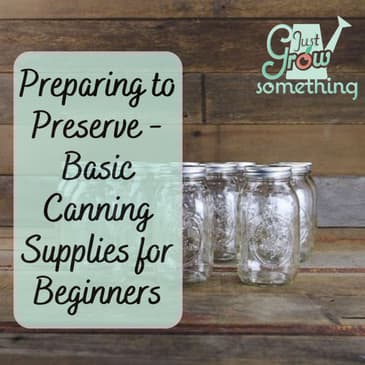
So, today on Just Grow Something we’re going to talk about the basic necessities you need for starting your own canning adventure. We’ll mostly focus on boiling-water canning and what can be safely canned in that manner, but since I jumped head first into pressure canning just a year after I started water-bath canning, we’ll touch on some of the differences in case, you too, are big on confidence but maybe a little shy on knowledge. Let’s dig in!
References and Resources
Vote for me in the Women in Podcasting Awards!
Home Page - National Center for Home Food Preservation (uga.edu)
Ball Complete Book of Home Preserving (Updated Edition)
Hosted by Simplecast, an AdsWizz company. See pcm.adswizz.com for information about our collection and use of personal data for advertising.
00:00:00
When I first started being successful at gardening after we
00:00:03
moved to our five acre homestead, I didn't have any
00:00:06
kind of a plan to speak of. I just decided what I thought we
00:00:11
would eat the most of. I had a rough idea of how much
00:00:13
each plant would produce after looking at a random online
00:00:16
chart, and then I did some quick math and I just planted from
00:00:19
there. And I way over planted.
00:00:23
And even with six kids and two adults in the household and
00:00:26
feeding friends on the weekend, I had plenty leftover.
00:00:30
This was my first introduction to preserving my own food.
00:00:34
I did figure out how to freeze a lot of it, which was a practice
00:00:37
I eventually perfected once I knew what we liked frozen and
00:00:40
what we didn't, and what really needed to be blanched before
00:00:43
freezing and what I could get away with just tossing in a
00:00:46
freezer bag and calling it good. But canning?
00:00:50
That was something I had never attempted.
00:00:52
I hadn't ever even been exposed to it.
00:00:55
But I'm not one to shy away from a challenge, and I regularly
00:00:58
have more confidence than I do since.
00:01:01
So I bought a book. I bought the fewest supplies
00:01:04
necessary on our minuscule budget to do some basic canning.
00:01:08
And I jumped in with both feet. At the end of that season, we
00:01:12
had a shelf full of jams and Pickles, salsa and stewed
00:01:15
tomatoes and pasta sauce. And I was bitten by the
00:01:18
preserving bug. There is something very
00:01:21
satisfying about growing your own food, for sure, and being
00:01:25
able to walk out into the garden to pick your lunch or your
00:01:28
dinner. But in the dead of a Midwest
00:01:31
winter, the ability to be able to shop your own pantry for the
00:01:36
things that you eat the most that you grew, that is a whole
00:01:40
other level. So today on Just Grow Something,
00:01:43
we're going to talk about the basic necessities that you need
00:01:46
for starting your own canning adventure.
00:01:48
We'll mostly focus on boiling water bath canning and what can
00:01:52
be safely canned in that manner. But since I jumped head first
00:01:56
into pressure canning just a year after I started water bath
00:02:00
canning, we'll touch on some of the differences in that too.
00:02:04
Just in case that you too are big on confidence but maybe a
00:02:09
little shy on knowledge. Let's dig in.
00:02:13
Hey, I'm Karen, I started gardening in a small corner of
00:02:16
my suburban backyard and now 18 years later, I've got a degree
00:02:19
in horticulture and operate a 40 acre market farm.
00:02:22
I believe there is power in food and that everyone should know
00:02:25
how to grow at least a little bit of their own.
00:02:28
On this podcast, I share evidence based techniques to
00:02:30
help you plant, grow, harvest and store all your family's
00:02:34
favorites. Consider me your friend in the
00:02:36
garden. So grab your garden journal and
00:02:38
a cup of coffee and get ready to just grow something.
00:02:50
Before we jump with both feet into canning, I want to thank
00:02:54
each and everyone of you who has reached out over the summer via
00:02:58
DMS or e-mail or wherever you're reaching out and who have sent
00:03:02
pictures or just told me tales of your garden.
00:03:07
The number of you who have expressed such joy at the state
00:03:13
of your gardens, the progress you've made, the bounty that
00:03:16
you've grown, it has made me incredibly.
00:03:20
And you've all got things that didn't go well, obviously.
00:03:23
But I love that you're not focusing on that.
00:03:25
You're focusing on the good stuff and on the progress and
00:03:28
the accolades that you're getting from your neighbors or
00:03:30
your mother-in-law. That one was a hoot.
00:03:33
This just tells me that the four years that I have spent running
00:03:38
my mouth on this podcast has indeed helped you as a gardener.
00:03:43
It's showing me that the goal that I set out to accomplish,
00:03:46
which was just to spread good evidence based gardening
00:03:50
information and techniques so that more people could learn to
00:03:53
grow their own food, has absolutely come to fruition.
00:03:57
I cannot thank you enough for sharing your gardening journey
00:04:02
with me and please keep it coming.
00:04:04
I love seeing your pictures and hearing your stories.
00:04:08
And for those of you who maybe haven't had a bounty this year
00:04:10
or you've had nothing but struggles and you're really
00:04:12
having a hard time focusing on the positive, I am always here
00:04:17
to answer questions when you find yourself sort of stuck or
00:04:21
if you just need a little bit of encouragement.
00:04:23
So keep up the great work all of you.
00:04:26
And please don't forget to share.
00:04:29
Also, don't forget to go vote for this podcast in the Women in
00:04:34
Podcasting Awards in the lifestyle category.
00:04:37
You only get one chance to vote in each category and it is
00:04:40
People's Choice. The link is in the show notes
00:04:42
and it's also in today's e-mail. Or you can go to
00:04:45
womeninpodcasting.net/awards and then click on the vote button in
00:04:51
the middle of the page. And it's just find this podcast
00:04:54
under the lifestyle category. I would be ever so grateful if
00:04:57
you did, please and thank you. So let's talk the basics of
00:05:08
boiling water bath canning and then we'll just lean a little
00:05:11
bit into pressure canning toward the end here.
00:05:14
Water bath canning is a very safe method of home food
00:05:18
preservation if it is practiced properly.
00:05:21
OK, the The canning process heats food to a temperature that
00:05:25
destroys microorganisms that could be a health hazard or the
00:05:30
microorganisms or enzymes that can cause food to spoil.
00:05:34
So during this heating process, air is driven from that jar and
00:05:39
then as it cools, it forms a vacuum seal.
00:05:42
And this seal prevents air from getting back into the food,
00:05:46
which could bring microorganisms and bacteria and stuff back in
00:05:49
that will re contaminate the full that that is the whole
00:05:52
premise behind canning, whether or not we're using a pressure
00:05:55
canner or just a boiling water canner.
00:05:58
Now, as you can imagine, it's actually very important to
00:06:01
follow proper canning practices in order to maintain this clean
00:06:05
environment from the beginning and to be sure that we're
00:06:08
keeping out all those little bad buggies from our final product.
00:06:12
This also means that choosing what you plan to preserve is
00:06:17
very important. Also, we want unblemished and
00:06:23
well washed produce. OK Microorganisms will live and
00:06:27
multiply very quickly on the surfaces of our food and then on
00:06:31
the inside of bruised, insect damaged or diseased produce.
00:06:35
So we want to can the best of the best if we can.
00:06:40
If we have bruises, if we have damage, then we need to be
00:06:43
cutting that away before we try to process anything.
00:06:46
Some of these things are going to need to be peeled first.
00:06:48
Some are going to be needing to be heated before they're
00:06:51
actually canned. We call that hot packing.
00:06:54
Some of it is going to need to have acid added in the form of
00:06:57
lemon juice or vinegar. And then they're all going to
00:07:00
need to need to be processed at a specific amount of time in
00:07:05
either the boiling water or if you're doing a pressure canner,
00:07:08
at a specific level of pressure for a correct period of time.
00:07:12
We are using recipes for every single thing that we can.
00:07:16
Now whether it's safe to boil water can or pressure can is
00:07:20
determined by the type of food that you're working with and its
00:07:25
natural acidity level. So we'll talk about that a
00:07:28
little bit here in a minute. And we'll also talk about those
00:07:32
rebel canners, right? So essentially with all canning,
00:07:36
what we're doing is removing the oxygen, we're destroying
00:07:39
enzymes, we are preventing the growth of the undesirables, and
00:07:44
we are forming a good vacuum seal to prevent any of the
00:07:46
undesirables from getting back in again.
00:07:48
Now, I'm not going to talk any specific canning recipes.
00:07:52
We're just going to talk about the basic necessities that you
00:07:56
need to get started and the basic methodology because once
00:08:00
you ick U these items, you literally can dive right in with
00:08:04
any good canning book or any good resource.
00:08:07
Now, I will leave a link to the National Center for Home Food
00:08:12
Preservation in the show notes, and it is also in this morning's
00:08:15
e-mail. This is the most comprehensive
00:08:18
free resource for home canning out there.
00:08:22
It's hosted by the University of Georgia and it has step by step
00:08:26
information for both boiling water and pressure canning with
00:08:31
umpteen numbers of recipes. You want to can something, you
00:08:34
just look it up and it will give you step by step.
00:08:36
It'll tell you how much, how long, all of it.
00:08:39
Right now my go to book from day one has been the Ball Blue Book
00:08:44
Guide to preserving. It is called the Ball Blue Book
00:08:47
and it covers not just canning, but also freezing and
00:08:50
dehydrating too. So does the National Center for
00:08:54
Home Food Preservation website. It also covers freezing and
00:08:57
dehydrating. So there are plenty of
00:08:59
resources. Just a word of caution not to
00:09:03
follow any random recipe that you find on the Internet until
00:09:08
you are well versed in safe canning practices.
00:09:13
There are a lot of rebel canners out there that will tell you how
00:09:18
to do something and they will maintain that it's safe to do it
00:09:22
that way just because it's the way that their grandma did it
00:09:25
for 50 years and nobody ever got sick that they know of.
00:09:30
So just be safe, understand the science and learn the ropes
00:09:36
first so that you know what to look for in a safe canning
00:09:41
recipe before you start following random canning blogs
00:09:44
on the Internet. Please please, please, please.
00:09:46
OK, so let's start with water bath or boiling water bath
00:09:50
canning. The equipment that you need for
00:09:53
this is very basic and very simple.
00:09:56
Of course, just like anything else, there are always all kinds
00:09:58
of fancy things that you can go out and buy to either make it
00:10:01
more fun or make it easier or whatever.
00:10:03
But we're just going to talk the bare bones of what you need and
00:10:07
it's not as much as you might think.
00:10:10
The first thing obviously is a pot that is deep enough to hold
00:10:14
either the pint or the quart size jars and one with a lid.
00:10:18
OK, I started with a 16 quart stock pot and it was more of a
00:10:23
stove pipe shape, so it was a little bit more narrow, but it
00:10:27
was very deep and that was enough to work with in the
00:10:29
beginning. It was a ceramic coated 1.
00:10:32
There are water bath canners, specifically pots that are
00:10:36
designed for this purpose, which I did switch to later on.
00:10:41
And the reason for this is because of the second piece of
00:10:45
pretty much required equipment, and that is a jar wreck.
00:10:49
I didn't have a jar rack when I was using that stock pot.
00:10:52
When I did get a jar rack, it did not fit that stock pot.
00:10:56
A jar rack is designed to hold the racks, hold the racks, hold
00:11:00
the jars in place in the rack, elevated up above the base of
00:11:05
the pot so they're not bouncing around and getting a chance to
00:11:08
crack and they're not banging against each other.
00:11:11
I didn't have that jar rack. I was layering towels in the
00:11:14
bottom of that stock pot to keep them from bouncing around, which
00:11:17
did the job, but there was always a kind of worry that they
00:11:22
were going to bang together. And also with that stock pot,
00:11:26
because it was very deep but also narrow, I could not fit as
00:11:30
many jars inside. So if you have the ability to
00:11:33
get an actual canner with the jar rack, then I would recommend
00:11:37
that. But if you're just starting out
00:11:39
and trying to test the waters to see whether or not this is
00:11:41
really something you want to get into, then a stock pot that's
00:11:44
deep enough to hold your jars and a bunch of layered towels on
00:11:47
the on the bottom is going to do the.
00:11:49
Just make sure that you have them spaced apart from each
00:11:51
other so they're not banging around.
00:11:54
The third thing that I would absolutely recommend having is a
00:11:56
jar lifter. This is like a special set of
00:12:00
tongs that has a little curved section at the end of the tongs
00:12:06
that is designed to fit snugly around the top of the jars
00:12:10
around the neck. I also did not buy one of these
00:12:14
when I first started canning and I should have.
00:12:18
Again, we were on a really tight budget, OK, like a zero, not
00:12:21
even shoestring budget. And I was just using a regular
00:12:24
pair of tongs, first a metal pair and then one that had like
00:12:28
a silicone end to him. And let's just say the number of
00:12:33
times that I either almost dropped the jar completely,
00:12:36
either putting it into the water or pulling it out, or splashed
00:12:39
myself and burned myself with the boiling water because I
00:12:42
wasn't using the proper lifter. Yeah, too many to count.
00:12:45
So if you can get the jar lifter, I absolutely recommend
00:12:48
it. Don't you know chance burning
00:12:49
yourself or breaking a jar open? And then another thing that's
00:12:54
not necessary but is really recommended that I did end up
00:12:58
buying fairly quickly after I started this as a home canning
00:13:01
funnel. It is wider mouthed than like a
00:13:03
regular funnel would be, and it makes it really easy to put
00:13:06
items into the jars without spilling them all over the
00:13:09
place. It just pops right into the top.
00:13:10
I actually use this weekly, not because I'm canning, but because
00:13:15
I'm putting things into Mason jars and it just makes it so
00:13:18
much easier without things falling all over the place.
00:13:20
So it's not, it's not expensive. I would absolutely recommend
00:13:23
picking this up if you use Mason jars for anything, but
00:13:26
specifically if you're going to be canning.
00:13:28
And then one thing that is a sort of nice to have but that I
00:13:33
still don't actually use is there's a special tool for
00:13:36
getting the bubbles out of the jars that also has measuring
00:13:41
marks on it so you can measure your headspace.
00:13:43
So these are two things that you will come to know are important
00:13:47
to do #1 is to remove the bubbles out of the jars before
00:13:51
you put the lid on them to put them in the water.
00:13:54
And the other thing is to measure the headspace because
00:13:58
every recipe is going to tell you that you need the amount of
00:14:01
distance that you need to have between the top of the product
00:14:03
that you are canning and the top of the jar.
00:14:06
It could be 1/4 inch, 1/2 inch, it could be a full inch.
00:14:09
This is to help facilitate the ability to form a proper a seal,
00:14:14
a proper vacuum, right? I still don't have this tool.
00:14:19
I, you know, I don't really need it.
00:14:21
I just use a small skinny silicon spatula as a way to get
00:14:26
the bubbles out. And then I just use a ruler.
00:14:28
I always have a ruler in my kitchen anyway, so I just pull
00:14:31
it out and measure the head space.
00:14:32
And over the years I've gotten really good at just eyeballing
00:14:34
it and I don't even have to use that anymore.
00:14:36
But a lot of the times you can buy a kit that comes with the
00:14:40
canner and the jar rack and the lifter and the funnel and it
00:14:43
will include this tool. So heck, you might as well,
00:14:46
right? And then of course, finally you
00:14:48
need to have jars and lids. Now you want jars that are
00:14:53
specific to canning. Do not use like leftover pickle
00:14:58
jars or leftover pasta jars or you know, whatever, and the lids
00:15:01
that go with that. For canning your HomeGoods, you
00:15:04
need jars that are specifically tempered to withstand the heat
00:15:07
from canning, whether that is boiling water or pressure
00:15:10
canning. If it's a canning jar, it can
00:15:12
handle both. And then you also want the two
00:15:15
piece lids with rings. And so you when you buy these,
00:15:20
you will see the lids are flat. That's the flat piece that has
00:15:24
the rubber gasket that goes around on the top of the jar.
00:15:27
And then there is a ring that goes along with it that allows
00:15:30
you to hold that lid in place while the canning is happening.
00:15:35
Once it's done, that lid isn't going to move anywhere because
00:15:39
it's vacuum sealed in place. So that lid is really or that
00:15:42
lid, that ring is really only needed for the beginning part of
00:15:46
the process to when you're lowering the jars into whatever
00:15:50
canner it is that you're using. You should not reuse these lids.
00:15:56
Again, Rebel Canners will tell you you can boil them with I
00:16:00
think baking soda in water to refurbish the, you know, the the
00:16:06
rubber gasket to make it usable again, this is not safe.
00:16:10
These lids are actually intended to be one time use only.
00:16:14
And so you have no idea whether or not it's actually going to
00:16:16
get the proper seal the second time.
00:16:18
So when you're just starting out doing this, please don't use
00:16:21
those lids or reuse those lids. There are reusable lids.
00:16:25
I think they're glass actually, and they are very expensive.
00:16:30
So if you're not sure whether or not you're going to continue
00:16:33
with this whole canning thing, I would definitely recommend just
00:16:37
getting the inexpensive two piece lids with the rings.
00:16:40
And then later on down the road, if you decide that you want to
00:16:42
invest in something like reusable lids, that is fine.
00:16:45
So that's it. That is all that you need for
00:16:49
your basic water bath canning. OK, now in terms of what you're
00:16:54
going to do, every single thing that you want to can, tomatoes,
00:16:59
salsa, jams and jellies, whatever it is, is going to have
00:17:03
a recipe. And by recipe, I don't
00:17:05
necessarily mean all of the ingredients that go into it.
00:17:09
Even if it's a single ingredient that you are canning up, we
00:17:12
refer to it as a recipe because it's telling you how to prepare
00:17:16
that item before you put it in the jar.
00:17:18
Whether or not you need to heat it up before it goes into the
00:17:21
jar or not, whether or not you need to add any additional acid
00:17:26
to modify the PHA little bit. That's what we refer to as the
00:17:30
recipe, OK? And it's going to tell you about
00:17:32
how many pounds of this vegetable or whatever you need
00:17:34
and about how many quarts or pints it will it will yield for
00:17:39
you. So after you get through the
00:17:41
recipe, the method by which you boiling water bath can is the
00:17:46
same regardless. Essentially, you are going to
00:17:49
fill up your pot around halfway full of water and you're going
00:17:53
to sterilize the jars and the bands.
00:17:55
And you always want to check your jars for damage every time
00:17:59
you use them. One tiny little nick or crack
00:18:02
can cause the entire thing to fall apart basically in the
00:18:07
canner. And then you're going to have
00:18:08
glass and food all in the water and that is just not a bad a
00:18:11
good thing. So make sure you're checking
00:18:13
them every time you use them. You're going to Preheat these
00:18:16
jars in the canner while you are working on your recipe.
00:18:19
And then once those jars are heated all the way through and
00:18:22
you've got your recipe prepared, then you just fill them one jar
00:18:25
at a time. They are going to be hot.
00:18:27
This is why I definitely recommend that jar lifter.
00:18:31
Pull it out. You're going to fill it up,
00:18:33
you're going to wipe the rim, you're going to put the lid and
00:18:35
the ring on it, and then you're going to put it back into the
00:18:37
pot. By the time you fill all of your
00:18:40
jars and have them all back in the pot again, the water should
00:18:45
be covering the jars by about two inches.
00:18:47
If not, make sure you add more water.
00:18:50
Then you put your lid on your pot and you bring the pot to a
00:18:54
boil. Every one of your recipes is
00:18:57
going to tell you exactly how long to boil the jars based on
00:19:03
the size of the jar. So pints are a little bit
00:19:06
shorter usually than what it does for quarts.
00:19:08
So it may say 25 minutes, it may say an hour.
00:19:11
Whatever it is, you start your timer when the pot starts to
00:19:15
boil, and you keep that pot boiling until it says your time
00:19:19
is done. You turn off the water, you let
00:19:21
it rest for 5 minutes. You pull the jars out again with
00:19:24
your jar lifter here, and then you put them on a towel in a
00:19:28
spot where they're not going to be bumped or disturbed in any
00:19:31
way for about 12 hours. You're going to see when you put
00:19:35
this stuff onto the towel, all that stuff in the inside of
00:19:39
those jars is going to continue bubbling and gurgling and all
00:19:42
that air is going to continue to push out the top.
00:19:44
And then you will start to hear the lids make the ever so
00:19:48
satisfying popping sound when they create the vacuum.
00:19:53
You don't want to touch them because you don't want to
00:19:55
disturb this process. So after 12 hours, then you just
00:19:59
go through and you make sure that you have a good seal on
00:20:02
them and that's it. You have canned whatever it was
00:20:05
that you just pulled out of your garden, right?
00:20:08
And then you go ahead and and get them ready to store.
00:20:11
So what can be water bath canned safely and what can't be most of
00:20:20
our high acid foods? Or foods that are fairly close
00:20:24
and can have their pH adjusted slightly by using vinegar or
00:20:28
lemon juice are safe for water bath canning.
00:20:31
So think about fruits that we're turning into sauces or jams or
00:20:35
jellies, tomatoes and salsas, Pickles, relishes, chutneys and
00:20:42
vinegars, right? These are all high acid things
00:20:44
or tomatoes and salsa, even though sometimes they're not
00:20:47
quite as high acid and they're at their acidity can be
00:20:50
variable. That is why we add the lemon
00:20:54
juice. And again, this also, that's why
00:20:57
we use vinegar, right? It is very important to follow
00:21:00
the directions on your recipe exactly because if you add too
00:21:03
little of the lemon juice or the vinegar, it can actually make
00:21:06
the recipe unsafe. Now you notice I didn't mention
00:21:11
anything about green beans or sweet corn that you've taken off
00:21:14
the cob. It does not matter if your
00:21:16
grandma always canned her green beans by just adding a pinch of
00:21:19
salt and throwing it into a boiling water bath canner for an
00:21:21
hour and a half and then threw them on the shelf.
00:21:25
Just because nobody ever got sick that you know of does not
00:21:29
mean that that is a Safeway to do it.
00:21:31
Vegetables like green beans and sweet corn do not contain enough
00:21:36
acid to preserve them without the addition of pressure.
00:21:41
And this is where pressure canning comes in.
00:21:43
Now, I know many people are intimidated or even downright
00:21:47
scared of pressure canning because either they've seen
00:21:50
horrific images of exploded canners all over someone's
00:21:54
kitchen, or just the thought of putting anything under pressure
00:21:58
in their kitchen makes them nervous and they would rather
00:22:00
not mess with it. I understand that completely,
00:22:05
but let me tell you, once you know how to safely can things in
00:22:09
a pressure canner and you move past that fear of the unknown,
00:22:13
using a pressure canner opens up a whole new world of things that
00:22:19
you can preserve on your own. But there's still a few things
00:22:23
that you shouldn't. OK, so pressure canning is
00:22:28
necessary for low acid foods that cannot be acidified.
00:22:32
So green beans, sweet corn, meat, anything with a pH that is
00:22:37
higher than 4.6. It is the only safe method of
00:22:41
canning low acid foods Now because this is a why behind the
00:22:45
how show, right? Let's talk about the science.
00:22:48
It is because the pressurized steam inside the canner creates
00:22:54
a temperature of above 240°F above the ability for us to the
00:23:00
temperature that we can get to with boiling water on its own.
00:23:04
So it's the pressure in the inside after we have removed all
00:23:07
of the air that gets it above 240 Fahrenheit and that destroys
00:23:12
the bacterial spores that are naturally present in these low
00:23:15
acid foods. Those are spores that are
00:23:19
responsible for things like Botulism and other nasty buggies
00:23:22
that can make us sick. So as the jar cools after being
00:23:26
pressurized, that vacuum is formed.
00:23:28
It seals in the food. It prevents any new buggies from
00:23:30
getting in and spoiling our harvest.
00:23:32
OK, so let's clear up a few things about the dangers of
00:23:38
pressure canning really quick. Most modern pressure canners are
00:23:43
fairly lightweight thin walled kettles.
00:23:45
They have turn on lids that are fitted with gaskets.
00:23:48
Some of them are also still screwed down and they don't have
00:23:51
gaskets. If you're looking at the all
00:23:53
American canner, they all have removable racks.
00:23:55
They have automatic vent and cover locks and steam vents or a
00:24:01
vent pipe and a safety fuse. OK.
00:24:04
All of the canners that I have seen that are approved for
00:24:08
canning have the Underwriters laboratory approval to ensure
00:24:12
their safety. That UL listing, I'm not sure if
00:24:15
that's an international thing. I know that's a US thing.
00:24:18
They usually have a dial gauge for indicating the pressure or a
00:24:23
weighted gauge for indicating the pressure.
00:24:25
It depends. You have to read your
00:24:26
manufacturer's directions. Pressure canners were very, very
00:24:31
heavily redesigned around the 1970s.
00:24:34
So if you have seen a picture of an exploded pressure canner, it
00:24:38
likely is one from prior to that era where they were very, very
00:24:43
heavy walled and thick, but they didn't have a whole lot of
00:24:47
safety features. All of the common or the modern
00:24:52
pressure canners now have all of these safety features in place.
00:24:55
In fact, the one that I use I actually found at a barn sale.
00:24:59
It is a Presto 23 quart. I'm fairly certain it's from the
00:25:03
late 70s. I completely replaced all of the
00:25:06
seals and had the pressure gauge checked and everything else and
00:25:09
I have been using it ever since. It is a regular stove top on my
00:25:13
gas stove version and I probably could not over pressurize that
00:25:20
thing if I tried because there are multiple places for that
00:25:23
steam to vent if the pressure got too much.
00:25:26
So once you try it and you get some practice with it, there
00:25:31
should be no reason why you are afraid of your pressure canner.
00:25:36
Do you need to pay attention to it?
00:25:37
Absolutely. I mean, you're cooking something
00:25:39
essentially under pressure, right?
00:25:42
We don't want to be, you know, silly about it, but we shouldn't
00:25:45
be scared of it either, OK? The essentials for canning in a
00:25:50
pressure canner are essentially exactly the same as what we use
00:25:54
with a boiling water canner with the addition of a pressure
00:25:57
canner. That's it.
00:25:59
And let's be clear also, when you are looking to upgrade to a
00:26:02
pressure canner, you are looking for a pressure canner, not a
00:26:06
pressure cooker. OK?
00:26:07
Do not confuse the two. The old school stove top canners
00:26:11
like mine absolutely can be both a canner and a cooker.
00:26:16
But those modern electric pressure cookers like your Insta
00:26:20
pots and your Prestos, those are not necessarily a canner.
00:26:24
There are a few electric ones out there that claim that they
00:26:28
are electric canners, but just understand that those have not
00:26:33
been independently tested to be sure that they are getting to
00:26:37
the proper temperature, that the food in the inside is getting to
00:26:41
the proper temperature. So take that for what it is,
00:26:45
make sure that you know what you are looking for and make sure
00:26:48
that you're getting a pressure canner and not a cooker.
00:26:50
OK, Now, just like with the boiling water bath, I'm not
00:26:53
going to go into the in depth instructions on how to pressure
00:26:56
can. I would reference you to the
00:27:00
National Center for Home Food Preservation or that Ball Blue
00:27:03
Book. The steps are almost as basic as
00:27:07
the boiling water bath canner. You just have to pay a little
00:27:10
bit more attention so that you maintain the correct pressure
00:27:14
within your pressure canner if you allow the pressure to dip
00:27:17
below the required level, which is going to be based on where
00:27:20
you are at sea level. So like where I am in the
00:27:23
Midwest, we do it at 11 PSI. If I start the timer on on my
00:27:28
canning at when it hits 11 PSI and I'm not paying attention to
00:27:34
make sure that I have maintained that proper pressure and it
00:27:36
drops below that 11 pounds. Well then now I got to get it
00:27:40
back up to £11.00 and I got to start my timer all over again.
00:27:43
So you just have to make sure that you're paying attention and
00:27:46
it takes a little bit of practice, but it is not
00:27:48
difficult. The rest of the setup is
00:27:50
essentially the same as the boiling water method, but you
00:27:53
just follow the manufacturer's instructions for your canner to
00:27:56
get to and maintain the pressure.
00:27:58
I will say the one thing that you should not skip in pressure
00:28:03
canning is the venting phase. So when you are starting to get
00:28:09
your canner up to pressure, you turn the heat to high and you
00:28:13
watch that steam escape coming out of the vent.
00:28:16
You need to let that steam escape for a full 10 minutes.
00:28:20
Remember what we talked about, the reason why pressure canning
00:28:24
gets to a higher temperature is because that pressurized steam
00:28:27
in the inside allows for that higher temperature.
00:28:31
If there is extra air in there that has not escaped, it's going
00:28:36
to affect its ability to be able to get to that temperature.
00:28:38
So this is very, very important. Do not skip this step.
00:28:43
Otherwise, everything else just follow, you know, go to National
00:28:46
Center for Home Food Preservation, get yourself
00:28:48
another trusted source, and just take it step by step.
00:28:52
Once you have a pressure canner, there are so many more things
00:28:56
that you can preserve. You can do your green beans and
00:28:58
your sweet corn, but you can also do carrots and baked beans
00:29:01
and stews and soups with meat in them and chili and whole baby
00:29:06
potatoes. Like the possibilities are
00:29:08
almost endless. And I say almost endless because
00:29:12
there are things that shouldn't be canned, whether or not you're
00:29:15
doing it in a boiling water bath, canner or a pressure
00:29:17
canner. Things like dairy, OK milk,
00:29:20
butter and cheese, fats like lard and oils, Grains, mostly
00:29:26
because you kill off the nutrients, but also because they
00:29:28
can go rancid really quickly. So no rice or quinoa.
00:29:31
And then very densely packed foods.
00:29:34
So think about mashed items like pumpkins or winter squashes or
00:29:37
potatoes. You can cube them and can them
00:29:40
up. But mashed is not or pureed is
00:29:44
not a good way to go if the heat in our home canning situations
00:29:47
just kind of struggles to get through the dense layers of
00:29:52
mashed and pureed foods. And so we don't know that the
00:29:56
center of that product is getting hot enough to kill off
00:30:00
the bacteria that we're worried about.
00:30:02
So that basically makes them unsafe for pantry storage.
00:30:05
So if you're going to cube, if you're going to cube, if you're
00:30:06
going to can things like pumpkins or winter squashes or
00:30:10
potatoes, just make sure that they are cubed or they are
00:30:12
chunked. They are not mashed up.
00:30:15
And again, that doesn't mean that there aren't rebel canning
00:30:18
recipes out there. It just means that there aren't
00:30:20
any tested recipes through university extension services or
00:30:26
independent, you know, facilities that have proven
00:30:30
those recipes to be safe. So make sure that you pick your
00:30:33
recipes with caution. Now, how should you store your
00:30:42
canned goods? Assuming that you are using the
00:30:44
most common two piece lids and that they are tightly vacuum
00:30:47
sealed on completely cooled jars, we want to remove the ring
00:30:51
bands. Wash the lid and the jar to
00:30:54
remove any of the food residue. We don't want to disturb the
00:30:56
seal. So don't scrub, scrub, but just
00:30:57
make sure it's nice and clean. Dry them off.
00:31:00
Now, it is recommended that you store the jars without the ring
00:31:04
bands only because it makes it easier to figure out if any of
00:31:07
your vacuum seals break while they're in storage.
00:31:11
But if you do choose to reapply the ring bands, just make sure
00:31:14
that all of your surfaces are clean and dry first before you
00:31:16
do that. Once this is all done, you want
00:31:18
to label and date the jars and then storing them in a cool,
00:31:23
clean, dark, dry place is your best method.
00:31:27
So between 50 and 70°F or 10 to 21 Celsius Celsius Celsius.
00:31:34
Wow. And do not store them at above
00:31:39
95°F or 35 Celsius, which means don't put them in your basement
00:31:43
near any hot pipes or near a stove or a furnace or in the
00:31:47
direct sunlight, like don't stick it near a window.
00:31:49
The idea is cool, dark and dry, right?
00:31:51
This is best quality and for the best shelf life.
00:31:54
And I do recommend periodically checking the jars just to be
00:31:58
sure that the seals are still intact, because that discovery
00:32:01
when you go to use a jar and it's popped open and you have no
00:32:06
idea how long it's been popped open, yeah, that is a nasty
00:32:08
surprise that nobody wants. So anytime you go to grab
00:32:12
something out of your pantry, I would recommend checking the
00:32:15
other lids just to be on the safe side.
00:32:17
So hopefully that gives you a jump to just kind of get started
00:32:21
in canning. Get the basics first, get a good
00:32:24
resource for step by step instructions and this just jump
00:32:27
in as you get familiar with the process, you can decide if you
00:32:31
want fancier tools or upgraded equipment.
00:32:34
But remember the main goal is to preserve that home grown
00:32:39
goodness that is coming out of your own garden.
00:32:43
Until next time, my gardening friends, keep on cultivating
00:32:45
that dream garden, and we'll talk again soon.
00:32:47
Thanks for listening to another episode of the Just Grow
00:32:50
Something podcast. For more information about
00:32:52
today's topic and to find all the ways you can get in touch
00:32:55
with me or support the show, go to justgrowsomethingpodcast.com.
00:32:59
Until next time, my gardening friends, keep learning and keep
00:33:02
growing.