
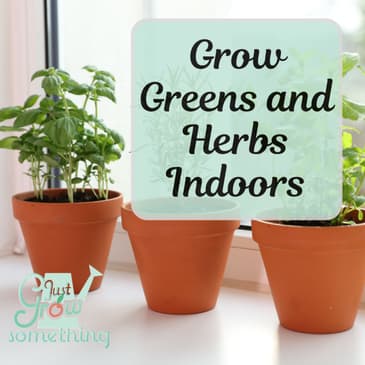
When the garden beds are frozen, the days are short, and you’re staring at bags of store-bought salad mix, it can feel like fresh homegrown food is a long way off. But it doesn’t have to be.
Today on Just Grow Something we’re talking about growing herbs and leafy greens indoors in winter—on a windowsill, under a simple grow light, or with one of those countertop indoor garden systems
If you’ve ever thought:
• “I’d love fresh basil in January.”
• “My house is too dark to grow anything.”
• Or, “Are those indoor garden gadgets actually worth it?”
This episode is for you. Let's dig in.
References and Resources:
How Do We Measure Light: https://gardeningsolutions.ifas.ufl.edu/plants/houseplants/light-for-houseplants/
University of Minnesota Extension. “Growing Herbs Inside is Easy and Healthy.” 2022. https://extension.umn.edu/news/growing-herbs-inside-easy-and-healthy
Penn State Extension. “A Step-By-Step Guide for Growing Microgreens at Home.” 2023. https://extension.psu.edu/a-step-by-step-guide-for-growing-microgreens-at-home
Just Grow Something: https://justgrowsomething.com
Just Grow Something Merch and Downloads: https://justgrowsomething.com/shop
Just Grow Something Gardening Friends Facebook Group: https://www.facebook.com/share/g/18YgHveF5P/
Check out how you can become a patron on Patreon: https://www.patreon.com/JustGrowSomething
Bonus content for supporters of the Podcast: https://buymeacoffee.com/justgrowsomething
Amazon storefront: https://www.amazon.com/shop/justgrowsomething
Hosted by Simplecast, an AdsWizz company. See pcm.adswizz.com for information about our collection and use of personal data for advertising.
00:00:00
So when the garden beds are frozen and the days are short
00:00:03
and you're staring at bags of store bought salad mix, it can
00:00:07
really feel like our own fresh homegrown produce is a long way
00:00:11
off. But it doesn't have to be.
00:00:13
Today. under score something we're going to talk about
00:00:16
growing herbs and leafy greens indoors in the winter time.
00:00:19
So on a windowsill or under a simple grow light, or in one of
00:00:23
those countertop indoor garden systems that you've seen.
00:00:26
If you've ever thought that your house is too dark to grow
00:00:29
anything, or wondered whether those indoor garden gadgets
00:00:33
actually work, then that's what we're covering today.
00:00:37
Why greens and herbs are the best indoor crops for winter,
00:00:40
What you can realistically grow inside, the basics of indoor
00:00:44
light, some DIY setups compared to the store bought ones, and a
00:00:48
step by step for a simple indoor greens or herb setup.
00:00:52
By the end you will have a clear sense of what to grow, where to
00:00:55
put it, and whether you want a DIY setup or a purchase system
00:00:59
or a mix of both. Let's dig in.
00:01:02
Hey, I'm Karen and what started as a small backyard garden 20
00:01:05
years ago turned into a lifelong passion for growing food.
00:01:09
Now as a market farmer and horticulturist, I want to help
00:01:12
you do the same. On this podcast, I am your
00:01:15
friend in the garden, teaching evidence based techniques to
00:01:17
help you grow your favorites and build confidence in your own
00:01:20
garden space. So grab your card and journal
00:01:23
and a cup of coffee and get ready to just grow something.
00:01:30
So honestly, you can try to grow almost anything indoors, but
00:01:36
that doesn't necessarily mean that it's efficient, right?
00:01:39
So over and over again we see the research from university
00:01:42
extension programs that show that leafy crops and herbs are
00:01:46
simpler and faster to grow indoors than fruiting crops.
00:01:51
They need lower or light levels, they take up less space, and
00:01:54
they mature more quickly, especially when they're grown as
00:01:57
like baby greens or microgreens. So this honestly makes those
00:02:01
leafy greens and herbs ideal for growing indoors in the winter
00:02:05
time because they fit in small spaces, they don't demand
00:02:09
intense light like tomatoes or Peppers, and you can harvest
00:02:13
them repeatedly from the same container.
00:02:15
And some of them, especially if you're doing like microgreens,
00:02:19
those can be ready in just a few days to a couple of weeks.
00:02:23
And from a nutrition standpoint, microgreens and fresh herbs are
00:02:27
very dense in vitamins and phytochemicals.
00:02:30
So even a small harvest of them can add a lot of value to our
00:02:35
winter meals. And I know like around here in
00:02:38
the summertime, we get really hyped up for tomato and cucumber
00:02:41
salad. Like it's just one of our
00:02:43
staples that we eat multiple times a week.
00:02:45
And as it starts to get into like the long dark days of
00:02:49
winter, I kind of would love to have a really fresh cucumber and
00:02:53
tomato salad. And the store bought produce
00:02:56
just doesn't compare. But it's also not worth the
00:03:00
effort and the setup that it would take to be able to grow
00:03:03
those things myself indoors. So I just say, OK, forget it.
00:03:07
We're going to focus on like the leafy salads, which is fine.
00:03:11
That's that makes us a little bit more appreciative of, you
00:03:14
know, what we get in the summertime in terms of those
00:03:16
tomatoes and there's cucumbers. So there is something to be said
00:03:20
for sticking with seasonality, but there is also something to
00:03:23
be said for adding some of that fresh nutrition to our winter
00:03:27
meals that oftentimes are very like meat and starch heavy.
00:03:31
So instead of fighting to try to ripen indoor tomatoes in, you
00:03:36
know, December, January, February, it's just usually more
00:03:39
productive to focus on cut and come again, salad greens and the
00:03:45
fairly easy to grow culinary herbs, you know, parsley,
00:03:48
cilantro, thyme, basil, chives, mint.
00:03:50
And then microgreens of some really common vegetables like
00:03:54
broccoli and kale and radish and peas, even sunflower.
00:03:58
Those are some of my favorite microgreens.
00:03:59
So we're just sort of going to stay in that lane today.
00:04:02
OK, so let's break down your main crop options for a winter
00:04:07
indoor setup. And the first one would be
00:04:09
herbs. Herbs adapt well to either
00:04:12
indoor window sills or some sort of a counter type system if they
00:04:17
get enough light. So really good indoor candidates
00:04:21
for this that can either be dug up and brought into overwinter
00:04:26
and be harvested off of, or that can be just grown specifically
00:04:30
for the indoors would be parsley, cilantro, chives, mint,
00:04:36
oregano, and thyme. These do well with a little bit
00:04:41
of less light. Most herbs do need about 6 to
00:04:45
hours, 6 to 8 hours of bright light indoors, preferably like
00:04:51
direct sun. If you want to do some more of
00:04:54
the warm, you know, heat loving herbs that do need more light
00:04:58
like basil or dill or even Rosemary.
00:05:02
I mean Rosemary, you know, if you're bringing in a large
00:05:07
specimen of Rosemary that was outside and you're just kind of
00:05:10
keeping it either in a stasis or a dormant state to put back out
00:05:15
again in the spring, that's one thing.
00:05:17
But if you want to actively harvest off of of it and you
00:05:20
want it to continue to grow, or if you're starting smaller ones,
00:05:23
then they definitely need more light.
00:05:26
These are the ones that you might need to give a little bit
00:05:29
more light to. In terms of an artificial light,
00:05:32
basil especially, I have found it can be very difficult to keep
00:05:36
basil going just in a sunny windowsill unless it gets really
00:05:40
gets a good amount of light and you kind of rotate it so it
00:05:43
doesn't lean. But anything less than that, I
00:05:46
find that basil gets really leggy and so either I am just
00:05:51
growing it for a very short period of time, harvesting all
00:05:54
of it and then starting over again, or I am giving it some
00:05:58
additional lights. OK, the second category of these
00:06:03
would be your leafy greens. So lettuce, baby kale, mustard,
00:06:06
baby Asian greens, these all do really well indoors as long as
00:06:10
they have adequate light. They have a short production
00:06:13
time, often just a few weeks to harvest as baby leaves.
00:06:17
They also have shallow root systems so they are going to do
00:06:21
really well in smaller containers.
00:06:24
They also have a tolerance for those cooler temperatures too.
00:06:27
So if your temperature is indoors in your house are are
00:06:32
fairly cool by comparison to like what the summer
00:06:35
temperatures would be outside, then these are doing just fine.
00:06:38
So these are not heat loving crops that are going to really
00:06:40
need to have a whole lot of warmth.
00:06:43
You're generally not going to grow like full heads of lettuce
00:06:49
in a tiny pot. You can, and you can do this in
00:06:52
a larger container, something that is about the size, you
00:06:55
know, like a quart sized nursery pot and it's going to take up
00:07:00
the entire pot. But you may not have the space
00:07:03
to do multiples of those. So if you can do baby leaf mixes
00:07:07
in trays or in shallow bins or do some compact varieties like
00:07:12
in window boxes or small tubs, then that's going to work for
00:07:15
you too. And then we have to mention
00:07:18
microgreens. You know, they kind of deserve
00:07:19
their own category. Essentially a microgreen is just
00:07:23
a mini plant, right? You're, you're growing them very
00:07:25
densely in shallow trays and you're harvesting them very
00:07:29
quickly. I mean, usually most of our
00:07:31
microgreens are going to be ready to harvest in about the
00:07:34
seven to 10 day mark. Some of them will take as long
00:07:37
as three weeks. You can often do these year
00:07:41
round depending on what it is that you're growing.
00:07:43
So common microgreens would be broccoli, cabbage, kale, peas,
00:07:49
sunflower. These are all pretty mild in
00:07:51
flavor. Then you have the more spicy
00:07:53
ones, so like radish and mustard and arugula.
00:07:56
You can do basil as a mini microgreen.
00:07:59
Like there are so many different ways that you can grow
00:08:02
microgreens or so many different varieties and types to kind of
00:08:05
mix and match to get different flavor profiles or get different
00:08:10
sort of textures and mouthfeel. Like I love sunflower shoots,
00:08:15
sunflower microgreens, but not everybody, everybody does
00:08:18
because they're kind of succulent.
00:08:20
Tea is the only way that I can, I can describe the texture, but
00:08:24
the flavor truly just tastes like you are eating sunflower
00:08:27
seeds, but it's in a green plant, right?
00:08:30
Peas, same thing You get that, you know, different texture
00:08:34
going and it tastes like you are eating sweet peas.
00:08:36
All of these taste like their adult counterparts.
00:08:40
You know, mini little broccoli. Microgreens taste like broccoli.
00:08:44
They just have a different texture.
00:08:46
As a matter of fact, I actually really like broccoli microgreens
00:08:49
and I don't eat heads of broccoli very often.
00:08:52
Right. I like broccolini, but I'm not a
00:08:54
huge, you know, consumer of like a head of broccoli, but I will
00:08:58
eat a ton of broccoli microgreens and they're great
00:09:01
either on their own or in salads.
00:09:03
I'm super, I'm a huge proponent of microgreens, especially if
00:09:06
you need something fresh in the house in the winter and you
00:09:09
don't have a whole lot of room because really with microgreens,
00:09:12
all you need is a tray. It's about one to two inches
00:09:15
deep and you can use a soil less growing medium of some sort.
00:09:20
So coconut coir or a hemp mat of some sort or some of these don't
00:09:25
even really even need to have a medium.
00:09:28
You can do these like in a in a Mason jar.
00:09:30
Just give them some consistent moisture and a sunny window or
00:09:33
just a very simple grow light and that's all you need.
00:09:36
They're going to grow for you. And from a space efficiency
00:09:39
standpoint, microgreens are probably one of the easiest ways
00:09:43
to get frequent harvests from a very small footprint in the
00:09:47
winter time. So when it comes to indoor
00:09:51
growing, light is usually the biggest constraint.
00:09:55
Like almost every extension article on indoor herbs or
00:09:59
greens leads with that point. So let's talk about window sill
00:10:04
light versus like grow lights AS facing window, if you're here in
00:10:09
the Northern Hemisphere is usually going to give you the
00:10:12
strongest light in winter. But for some people that's not
00:10:17
an option, whether it's because you're, you know, you don't have
00:10:20
any S facing windows or like me, your S facing windows are all
00:10:25
covered by trees. And so yes, at this time of
00:10:28
year, that is where the light is coming in.
00:10:30
But I have heavy tree cover to the South of my house so you can
00:10:35
use an east or West window. It can work for herbs or greens
00:10:39
that tolerate slightly less light, but they are not going to
00:10:43
be enough for like basil or really dense growth of like
00:10:48
salad greens. So in this instance you might
00:10:50
need to add something additional.
00:10:53
I will say I have an E facing window so I get the morning
00:10:57
light. I do still tend to get that
00:11:00
morning light even at this stage of the game, you know, based on
00:11:04
how far South the the sun is in the winter time.
00:11:08
But I also have a fluorescent light that's in that window as
00:11:10
well. So I get the morning light, but
00:11:14
then I also have that fluorescent light on for
00:11:16
basically the rest of the day. So anything that I have in that
00:11:19
window does get a combination of those things.
00:11:22
So that is something to think about.
00:11:24
If you have a window that maybe isn't, you know, perfectly ideal
00:11:29
at this time of the year, you can add an additional light.
00:11:31
But we do have to pay attention to those obstructions.
00:11:33
Like I said, my trees or if you have an awning or if you have a
00:11:36
very deep window recess, that's going to, you know, reduce that
00:11:40
that light intensity very significantly.
00:11:42
OK, Light intensity indoors is often described in foot candles.
00:11:47
So I'm going to link to an article for interior plants.
00:11:52
That category categorizes each one of these things.
00:11:56
Low light is roughly 25 to 75 foot candles, Medium is 75 to
00:12:01
500, high is 500 to 1000. So if you think about this, a
00:12:05
bright S window on a very clear day might give you anywhere
00:12:10
between 250 to up to 1000 foot candles, which is usually
00:12:15
perfect for herbs and leafy greens if that window does not
00:12:18
have any obstructions. But if your space falls into
00:12:21
more than medium or low category, you can still grow
00:12:25
something, but your choices are going to be a little bit more
00:12:28
limited unless you add grow lights.
00:12:30
Now, grow lights don't necessarily need to be
00:12:34
specifically indoor growing lights.
00:12:38
OK, we've talked about this before.
00:12:40
I'm going to reiterate it. Your your your grow lights can
00:12:44
just be any type of simple artificial lighting.
00:12:47
All right? This can be an LED light.
00:12:51
This can be a fluorescent light. These do not have to be specific
00:12:55
grow lights in a full spectrum. OK.
00:12:58
Herbs and leafy greens generally need, you know, a minimum of six
00:13:03
hours. I find that to be, you know,
00:13:05
that tends to get them a little bit leggy.
00:13:07
So if you want to get closer to 8 to 10 hours of light per day,
00:13:12
either under fluorescence or under an LED for steady growth.
00:13:16
So again, if you have a situation where you have a
00:13:19
window that gets maybe a little bit of natural light but not
00:13:22
quite enough, and you can put a light in that window to get you
00:13:26
to that 8 to 10 hours a day, then you are golden.
00:13:30
We typically want to keep these lights, whatever you're using,
00:13:34
about four to 12 inches above the foliage, depending on, you
00:13:39
know, the fixture, what it is that you're using.
00:13:41
We were trying to hit that happy spot where it's not so close to
00:13:45
the plants that it's scorching the leaves, but it's not so high
00:13:49
up that the plants are trying to stretch to reach the light.
00:13:52
So you might have to play with this a little bit.
00:13:54
LED lights are definitely more efficient.
00:13:57
They also put off less heat. So if you have, you know, older
00:14:01
fluorescent fixtures, they might give off a little bit of heat
00:14:05
and that might influence your growth as well, either
00:14:09
positively or negatively, depending on how cold your
00:14:11
window is or where you're setting this up.
00:14:14
It you just, you have to keep in mind this does not have to be
00:14:18
complex, OK? You're just trying to grow a
00:14:20
fruit, a few salads. So a basic LED shop light is
00:14:22
going to be just fine. You can get an all-purpose, you
00:14:27
know, LED light and pop it up over top.
00:14:29
If you really want to go and get an actual like grow light, you
00:14:33
can buy those grow light bars that pop up over top of your of
00:14:38
your plants. It doesn't have to be an entire
00:14:41
giant setup. OK, so let's look at the DIY
00:14:45
options first, things that you can put together with relatively
00:14:48
simple materials. You know, you might do a window
00:14:52
garden, you might just do containers on shelves, or you
00:14:55
can sort of set up an an indoor greenhouse.
00:14:59
Those shelving units that have a little pop up over top of them.
00:15:03
You can create one of those yourself.
00:15:05
OK, the window sill garden, again, best for like your herbs
00:15:10
and your small greens that are in a truly bright window.
00:15:12
So AS facing window or a very bright east or West window.
00:15:16
All you need is just containers that are about four to six
00:15:19
inches deep that have some drainage.
00:15:21
You likely you're going to want to put a saucer or a tray
00:15:23
underneath there to catch the excess water.
00:15:25
And then just a really good potting mix or a container mix.
00:15:29
We are not using garden soil here.
00:15:30
We don't want to #1 bring in any, you know thing from the
00:15:33
outside, but also garden soil is going to be a bit too heavy to
00:15:37
be in a container. OK, so we definitely want a
00:15:40
potting mix here. Fill the containers with that
00:15:43
moistened potting mix. Sow your seeds or plant your,
00:15:46
you know, transplant your small herbs to start with.
00:15:49
Make sure that you place them as close as possible to the glass
00:15:53
in your window so that they get that full sort of spectrum of
00:15:58
light. But you also want to sort of
00:15:59
avoid cold drafts that could chill the roots in if you're in
00:16:03
a very cold climate. So if you are way north of me
00:16:06
here in the US, like you're up in Minnesota or something like
00:16:09
that, you might not want them right up against the glass
00:16:12
because you know how cold that glass gets, right?
00:16:14
So you might want to pull them back just a little bit.
00:16:16
And then you want to rotate those pots regularly so that all
00:16:19
of the sides kind of receive the light and the growth stays more
00:16:22
even. You will notice if you're not
00:16:24
doing this frequently enough because all your little plants
00:16:26
are going to start leaning toward that sunlight exposure,
00:16:29
right? This sort of window garden setup
00:16:33
is super low cost, right? Obviously it's, it's, it's cute,
00:16:37
it's visually appealing, but that winter light might be
00:16:41
marginal in a lot of our homes. So just expect that it's going
00:16:46
to grow a lot more slowly if you don't have any supplemental
00:16:50
light coming in. Plus the days are also very
00:16:52
short, you know, and we also get overcast days.
00:16:55
So this is we're not expecting summertime growth out of these
00:16:58
plants. OK.
00:16:59
Your second option is like a shelf plus a shop light system
00:17:03
of some sort. Again, you can, if you can get
00:17:05
really consistent production out of a basic setup like this.
00:17:11
You just need like a shelving unit of some sort or a tabletop,
00:17:16
whatever's available in your home.
00:17:17
You don't have to go and buy something specific to this.
00:17:20
You're going to want one or more like LED shop lights or
00:17:24
fluorescent lights that are mounted above each shelf.
00:17:27
So this works really well if you have a corner somewhere where
00:17:29
you can put in like a three or four shelf system and you can
00:17:32
hang these lights underneath to be able to reach those plants.
00:17:36
And then just have some trays or some shallow bins for some
00:17:39
greens and some pots for some herbs.
00:17:42
And it might be a good idea to get a timer for the lights.
00:17:46
This is optional, but it's a really good idea just for
00:17:51
consistency purposes and also for convenience because you
00:17:53
don't want to have to remember to turn these lights on and off.
00:17:56
So if you can have a timer that kicks on at a certain time,
00:17:59
kicks them off at a certain time, and that way you're
00:18:01
getting that 8 to 10 hours of light daily, you know that
00:18:05
they're getting that light, then that's going to be perfect.
00:18:08
Just make sure that you're keeping those lights anywhere
00:18:10
from 4 to 12 inches above that plant canopy.
00:18:12
We don't want to burn them, but we don't want them to get all
00:18:14
stretchy stretchy. And if you are keeping plants in
00:18:18
there for an extended period of time, you might have to adjust
00:18:21
the the height on those lights. So if you're growing some herbs
00:18:25
that are getting fairly tall, right, or a green that's getting
00:18:29
fairly tall. So say you've got basil, but
00:18:31
you're also doing like some Shard, which can get really
00:18:33
tall. You might have those on one
00:18:35
shelf and adjust the height accordingly and then have your
00:18:38
more low growing ones, you know, on a different shelf where you
00:18:41
can drop that light back down again.
00:18:43
OK. This definitely gives you a
00:18:44
higher capacity for the number of plants that you can grow
00:18:47
versus just a windowsill. It's very flexible.
00:18:50
You can do microgreens on like one shelf and then do salad
00:18:54
mixes on the next shelf and then do the really tall herbs on the
00:18:57
next shelf. So and doing it this way is
00:19:00
often going to be cheaper per square foot than getting one of
00:19:03
those commercial, you know, indoor sort of garden systems.
00:19:06
We'll talk about that here in a minute.
00:19:08
And then finally, we want to look at like microgreens.
00:19:10
So you can have a little station specifically for your
00:19:13
microgreens. Now you can do microgreens in a
00:19:16
sunny window just the same way that you can do your salad
00:19:19
greens, OK, But you know, oftentimes of just having a
00:19:24
small grow light and having your own little area dedicated to
00:19:26
your microgreens might be a good idea.
00:19:29
You can do these just in little little shallow trays.
00:19:32
If you have those standard sort of 10/20 trays, those 1020 flats
00:19:36
that you get plants in, those work well for this.
00:19:40
You can also do takeout trays and containers.
00:19:43
This doesn't have to be fancy. You just want something that is
00:19:46
soil less if you can. So you want a soil less potting
00:19:49
mix or a grow grow medium or a mat of some sort because we're
00:19:54
keeping that medium fairly moist all the time.
00:19:57
You don't want a soil component necessarily because oftentimes
00:20:01
you can start to get fungus gnats.
00:20:02
OK, now this is not a problem for you and you want to try it
00:20:05
with just a regular potting mix. You can, but also know that when
00:20:08
you're harvesting microgreens, you're harvesting them fairly
00:20:10
close to that medium. And so you might end up with
00:20:15
soil on what it is that you're you're going to eat and then you
00:20:19
don't have to worry about rinsing them and on and on.
00:20:21
So we just prefer a soil list mix of some sort.
00:20:24
And then really all you need is your seeds and a sunny window or
00:20:28
a small grow light. You're going to plant these in a
00:20:31
larger sowing rate than what you would for your regular
00:20:34
gardening. So just know that whatever it is
00:20:36
that you plan to grow as a micro green, you're going to do a lot
00:20:39
of these seeds. Broccoli seeds are a good, a
00:20:42
good example of this, right? If you're going to plant
00:20:44
broccoli as like a full grown head of broccoli, obviously
00:20:48
you're only doing like, you know, 2 seeds per cell as you're
00:20:51
starting these, when you're doing it as microgreens, you are
00:20:54
scattering them very, very densely over the surface.
00:20:57
OK, so, and that's the basic process.
00:20:59
I mean, all you're going to do is you're going to moisten that
00:21:01
medium, you're going to scatter those seeds really densely over
00:21:03
the surface, press them down to make sure they're in good
00:21:06
contact with the medium. Sometimes you might need to
00:21:11
cover them briefly for germination and then uncover
00:21:14
them to provide the light, unless it's a seed that needs
00:21:17
light to germinate. I also do this sometimes too,
00:21:20
just to make sure that I'm getting really good, strong
00:21:22
growth out of them. Like they have to push up
00:21:24
against something. So since they're not pushing up
00:21:27
through soil, I'll just flip a cover over and lay it on top of
00:21:30
those seeds for the first few days until I see them starting
00:21:32
to sprout and kind of push that cover up and then I just remove
00:21:35
it. And then you just want to keep
00:21:37
them evenly moist and you can harvest when those first true
00:21:40
leaves appear. And like I said, for some of
00:21:42
these things that might just be a few days, you might be 5 to 7
00:21:45
days in with really fast growing things like radish, greens, and
00:21:50
some of them are going to be longer.
00:21:51
You know, sometimes it could take up to three weeks for some
00:21:53
of these things to be ready to harvest.
00:21:55
And so you can play around with that.
00:21:57
It's it's really easy to go on to any one of your online seed
00:22:01
suppliers and look under microgreens and it's going to
00:22:03
have a wide variety. You can start by going to
00:22:05
johnnyseedsitsjohnnyseeds.com and they have a whole category
00:22:10
of microgreens and you can find what just kind of sounds
00:22:13
appealing to you And then shop around, look for, you know, what
00:22:15
cheaper price or something that's got, you know, fewer
00:22:18
number of seeds in it, whatever you need.
00:22:22
So let's talk about those systems that you can buy the
00:22:24
countertop hydroponic units or indoor towers and those sort of
00:22:28
similar products. These can be either soil based
00:22:32
container systems that have built in lights or you've got
00:22:35
hydroponic systems where the plants grow in a nutrient
00:22:38
solution instead of soil. One of the most popular versions
00:22:43
of that is the aero garden, which I actually have one of
00:22:46
those small aero gardens, those types of hydroponic units
00:22:50
basically have like an integrated LED grow light.
00:22:53
It's got seed pods or growing baskets of some sort.
00:22:56
You've got a water reservoir and a pump and then you have the
00:23:00
liquid nutrients. OK.
00:23:03
From an evidence based perspective, which you know, I'm
00:23:06
all about, typically these hydroponic systems support
00:23:12
faster growth than soil under similar light because the
00:23:16
nutrients are directly available in the solution.
00:23:20
So you can produce really high yields of herbs and greens in a
00:23:25
very compact space. The downside is that you really
00:23:29
do need, you know, regular maintenance.
00:23:30
You have to make sure that you're adding the nutrients and
00:23:33
making sure that you are keeping these units clean to prevent any
00:23:36
algae growth or any biofilm. But they are very, very
00:23:41
efficient. So if we look at the testing and
00:23:45
the extension guidance on these sort of small space indoor
00:23:49
production, a lot of these things are really good because
00:23:53
they have an integrated design. You have the lights, you have
00:23:55
the containers, you have the water management, and it's
00:23:58
already sort of matched for you and it tells you what to do and
00:24:02
when to do it right. They're fairly easy to set up.
00:24:06
There's not any DIY really involved with these systems.
00:24:09
You just kind of set it up, add water, plug it in and plant your
00:24:13
plants and you're done. They're designed to look good on
00:24:17
your counters or in your living spaces and they're very
00:24:21
predictable. You know, they, they give you
00:24:23
recommendations on the plant spacing and the nutrient
00:24:26
schedules and the light cycle. So it completely simplifies all
00:24:30
of those decisions. So if you want something that's
00:24:33
more convenient or that has a nicer appearance than maybe a
00:24:36
DIY solution, this might be an option for you.
00:24:40
You do have to be willing to pay more upfront per plant
00:24:43
basically, because obviously you have to to, you know, buy these
00:24:46
units to be able to use them. But they're great if you don't
00:24:50
want to tinker with having to get your own, you know, lights
00:24:54
to set up with shelves or wiring, any of those types of
00:24:57
things. OK, Obviously, yeah, it's going
00:25:00
to cost more than your basic DIY shelf and light setup for the
00:25:03
same growing area. So maybe you try the DIY setup
00:25:07
1st and see how that works for you.
00:25:10
And then if it doesn't, then you opt for another one of these
00:25:13
options. A lot of these systems are
00:25:15
optimized for herbs and leafy greens, which is great.
00:25:19
Again, we already said those fruiting crops are a little bit
00:25:21
more challenging indoors because of the higher light and nutrient
00:25:25
demands. But there are systems.
00:25:28
Aero Garden has a much larger system.
00:25:31
It's called the the harvest or the farm, I can't remember.
00:25:35
But it, it also is designed for those larger plants, those
00:25:39
fruiting crops where you can put, you know, you can do
00:25:43
tomatoes and such. There are other varieties, other
00:25:45
versions of these things that that are meant to go in the
00:25:48
corner of a room and grow larger plants.
00:25:51
So if you really do want to get adventurous and you want to grow
00:25:54
those things, there are absolutely are systems out there
00:25:56
for you that are going to, to, to work.
00:25:59
But if you're just interested in like the herbs and the leafy
00:26:01
greens, the smaller systems are just fine.
00:26:04
The other other drawback to some of these is that you might end
00:26:07
up being somewhat tied to their like proprietary seed pods or
00:26:13
accessories with some of these systems.
00:26:15
So do your research when you're looking at them.
00:26:18
We don't want to increase our operating costs by having to buy
00:26:24
a very specific type of seed pod or whatever to go with our
00:26:28
system. You can adapt these systems to,
00:26:31
you know, using your own bulk seeds.
00:26:34
My little Aerogarden system, I just have the replacement little
00:26:38
pods that go in not the pods, but these little the little seed
00:26:42
holders and I don't buy their pods.
00:26:45
I use my own seeds and I drop them into these the foam
00:26:48
holders. So there are ways to work it
00:26:50
around. So, you know, DIY is more
00:26:55
flexible and you've got like a lower cost per square foot, but
00:26:58
it does require more setup and troubleshooting versus, you
00:27:01
know, the purchase systems that are definitely very simple, easy
00:27:04
integration, but they do have a higher initial cost and
00:27:07
sometimes an ongoing cost. So neither system is inherently
00:27:11
better. It just comes down to your
00:27:14
budget, your available time and how many plants you want to
00:27:17
grow. So just just like our outdoor
00:27:19
garden sometimes, you know, indoors, our plants aren't going
00:27:23
to be entirely insulated from those problems either of pests
00:27:27
and diseases and other things, right?
00:27:29
So we already talked about fungus gnats.
00:27:31
You know, they can be a problem in overly wet medium aphids and
00:27:36
spider mites. Those can also be like brought
00:27:39
in on plants or they come in from the outside through screens
00:27:42
or whatever. You also sometimes have to worry
00:27:44
about powdery mildew or even root rot if you're, you know,
00:27:48
plants are poorly ventilated or if the foliage is very crowded.
00:27:53
So we just want to avoid over watering.
00:27:55
So we want to let the top of the medium dry slightly between
00:27:58
waterings. We want to provide air
00:28:00
circulation if we need to with like a small fan put on low.
00:28:05
And we just want to inspect our indoor plants regularly,
00:28:08
especially the underside of the leaves for early signs of pests
00:28:12
if we do see pests. And we want to start with some
00:28:15
mechanical and cultural control. So with aphids, you can just
00:28:19
rinse the small plants in the sink to remove those guys.
00:28:23
You may have to prune back really heavily infested leaves.
00:28:26
You can also use yellow sticky traps, especially if you've got
00:28:29
fungus gnats. You can use insecticidal soaps
00:28:32
or horticultural oils that are labeled for the edible plants if
00:28:37
you need to. But at this point, you know,
00:28:40
when you've got an indoor garden going on and you end up with a
00:28:44
really heavy pest infestation, oftentimes I found that it's
00:28:48
difficult to get rid of those infestations.
00:28:51
So you might just want to start over, you know, or you might
00:28:55
switch the type of system that you're using, or you might
00:28:58
switch to just doing microgreens.
00:28:59
Whatever it is, oftentimes I feel like, you know, the pest
00:29:02
situation is almost not worth the effort.
00:29:08
OK? So if you see that you're
00:29:10
starting to have those problems, then it might just be a time to
00:29:12
go. OK, we're just going to change
00:29:14
things up a little bit. Let's ditch this batch and start
00:29:17
over again. OK, so leafy greens, herbs,
00:29:22
microgreens, these are the most efficient indoor crops for
00:29:26
winter. They have very short cycles.
00:29:27
They have compact roots. They have lower light needs
00:29:29
compared to our fruiting plants. So these are probably what we're
00:29:32
going to stick to. Growing inside light is your
00:29:35
main limiting factor. So we want a bright S window or
00:29:38
a simple LED grow light. That can make the difference
00:29:41
between having really spindly plants and having actual
00:29:44
productive harvests. Your DIY setups are going to
00:29:47
include shelves, shop lights, and trays.
00:29:50
These are pretty costly, effective and flexible, but you
00:29:52
can go with those purchased indoor garden systems.
00:29:55
You have a higher upfront cost, but they're much more convenient
00:29:58
and they have a more integrated design.
00:30:00
I will say that I use all of the above.
00:30:03
OK, so I have windowsill gardens going on in my kitchen.
00:30:08
I have a full light and shelf set up downstairs.
00:30:11
It's in my seed starting room, so I use a flood table and I can
00:30:14
keep things going all season long.
00:30:16
And then I also have my little aero garden that I will pop out
00:30:19
and put it onto my kitchen on the table.
00:30:21
So all three of these things are going on in my house.
00:30:24
And I think with with some thoughtful watering and some
00:30:28
occasional feeding and basic pest monitoring, you can have a
00:30:32
steady supply of fresh greens coming in even when the garden
00:30:37
outside is a frozen solid. So decide which one of these
00:30:41
works for you best. You know, herbs, baby greens,
00:30:43
microgreens, all of them. Whatever it is, figure out what
00:30:47
your system could be. If you've got a bright window or
00:30:50
an extra shelf or maybe a small grow light that's in storage,
00:30:53
pull it out, get it set up and either use a simple DIY setup
00:30:57
or, you know, go get a small indoor garden unit and get
00:31:00
started, right? Even a handful of fresh basil on
00:31:04
a salad or a tray of spicy microgreens that you can throw
00:31:07
onto like a winter sandwich can be a surprisingly big mood
00:31:11
boost. Until next time, my gardening
00:31:14
friends, keep on cultivating that dream garden, and we'll
00:31:16
talk again soon.