
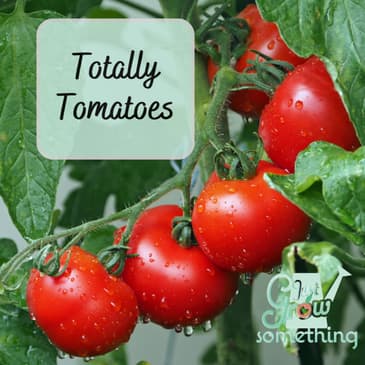
It’s been a while since we’ve done a full crop specific episode and I think this is the perfect time of year to talk tomatoes. We are getting about 500 tomato plants in the ground over the next week so they are on my mind!
So, today on Just Grow Something we’ll walk through the full tomato-growing process—from choosing varieties and starting seeds indoors to troubleshooting common problems and harvesting for peak flavor.
You’ll learn how to choose the right variety for your space, when and how to plant for success, how to deal with pests before they ruin your harvest, and what to do when things don’t go quite as planned (looking at you, blossom-end rot). Let's dig in!
References and Resources:
Save 20% on your new own-root rose plant or find your next favorite perennial at HeirloomRoses.com with code JUSTGROW https://heirloomroses.com
http://www.naturalmedicinalherbs.net/herbs/l/lycopersicon-esculentum=tomato.php
https://pubmed.ncbi.nlm.nih.gov/10050865/
https://pubmed.ncbi.nlm.nih.gov/12424325/
https://www.sciencedirect.com/science/article/abs/pii/S0168945212001483
Just Grow Something: https://justgrowsomething.com
Just Grow Something Merch and Downloads: https://justgrowsomething.com/shop
Just Grow Something Gardening Friends Facebook Group: https://www.facebook.com/groups/508637300354140/
Check out how you can become a patron on Patreon: https://www.patreon.com/JustGrowSomething
Bonus content for supporters of the Podcast: https://buymeacoffee.com/justgrowsomething
Amazon storefront: https://www.amazon.com/shop/justgrowsomething
Hosted by Simplecast, an AdsWizz company. See pcm.adswizz.com for information about our collection and use of personal data for advertising.
00:00:00
OK. It's been a while since we've
00:00:01
done a full crop specific episode and I think this is the
00:00:05
perfect time of the year to talk tomatoes.
00:00:08
We are getting about 500 tomato plants in the ground over the
00:00:11
next week. So the conditions of the soil
00:00:13
and the air conditions are on my mind at the moment, along with
00:00:17
how to trellis and prune those guys as well.
00:00:20
I don't do as much with my tomatoes as some other people
00:00:22
do, but what I do do is pretty consistent from year to year.
00:00:26
So today on Just Grow Something, we're going totally tomatoes
00:00:30
where they originated, the nutritional benefits, what types
00:00:33
of soil conditions they prefer, trellising, pruning, pest
00:00:36
diseases, all the things. You will walk away from this
00:00:39
episode with all the knowledge to tackle this much loved
00:00:42
veggie. Well, fruit actually.
00:00:46
Let's dig in. Hey, I'm Karen and what started
00:00:48
as a small backyard garden 20 years ago turned into a lifelong
00:00:52
passion for growing food. Now as a market farmer and
00:00:55
horticulturist, I want to help you do the same.
00:00:58
On this podcast, I am your friend in the garden teaching
00:01:01
evidence based techniques to help you grow your favorites and
00:01:04
build confidence in your own garden space.
00:01:06
So grab your garden journal and a cup of coffee and get ready to
00:01:09
just grow something. So there's a lot to cover on
00:01:16
tomatoes, so let's just dig right into it this week.
00:01:19
The scientific name for tomato is Selenium lycopursicum, so of
00:01:24
course it's part of the Solon ACA family, also known as the
00:01:27
Nightshades. This family also includes a lot
00:01:30
of our familiar friends in the garden like Peppers and eggplant
00:01:33
and potatoes, but also some stubborn weeds as well, like
00:01:38
horse nettle and Eastern black nightshade and jimsome weed, and
00:01:43
even some very notorious ones like belladonna.
00:01:46
Yes, your summer salsa shares a family tree with deadly
00:01:49
nightshade. It's not just a good idea to
00:01:53
know the plant family something is in because it can give us
00:01:57
some idea about its familial traits, but it's also good to
00:02:00
know where a plant originated from because it gives us a clue
00:02:05
as to what its ideal climate is. Tomatoes originated in Central
00:02:11
and South America, so warm climates with steady rainfall
00:02:15
and mild winters. That origin gives us a clue.
00:02:19
Tomatoes like warmth, they like sunlight, and they like
00:02:21
consistent moisture, right? So if we want to be successful
00:02:25
with tomatoes, then we might need to be recreating those
00:02:28
conditions in our own gardens. And yes, let's just clear it up
00:02:33
right away. Tomatoes are technically a
00:02:37
fruit, even a Berry actually, since their seeds are on the
00:02:41
inside. But because they're not sweet,
00:02:43
we use them like a vegetable. Culinarily, I don't know anyone
00:02:47
using tomatoes in their fruit salad.
00:02:50
If you are, we need to have a talk.
00:02:54
So as far as tomatoes nutrition is concerned, they are made-up
00:02:57
of about 95% water with a little bit of carbohydrates and some
00:03:00
trace amounts of fat and protein.
00:03:02
They are low in calories, so 18 calories per 100 grams, and they
00:03:06
are packed with nutrients like vitamin C and potassium, vitamin
00:03:11
K1 and folate. They are also full of
00:03:14
antioxidants, most notably lycopene.
00:03:18
That is the compound that gives tomatoes their red color and
00:03:20
it's often touted for heart health and prostate support.
00:03:24
There's also beta carotene and chlorogenic acid.
00:03:27
And then there's a compound in the skin called Neuringenon,
00:03:30
which is a polyphenol that likely has some
00:03:33
anti-inflammatory effects. But not everything about the
00:03:37
tomato is helpful. The green part.
00:03:39
So the leaves and the stems actually contain toxic alkaloids
00:03:43
and ingesting those can cause symptoms from stomach upset to
00:03:47
much worse in rare instances. Which is why I think I've never
00:03:52
had a problem with small rodents or anything eating my baby
00:03:57
tomato transplants like I have with my pepper transplants.
00:04:01
But the deer do seem to not have a problem eating the tomato
00:04:06
plants sometimes, so I'm not sure how that's working out for
00:04:08
the deer. So just don't you go snacking on
00:04:11
tomato leaves. And tomatoes are a warm season
00:04:13
crop. They like the heat.
00:04:15
They absolutely cannot handle frost.
00:04:18
So in northern climates, we want to wait until all danger of
00:04:22
frost has passed and the soil temperatures are at least 60°F
00:04:28
or 15.5 Celsius. We actually ideally want them a
00:04:31
little bit closer to 70 Fahrenheit or 21.1 Celsius.
00:04:36
That's even better for reducing transplant shock and making sure
00:04:39
that they take off growing right away.
00:04:42
We also want to wait until the overnight air temperatures are
00:04:47
staying above 50°F or 10 Celsius.
00:04:51
It's not going to cause obvious damage to the plant tissues if
00:04:56
the temperatures drop, you know, down into the 40s, but it will
00:05:01
absolutely slow their growth and there can actually be long term
00:05:05
effects that aren't as obvious. So there have been studies that
00:05:08
show if the overnight temperatures drop down just 1°C
00:05:14
to 9 Celsius or down to 48.2 Fahrenheit for 9 nights in a
00:05:20
row, they specifically looked at this time frame.
00:05:23
Then the ability of the plant to photosynthesize is permanently
00:05:29
reduced, so its photosynthetic rate, which is how the plant
00:05:32
gets energy to grow and produce fruit from the sun, is
00:05:36
irreversibly reduced. Now, that's if the temperatures
00:05:40
are low like that for more than a week.
00:05:42
But we also know that for every hour that the air temperatures
00:05:47
are below that 50°F, it takes an increased amount of time for the
00:05:51
plant to recover its functions. So we don't want to rush and put
00:05:57
our tomato plants out in the garden until like we don't see
00:06:00
any nights any cooler than 50°F in the forecast and the soil
00:06:04
temperatures are at least like 65°F or 18.3 Celsius before we
00:06:09
put them out. You might choose to put them out
00:06:12
sooner and that's fine. Just know that they may get off
00:06:15
to a slower start. So if you can wait, I suggest
00:06:19
it. Now sometimes obviously maybe we
00:06:21
start our plants too early and they start to get leggy and we
00:06:24
need to get them out into the garden and that's fine.
00:06:28
Just know that you are also not going to get any higher of a
00:06:33
yield or any earlier of a yield by putting them out earlier.
00:06:38
So we have done the tests here. We have plants that we put out,
00:06:42
tomato plants that went out in late April and then we also set
00:06:46
tomato plants out three weeks later around mid-May and all of
00:06:51
those plants began producing at the same time.
00:06:54
The ones that went in earlier did not start producing any
00:06:57
earlier than the ones that went out in May, and the mid-May
00:07:02
transplanted plants looked much healthier overall.
00:07:05
We didn't measure the yield, but I really should repeat that
00:07:09
experiment to see if the yield was any different.
00:07:11
But for sure there was number difference in terms of when they
00:07:14
started producing. So tomato plants do need at
00:07:19
least six hours of sunlight a day.
00:07:21
Ideally, we're looking at 8 to 10 preferably.
00:07:25
So if you are gardening somewhere where you're getting
00:07:27
sort of a lot of part shade in your garden, just know that, you
00:07:31
know, even if it's broken up. So you get like 4 hours in the
00:07:34
morning and then four hours in the afternoon and you have a
00:07:37
break during the middle of the day, that's OK.
00:07:39
It all counts. It's all cumulative, right?
00:07:42
So, you know, if you have a particularly shady spot in your
00:07:45
yard and you're trying to grow tomatoes and you really aren't
00:07:48
quite hitting that 6 hour mark, maybe consider doing them in
00:07:53
containers and being able to move them around a little bit as
00:07:57
the season progresses to the sunniest parts of your yard if
00:08:00
you can. And we'll talk about how to do
00:08:01
that with containers here in a minute.
00:08:05
You may also, if you're in a hot Southern climate in the Northern
00:08:09
Hemisphere, you might actually benefit from some afternoon
00:08:14
shade that is actually really helpful to those plants in the
00:08:17
extreme heat. You know, they might be, you
00:08:20
know, heat lovers, but they they have, you know, there is some
00:08:23
limit to to what they'll tolerate.
00:08:25
They like it warm, but they didn't originate like in the
00:08:27
desert. So there is a limit UA also in
00:08:30
these in those climates, consider growing determinate
00:08:32
tomatoes in two separate successions.
00:08:34
So one in the early spring and then another one late into the
00:08:38
fall to just avoid the hottest part of the year when it's
00:08:41
actually too hot for tomatoes. Because once they get over a
00:08:44
certain temperature, air temperature wise, tomatoes will
00:08:46
actually stop producing. They'll either drop their blooms
00:08:49
or they will stop ripening the tomatoes.
00:08:51
So if you can avoid those those really hot times in those
00:08:55
southern areas, then then you might be better off if you are
00:08:58
starting seeds indoors. Tomatoes like soil temperatures
00:09:02
for germination between 65 and 85 Fahrenheit, preferably closer
00:09:08
to that 85° range. I get questioned about this a
00:09:13
lot when it comes to, you know, seed germination temperatures
00:09:17
and why they are often listed so much higher than like the
00:09:21
preferred soil temperature for transplants.
00:09:23
Because remember we said, you know, we want a minimum of 60°F
00:09:27
for the transplants to go into the garden.
00:09:30
Why would we not want that soil at a much warmer temperature,
00:09:33
which would be similar to what the germination temperature
00:09:36
would be? If you think about how a seed
00:09:39
would naturally occur out in the wild, basically, you know, if
00:09:43
you have tomatoes that drop their fruit, OK, and over ripe
00:09:48
fruit, the whole idea of producing fruit is to reproduce,
00:09:52
right? So the the tomato is going to
00:09:54
drop its fruit on the ground, that's going to disintegrate.
00:09:57
Those tomato seeds are going to be right there within that, you
00:10:02
know, top layer of the soil. Well, what happens with that top
00:10:05
layer of soil in the spring, That top, you know, inch or even
00:10:09
2 inches is getting warmer in the spring much more quickly
00:10:14
than the soil, you know, between the two and four inch range.
00:10:18
So it's going to be closer to that 85°F during the day in the
00:10:24
early part of the spring versus the soil further down, which is
00:10:28
going to take longer to warm up. So as those roots go down,
00:10:32
they're actually going towards that cooler soil, but they like
00:10:34
that warmer temperature at the top to actually germinate.
00:10:38
So This is why when we're starting seeds indoors, we
00:10:40
generally like to use those heat mats because we're mimicking
00:10:43
what is actually going to happen outdoors where the soil
00:10:46
temperature at the top at germination point is much
00:10:49
warmer, but then those roots are going down into that slightly
00:10:52
cooler soil. So just think, you know, when
00:10:54
you're planting your seeds, when you're starting them indoors,
00:10:56
those seeds should be planted about 1/4 of an inch deep and
00:11:00
just keep them nice and moist. And again, if you have those
00:11:02
higher temperatures, that's also very important, making sure
00:11:05
they're in contact with that wet soil all the time, or damp soil
00:11:08
I should say. And then once they sprout, they
00:11:10
do need lots of light. You know it.
00:11:13
We say they need 6 hours a day to grow while they're out in the
00:11:18
garden, but ideally if we can provide them with more than that
00:11:21
when they are growing indoors, so closer to like 12 to 14 hours
00:11:25
a day, even as much as 18 hours a day from a grow light, then
00:11:30
that's going to be better. And I know that can be a bit
00:11:32
much for beginners, which is why a lot of gardeners just want to
00:11:35
buy their their starts at the garden center.
00:11:37
There is absolutely nothing wrong with that.
00:11:39
Don't feel like you have to go and start your own tomatoes from
00:11:42
seed. The benefit to starting your own
00:11:44
tomatoes from seed, though, is that you get to choose from a
00:11:47
whole wide range of varieties that you likely are not going to
00:11:53
find in, you know, a garden and a nursery in a in a big box
00:11:57
store, any of those places. So if you are interested in
00:12:00
trying a bunch of different types of varieties or you are
00:12:03
looking for specific traits in general, you are likely going to
00:12:08
want to start your own tomatoes indoors.
00:12:11
And part of this is tomato types fall into two main categories of
00:12:19
growth. We have determinate and we have
00:12:21
indeterminate. So determinate or like Bush
00:12:24
varieties will grow to about two to three feet tall and they
00:12:28
produce most of their fruit over a short period of time.
00:12:32
So these are really great if you want to can or make sauce all at
00:12:38
once. You don't want to have to
00:12:39
continue to do a bunch of batches throughout the year.
00:12:42
They also don't require staking and so they're very ideal for
00:12:45
containers and small spaces. And again, if you are in a very,
00:12:49
very warm climate where the center or the the middle part of
00:12:53
the summer is just way too hot for growing tomatoes, you can
00:12:57
use a determinant tomato very early in the season to get your
00:13:01
first batch of tomatoes. And then pull those tomato
00:13:03
plants out, making space for something else during the
00:13:06
hottest part of the season. And then plant another batch of
00:13:09
them later on towards the fall when your temperatures start to
00:13:13
cool a little bit, but timing it to where you know it's still
00:13:16
warm enough for them to grow. And that way you're getting two
00:13:19
different batches essentially of tomatoes.
00:13:23
You don't want to prune determinate tomatoes though,
00:13:25
because that is going to reduce the number of fruiting points on
00:13:31
the plant and since they only produce those points over a
00:13:35
short period of time, that will reduce your overall yield.
00:13:39
So some determinant varieties like in the slicing kind of
00:13:43
tomato category are things like Celebrity or Rutgers or
00:13:46
Butterbush. And then a lot of your sauce and
00:13:49
paste tomatoes like your Roma's and your San Marzano's are also
00:13:52
determinants. On the other side of this we
00:13:55
have indeterminate. These are your vining type
00:13:58
varieties. OK, so they will keep growing
00:14:01
and keep producing all season long until you get to your your
00:14:05
first frost. So think about like your cherry
00:14:08
tomatoes and how wild and crazy cherry tomatoes can grow or your
00:14:11
beef steak tomatoes, right? These guys all do need staking
00:14:17
or caging and this is for a number of reasons.
00:14:20
Number one, you want to kind of have a way to support that
00:14:23
longer growth and that heavier load of fruit, but also it keeps
00:14:27
that fruit up off the ground where it can be bruised or you
00:14:33
know, critters have more access to them, etcetera.
00:14:35
So these are the ones that you generally want to make sure that
00:14:37
you are staking or caging and we'll talk about how to do that
00:14:40
here in a minute. Now there is actually a third
00:14:44
type that isn't always differentiated a lot of the time
00:14:49
and it's called indeterminate, short internode or ISI.
00:14:53
These are Bush types of tomatoes that are also indeterminate.
00:14:59
So they keep growing and producing all season long.
00:15:04
But the difference between, you know, your regular vining
00:15:07
indeterminate and these ISIS is that these ones have shorter
00:15:11
internode. So the internode is that space
00:15:14
between the nodes on the stem where the leaves are attached.
00:15:18
So rather than being, you know, spaced a certain distance apart
00:15:21
like the vining types, they're shorter, which means that they
00:15:24
have a bushier growth habit, which is more similar to a Bush
00:15:28
type or a determinant. But unlike A determinant that
00:15:33
only produces all of its fruits sort of all at once over the
00:15:35
span of a few weeks, these Isis will actually produce all season
00:15:40
long. So one variety that we grow here
00:15:43
for our customers specifically to be able to grow in containers
00:15:47
on their patio is called Husky Red.
00:15:50
But there's also Perths Pride and Sleeping Lady and Dwarf Wild
00:15:54
Fred. Dwarf Wild Fred.
00:15:56
Yeah. So even though they have a
00:15:58
compact growth habit though, these, you do actually want to
00:16:02
stake or use a cage or something because that indeterminate fruit
00:16:08
production will mean that it gets heavy enough with fruit
00:16:12
over the season to sort of be top heavy.
00:16:14
And so, you know, you want to prevent it from falling over.
00:16:17
You also don't want to prune ISI plants other than to clear out
00:16:21
dead or disease foliage around the base of the plant for
00:16:24
airflow. And we'll talk more on pruning
00:16:26
here in a minute. One of the reasons that I love
00:16:30
heirloom roses as a company is because they are a family
00:16:33
business. They're owned by Ben and Cara
00:16:35
Hannah, located in the fertile Willamette Valley in Oregon,
00:16:38
just an hour away from my alma mater, Oregon State University.
00:16:42
Ben and Cara are continuing the legacy of John and Louise
00:16:45
Clements, who founded the nursery back in 1973, which
00:16:49
incidentally, was the year I was born.
00:16:50
So the company's been doing this for as long as I have been
00:16:53
alive. In fact, the Heirloom Roses
00:16:56
offices are still located in the farmhouse where John and Louise
00:17:00
lived on the property. They're not just passionate
00:17:03
about hand propagating each rose, they also value the
00:17:07
preservation of unique and rare roses.
00:17:10
They are committed to providing own root roses that provide tons
00:17:15
of blooms, are winter Hardy, disease resistant, and true to
00:17:19
variety. Own root roses cannot be
00:17:22
produced very quickly like grafted roses, but the
00:17:25
difference in the quality is worth it.
00:17:27
Get your own beautiful roses directly from their farm in St.
00:17:31
Paul OR by going to heirloomroses.com and using code
00:17:35
Just grow at checkout to save 20% on your order.
00:17:39
heirloomroses.com with code Just grow at checkout.
00:17:43
The link is in the show notes. So let's talk about the
00:17:48
difference between growing tomatoes in ground versus
00:17:51
growing them like in pots or containers.
00:17:53
So if you are planting in the ground or using like raised
00:17:57
planters, it's generally recommended that you space your
00:18:00
plants about two to three feet apart so that they get enough
00:18:05
air flow and sunlight. The one thing I will say is if
00:18:10
you are trellising your tomatoes either on a panel or by using
00:18:15
the string method, and we'll go into all that here in a minute,
00:18:18
it is possible to plant them more closely together.
00:18:22
So anywhere between 12 and 18 inches is actually possible so
00:18:28
long as you have that really good soil fertility and you are
00:18:31
doing some pruning. So just know that if you feel
00:18:35
like you don't have enough room for the number of tomato plants
00:18:38
that you want to grow, the way that you trellis them may make
00:18:41
the difference and also the way that you prune them.
00:18:45
But when it comes to, you know, that soil fertility, we want to
00:18:47
make sure that we are adding good compost or organic matter
00:18:50
to the soil. And then if you want to add, you
00:18:53
know, bone meal or you know, a tomato specific fertilizer at
00:18:57
planting or around planting time to support that root and flower
00:19:01
development, that's a really good idea.
00:19:04
Don't go heavy on the nitrogen, too much nitrogen is going to
00:19:07
give you like a lot of leafy green, but not so much in terms
00:19:12
of the flowering and the fruiting.
00:19:13
So remember we want that the phosphorus and the potassium for
00:19:17
supporting that flowering and fruiting.
00:19:18
So, you know, a standard amount of nitrogen is fine if you're
00:19:23
using, say a balanced fertilizer that's like a 10/10/10 or you
00:19:28
can do something that is higher with that middle number and that
00:19:30
last number. So like a 10/15/10 to get more
00:19:34
of the, the phosphorus in there. And then a quick tip for
00:19:37
transplanting. Remember we talked about, you
00:19:40
know, maybe having leggy plants that maybe got away from you and
00:19:43
you started them too early and you were you waited too late to
00:19:46
get them in the ground. Tomato plants are very, very
00:19:50
forgiving when it comes to planting.
00:19:53
If they've gotten really leggy, right?
00:19:56
You can lay them on their side sort of in a trench and then
00:20:00
just leave that top part of the stem out of the ground.
00:20:04
And they will take off just fine.
00:20:06
Tomatoes will grow roots all along their stems wherever they
00:20:12
are in contact with the soil. So even if they're not laggy, if
00:20:16
you can dig a nice deeper hole and plant them deeper into that
00:20:21
hole and just leave those few inches at the top of the plant,
00:20:25
that is really going to help them establish a nice strong
00:20:29
root system. So this is not one of those
00:20:32
plants where we want to take them from the pot and put them
00:20:36
in the soil and plant them at the same depth as the soil depth
00:20:40
in the container. We want to get them as deep as
00:20:42
possible. OK.
00:20:43
And so again, if your seedlings are leggy, you can use this to
00:20:47
your advantage by laying them in a shallow trench and then just
00:20:49
burying the stem sideways. I will say that unless you are
00:20:55
growing determinate varieties, you want to steak or cage your
00:21:00
tomatoes at the same time that you are planting them.
00:21:04
Do not wait to do this. This is the voice of experience
00:21:08
speaking to you right now. Unless you are just doing a
00:21:11
single steak that is going to go right next to the stem of the
00:21:14
plant once they're growing, it is really, really difficult to
00:21:19
try to add that support later on and you can actually end up
00:21:23
damaging the plant. So if you're using cages, get
00:21:27
your tomato plant in the ground and then put the cage over top
00:21:30
of it right away. If you are doing, you know,
00:21:34
fence trellises or if you're doing the string methods, make
00:21:37
sure that all of your apparatus are there and in place before
00:21:41
you go and plant your tomatoes. You don't want to be doing this
00:21:44
after they've already started growing.
00:21:45
Now, if you're using containers, we're looking at preferably
00:21:50
something that's a 20 inch top with some really good drainage
00:21:54
holes. So usually this is something at
00:21:55
least like in the five gallon range, but 10 gallon is even
00:21:58
better. If you're doing 5 gallon, make
00:22:01
sure that you are, you know, doing probably a determinate
00:22:03
tomato that is a bit smaller or one of those ISIS.
00:22:07
You definitely want to use a good quality potting mix,
00:22:11
possibly mixing in some compost or or other organic matter into
00:22:14
there. These are plants that are going
00:22:16
to be in place in this for a very extended period of time.
00:22:19
So you want to make sure that the soil fertility is there.
00:22:21
So not only is this going to help with the soil fertility,
00:22:24
but it's also hopefully going to help with some water retention
00:22:27
because containers can dry out faster than like our in ground
00:22:31
garden beds or even our raised planters.
00:22:33
So number one, we want something in that container that's going
00:22:36
to help retain the moisture, but just understand that you're
00:22:39
likely going to need to water more often, especially during
00:22:42
heat waves. We do want to stick with those
00:22:45
less frequent, more thorough waterings.
00:22:46
OK, that still applies here, but you don't want the container to
00:22:50
get bone dry before you water it because that stresses the plant
00:22:54
out and it can also make your soil hydrophobic, meaning when
00:22:57
you do finally go and water it, then the water might just float
00:23:00
across the top and it might not soak in quite his way.
00:23:02
So make sure that you are, you know, paying attention to its
00:23:05
watering needs. And again, if you're doing these
00:23:07
in pots, you likely want to stick with the Bush or the dwarf
00:23:10
varieties unless you are ready to really stake some sort of a
00:23:14
monster vine in a pot. This is even more important if
00:23:19
you plan to move the pot around. So like I mentioned earlier, if
00:23:23
you have a problem with your garden becoming shaded at
00:23:27
certain points of the season and you don't think you're going to
00:23:29
have enough sun, make it to where you are planting a Bush or
00:23:33
a dwarf variety in a container that you can move, You can
00:23:37
follow the sun as it continues around during the season.
00:23:40
This is one way to kind of get around that.
00:23:43
So when we're talking trellising and pruning, 2 practices that
00:23:49
can make a huge difference in your plant health, your harvest
00:23:52
quality and your ease of maintenance.
00:23:54
OK, trellising and pruning. Let's talk trellising first.
00:23:57
Why does it matter? Trellising helps to keep your
00:24:00
tomato plants upright. OK, so this keeps the plants or
00:24:03
keeps the fruit off of the ground, so that reduces the
00:24:07
possibility of rot. It's also going to reduce the
00:24:09
possibility of disease and also damage from things like slugs or
00:24:13
rabbits that can grab onto it very easily when they're close
00:24:16
to the ground. Your upright plants are less
00:24:19
likely to break in the wind, especially when they are loaded
00:24:23
down with heavy fruit. So that's going to support your
00:24:26
harvest a little bit more. And it also increases air
00:24:29
circulation, which is going to help prevent fungal diseases
00:24:32
like early blight. This is really important if you
00:24:35
live someplace like where I do, where it gets very, very humid
00:24:39
and it just seems like the disease just wants to hang in
00:24:43
the air and it wants to attach itself to our tomato plants.
00:24:48
So, you know, staking or trellising in some way actually
00:24:52
helps to accomplish all of those things.
00:24:54
Do all tomatoes need a trellis? No, not necessarily.
00:24:57
We already talked the determinate type.
00:24:59
So all those Bush or patio tomatoes generally stay compact
00:25:02
enough and don't require support, although it is still
00:25:07
helpful during heavy fruiting. Indeterminate tomatoes, you
00:25:12
know, again, they grow and produce all season.
00:25:14
They really do need some support for their best yield and their
00:25:19
best health. So what are some different ways
00:25:21
that we can do this? The first one that you likely
00:25:23
are familiar with is those tomato cages.
00:25:26
These are fine for, you know, smaller gardens if you are
00:25:30
growing fewer than 10 plants because they can be kind of
00:25:34
pricey. The square cages are really nice
00:25:37
because they have like solid, you know, four sides around
00:25:40
them, which makes it, you know, a little bit more sturdy than
00:25:44
the round ones that kind of taper at the bottom.
00:25:47
Just make sure really what it is is that they're they're tall
00:25:50
enough, OK, especially for indeterminate varieties.
00:25:54
They're they can be a little flimsy if you don't get the
00:25:58
right ones, you know, and they, I mean, they have very, very
00:26:00
inexpensive ones. So if you are growing more than
00:26:03
10 plants, then you might be tempted to buy the kind of cheap
00:26:07
ones. But just know that if you're
00:26:10
growing an indeterminate variety and they get particularly
00:26:12
vigorous, it's probably going to outgrow that cage.
00:26:15
You likely are going to have them coming up and over the side
00:26:19
and you know, vines going out all over the place.
00:26:22
So just be aware that you might need to prune more frequently if
00:26:26
you've got a cage. The next option would be
00:26:29
individual steaks. So putting a single steak next
00:26:33
to each plant basically right at the stem and then loosely tying
00:26:37
that main stem as it grows. This is very simple.
00:26:41
It is it is fairly effective depending on the size of the
00:26:44
steak. Again, we want to base that on
00:26:47
the size of our tomato plant, especially if we are doing an
00:26:50
indeterminate. It can be time consuming if you
00:26:53
have a large number of plants to go through and do this, but it
00:26:57
is effective and we do it here in a lot of the beds where we
00:27:00
may not have permanent trellising attached.
00:27:04
The next one would be a fence trellis, so a vertical structure
00:27:08
of some store. Our favorite thing to do is a
00:27:10
cattle panel on T posts, and I like to leave them in place.
00:27:16
This lets you tie tomatoes to this very sturdy frame.
00:27:21
So we can actually space our tomatoes much more closely
00:27:25
together because they're being planted at the base of this
00:27:29
cattle panel, and I can tie it up very effectively and control
00:27:33
that growth habit as it goes up. You know what the bonus about
00:27:38
this too, is? If you have these types of
00:27:40
sturdy, sturdy trellises in place all the time, you can
00:27:45
reuse it for other vining crops. So one year you might grow, you
00:27:49
know, peas on that trellis. Or maybe, you know, pole beans
00:27:55
and well, that's a legume. It's fixing nitrogen into the
00:27:58
soil. And so the next season you could
00:28:00
do tomatoes there because the tomatoes can take advantage of
00:28:03
that nitrogen for its early growth.
00:28:06
And then maybe the next season you can do cucumbers, right?
00:28:08
All, all in different seasons. So we're rotating those plant
00:28:11
families like we like to do, and we're using that same trellis
00:28:15
over and over again. So if you can invest in a really
00:28:17
good fence type trellis, then that's the way that I recommend
00:28:20
doing it because I mean that's how we do it and it works really
00:28:22
well for us. There is also the Florida weave.
00:28:27
So this is another way to do it. I have done this in the past.
00:28:32
I'm not sure if I'm doing it this year because we sort of
00:28:34
moved fields where we're doing all of our tomatoes, but it is
00:28:38
very effective. So, and this is really ideal for
00:28:41
you if you have rows of tomatoes.
00:28:45
So essentially what you're doing is you're driving steaks between
00:28:48
every few plants and then you are weaving twine around the
00:28:53
steaks and around the tomato plants kind of in and out as you
00:28:57
go down and then back the same, you know, back, come up the
00:29:00
other direction and do the same thing on the opposite side of
00:29:04
each of those plants. So essentially you are
00:29:06
sandwiching the plants in between these strings of twine
00:29:13
and you just add more layers of that of the twine as the plants
00:29:18
grow taller. It's very efficient and it's
00:29:21
very scalable. If you are growing a lot of
00:29:24
plants and you're doing them in rows, it is a very, very
00:29:27
effective way to to get them strung up, so to say.
00:29:31
You just have to make sure that on either end you have something
00:29:34
very sturdy to sort of anchor the, the twine that you're tying
00:29:41
off so that so, you know, your rows don't kind of flip flop
00:29:43
around. So if you're using, you know,
00:29:47
fairly skinny steaks in between, you know, the, the plants as you
00:29:51
go every so often you want to have a really, you know, heavy
00:29:54
duty 1, So either AT post or a larger steak or something like
00:29:56
that. But it is a very, very effective
00:29:58
way. It takes a little practice and
00:30:00
you definitely have to keep up on it, but but it is, it is very
00:30:04
effective. And then of course there is also
00:30:08
the overhead string trellis and you can do the the lower and
00:30:12
lean method with this as well. So this is a little bit more
00:30:15
advanced and, but I have seen a lot of home gardeners start to
00:30:19
do this. And it's, I mean, it's very
00:30:21
effective. It's really good for maximizing
00:30:23
your yield in a very small space.
00:30:25
And essentially what you're doing is that you're creating an
00:30:27
overhead support of some sort. And then you are dangling
00:30:33
strings. You know that strings are
00:30:35
hanging from that overhead support.
00:30:38
And so the plants are tied to those strings as they grow.
00:30:44
Now you can just do that and call it good.
00:30:47
That's your, you know, that's the way that they, they grow all
00:30:50
season long. Or if you want to make it a
00:30:53
little bit easier on yourself, or if you have a very, very long
00:30:56
growing season and your tomatoes are going to get very, very
00:30:58
tall, you do the lower and lean method, which is very popular in
00:31:03
commercial greenhouses. So essentially you're removing
00:31:06
the lower leaves as the plant, you know, is the production, you
00:31:11
know, ceases at the lower part of the plant.
00:31:13
You just start to strip those leaves off and then you like
00:31:17
lower those plants on the string, let them kind of lean
00:31:23
down sideways. So now that's all touching the
00:31:26
ground. That whole bare section on the
00:31:28
bottom of the plant is touching the ground and the top part
00:31:32
continues to grow upward. You, I mean, it's, it's very
00:31:35
difficult to describe. You'll have to go look it up.
00:31:37
If you just look at the lower and lean method, you will see
00:31:40
what I'm talking about. But, you know, this is very
00:31:43
effective if you, again, have, you know, a small space or you
00:31:48
don't want to put any kind of a permanent trellis in place.
00:31:51
It's very effective. It just takes some practice.
00:31:54
But it isn't really good for maximizing your yield,
00:31:56
especially if you have a small space.
00:31:59
Now, what about pruning? OK, should you bother pruning
00:32:04
this is this is the age-old question and I will let you in
00:32:08
on a little secret. I very rarely prune my tomatoes
00:32:13
anymore. OK, so basically the short
00:32:17
answer is it's optional. OK, Yes, pruning can improve
00:32:21
your airflow, which is actually going to help you reduce
00:32:24
disease. So I absolutely recommend
00:32:27
pruning if you live someplace where diseases are prevalent,
00:32:31
especially, again, places like here where it gets very, very
00:32:34
humid. But I tend to prune just like
00:32:38
the lower, probably 12 inches or so of the plant to keep any
00:32:42
debris from splashing up out of the soil and causing soil still
00:32:45
borne diseases. And then I will just remove what
00:32:49
branches and leaves seem to either be obstructing the
00:32:55
airflow a little bit. I don't really do it
00:32:57
strategically in terms of, you know, pinching off the suckers.
00:33:04
If you prune, it also is likely going to increase your fruit
00:33:09
size, but it does not mean you're going to get more fruit.
00:33:14
You're actually reducing the number of fruit that you're
00:33:17
getting. So it's kind of like, you know,
00:33:20
if you if you picture the fact that this plant has a certain
00:33:24
amount of energy that I can put into fruiting, right?
00:33:27
And you either are going to give it the opportunity to produce a
00:33:29
bunch of smaller fruits or prune it to where it gives you fewer
00:33:35
but much larger fruits. OK.
00:33:37
I can also encourage earlier ripening too, depending on the
00:33:41
variety that you're growing. But skipping pruning does not
00:33:44
mean that your plants are going to fail.
00:33:45
Again, I don't do a ton of pruning because I mentioned
00:33:49
we're planting 500 some odd tomato plants and in addition to
00:33:52
everything else that goes on in these gardens, I don't have time
00:33:54
to be out there pruning all the time.
00:33:56
You just need to remember that you only prune indeterminate
00:33:59
tomatoes. If you prune the determinant
00:34:02
types, you're going to reduce your yield because they only
00:34:05
produce a fixed number of flowers and fruits.
00:34:07
OK. It is also very normal for the
00:34:11
lower leaves to yellow and fall off, especially for determinate
00:34:15
plants as that fruit matures. So don't don't worry about that
00:34:19
in your in your determinants, you're not doing anything wrong.
00:34:22
So only prune your indeterminate tomatoes.
00:34:25
The essentially when you're pruning, you have a couple of
00:34:29
things. First off, early on, if your
00:34:33
plant is fairly small when you plant them, it's generally
00:34:37
recommended that you pinch off the flowers until that plant is
00:34:40
at least 12 to 18 inches tall. We want to build a good strong
00:34:45
root system. We want that energy being
00:34:47
focused on root development and not on flowering and fruiting.
00:34:52
This is, you know, especially if you have a very, very large
00:34:57
tomato, you know that you're growing in terms of fruit size.
00:35:01
Again, this is not something you do with a determinant.
00:35:03
You, you only on the indeterminants, OK.
00:35:05
And then once it starts flowering and fruiting and you
00:35:08
allow it to start to develop its fruit, you want to remove the
00:35:11
suckers. OK, so the suckers.
00:35:14
And it took me a long time to figure out what people meant by
00:35:16
suckers because in terms of like fruit trees and things like
00:35:19
that, suckers are what come from the base of the plant that
00:35:23
continue to grow up. But when we're talking about
00:35:24
tomatoes, the suckers are the small shoots that grow in the
00:35:30
joint between the main stem and a leaf branch.
00:35:34
OK, So, and it's very easy to just pinch those off when
00:35:37
they're very small. You can just pinch them with
00:35:38
your fingers. OK.
00:35:40
Now, if you don't do this, those again eventually become fruiting
00:35:45
points and you're going to have more fruit coming out of there.
00:35:48
So if you are focusing on getting larger fruits, then yes,
00:35:51
absolutely remove those suckers. If you're not that concerned
00:35:55
about it, then you're getting more fruit out of those suckers,
00:35:59
but they're just going to be smaller fruits, OK.
00:36:01
Then you can also again, remove those lower leaves as the plant
00:36:05
gets taller and the fruits ripen because that is going to improve
00:36:08
the airflow near the base. And of course, this is
00:36:11
absolutely crucial if you are trying to avoid diseases.
00:36:15
So what kind of pests do we have to worry about with tomatoes?
00:36:21
The first thing probably earliest in the season is tomato
00:36:23
cut worm. They may actually eat the stem
00:36:27
of the tomato plant and kind of cuts through.
00:36:29
That's the stem completely. In some cases you walk out and
00:36:32
it's very similar to what you see in any other type of a
00:36:34
plant. You walk out and you're
00:36:36
perfectly healthy. Little tomato seedling is now
00:36:39
laying flat on its side like something snipped it at the soil
00:36:42
level. That is generally a cut worm.
00:36:44
So you either you can wait until your tomato plants are larger
00:36:49
and it's it's less difficult, less difficult, more difficult
00:36:53
for the cutworm to be able to cut through the stem of the
00:36:55
tomato plant. Or you can put collars around
00:36:59
the base of the plant to help prevent them from getting to the
00:37:02
stem at all. Because they actually might also
00:37:05
climb up the stem and feed on the leaves if they, you know, if
00:37:08
they can't cut through the stem. So a collar is a good idea if
00:37:12
you know that you have had cutworms.
00:37:14
Aphids too, can tend to be a problem in tomatoes.
00:37:19
They're generally only a problem if you have them in abundance
00:37:24
because they will cause yellow curling leaves and they've got
00:37:27
this white sticky residue, the honeydew that they leave behind.
00:37:31
If you are promoting a really good ecosystem in your garden
00:37:36
and you are inter planting things like we talked about
00:37:39
before, you likely are also going to be drawing in some of
00:37:42
those good bugs that are actually going to take care of
00:37:45
the aphids for you. Never have I had a problem with
00:37:50
such a horrible infestation of aphids that it started causing
00:37:56
problems with my plants before the ladybugs moved in to try to
00:38:01
help take care of that problem. So don't panic if you see aphids
00:38:07
right away. Now you can just spray them off
00:38:09
with a hose, OK? They often times are fairly easy
00:38:13
to just knock down that population by spraying them off
00:38:15
really well and waiting for those ladybugs to start to find,
00:38:19
you know, to show up. But if you're not noticing any
00:38:21
of the lady beetles or any of their larvae, which if you've
00:38:23
never seen lady beetle larvae, they look like tiny little
00:38:26
orange and black alligators. They're very cool looking.
00:38:29
But the first time I saw one, I had no idea if it was a good bug
00:38:31
or a bad bug. So just know that those are your
00:38:34
your lady beetle or ladybug larvae and they are voracious
00:38:39
eaters of aphids. If you notice though, that you
00:38:42
have aphids in addition to having a ton of ants, just know
00:38:47
that ants will farm aphids like livestock in order to feed on
00:38:53
the honeydew that the avids aphids leave behind.
00:38:56
So at that point, you definitely want to be kind of spraying
00:38:59
things down just to kind of get rid of them and hope for the
00:39:01
best, you know. But of course, if that doesn't
00:39:05
work, then, you know, you can use some insecticidal soap, you
00:39:08
know, directly on the insects on the plant to get rid of them.
00:39:11
Flea beetles are a problem, especially in younger plants.
00:39:15
Usually if you've gotten the plant, you know, beyond its kind
00:39:18
of ceiling or juvenile stage and the flea beetles, even if they
00:39:22
are there and causing damage, they're not going to cause so
00:39:24
much damage that it if it, it causes a problem with the plants
00:39:28
production. Flea beetles are usually more of
00:39:30
a problem when the plant is younger because they cause those
00:39:33
holes in the leaves. And of course that interrupts
00:39:36
the photosynthesis process, which is going to interrupt how
00:39:39
well that plant grows in the beginning.
00:39:41
So that's one thing to to be aware of.
00:39:44
And of course there is a tomato hornworm or the tobacco
00:39:49
hornworm. They're both the same.
00:39:51
They 'cause that defoliation on your tomatoes.
00:39:53
Those are those big, thick, nasty green tomatoes that have
00:39:58
what looks like a horn on the end of them.
00:40:01
They will do some damage. You can walk out the next day
00:40:06
and see just plants completely stripped of their leaves if you
00:40:10
don't pay attention to what's going on.
00:40:13
And you can usually see the signs of the hornworm before you
00:40:15
start to see that they are completely defoliating your
00:40:18
plants because you'll see their droppings.
00:40:21
So you'd the tomato hornworm frass is kind of very
00:40:24
distinctive looking. It's black almost almost looks
00:40:27
square to be honest with you. If you look up pictures of this,
00:40:30
you will know if you see that that you have hornworms.
00:40:33
Interesting fact, if you go out into your garden with a black
00:40:37
light at night, tomato hornworms will glow in the dark.
00:40:42
And so they're a lot easier to pick off when you can see them
00:40:45
when they're glowing in the dark.
00:40:47
White flies are also a problem in tomatoes.
00:40:50
They can, you know, also leave behind a sticky white residue.
00:40:54
But generally speaking, if you have white flies, you're going
00:40:56
to know it because as soon as you move that plant, they just
00:40:59
all fly up. And then leaf miners, those are
00:41:02
also an issue. You're going to see that kind of
00:41:05
tunnel or zigzag pattern on the leaves.
00:41:07
And then of course, we have corn earworms, which is also known as
00:41:11
the tomato fruitworm, which is why we generally don't like to
00:41:15
plant corn near our tomatoes because they share a host.
00:41:19
They're both a host for the same pest and stink bugs and slugs,
00:41:23
those can all, you know, cause holes in your fruit once they
00:41:26
start producing. So with all of these pests, you
00:41:30
generally want to monitor your tomato plants on a daily basis.
00:41:35
Checking underneath the leaves is a really good idea.
00:41:37
Check the fruit, check around your soil, make sure that you
00:41:40
are able to identify the problem insects in your area.
00:41:46
So your university extension is a really good place to start
00:41:49
looking for that information to find out what tomato pests are
00:41:52
in your area. And then you can find out what
00:41:54
the natural predators are for those pests so that you
00:41:57
recognize what those look like in your garden.
00:42:02
And, you know, you know, OK, this is a good bug.
00:42:05
This is one that I don't want. And you're not, you know, doing
00:42:08
away with the bugs that you actually want to have there.
00:42:12
Again, if you can dislodge the pests just by spraying your
00:42:16
plants down with a really good jet stream from the hose, this
00:42:19
is a nice step. You know, especially, you know,
00:42:21
for things like aphids that take a while to actually cause
00:42:24
damage, but you can be handpicking insects to those
00:42:27
bigger things like the tomato hornworms.
00:42:29
Get yourself a pair of gloves and, you know, a bucket of soapy
00:42:32
water or a cup of soapy water and just walk through and pick
00:42:34
those guys off and toss them in the soapy water.
00:42:37
You can also use that insecticidal soap directly on
00:42:40
the insects on the plant. This works especially well for
00:42:43
smaller pests like aphids and you know, even spider mites or
00:42:47
other types of things. Horticultural oils or sprays
00:42:52
diluted in water. Neem oil sprays are also good to
00:42:56
use here too. If as a last resort you choose
00:43:00
to use an actual synthetic insecticide, keep in mind that
00:43:05
you might also be, you know, damaging the beneficial insects
00:43:09
as well. Just make sure that you are
00:43:11
following the directions on the label.
00:43:13
The label is the law and we do not want to under use or over
00:43:17
use these things because we don't want to develop reasons.
00:43:20
Insects. So those are all the buggies.
00:43:23
What about the diseases and other problems?
00:43:25
OK, early blight. This is a fungal disease that
00:43:28
causes leaves to drop. It is very common after rainfall
00:43:31
or in very humid areas like ours.
00:43:34
It starts with these dark concentric spots on the leaves.
00:43:39
They're like brown to black. They're about 1/2 an inch in
00:43:41
diameter and it's usually on the lower leaves and the stems.
00:43:45
If you catch it early and you destroy the infected leaves,
00:43:48
your plant is likely to survive. Late blight is another fungal
00:43:53
disease that causes Gray, moldy spots on the leaves and the
00:43:58
fruit, which will later turn brown.
00:44:00
It is spread and supported also by persistent damp weather.
00:44:04
This is especially true if you have your plants in the ground
00:44:07
already and you're having like a cool, wet spring.
00:44:09
You very likely might see some late light powdery mildew is
00:44:14
another fungal disease. It leaves those white spots or a
00:44:17
dusting of white on the leaves. It definitely can be managed
00:44:21
again, you know it's more prevalent when it's damp out,
00:44:23
but I have successfully used first Saturday lime or milk
00:44:27
sprays or baking soda on the the leaf surfaces.
00:44:33
And with a lot of these fungal ones, this will work to help
00:44:35
kind of combat it because you're changing the pH of of the
00:44:39
surface of the leaves and it's less likely that those funguses
00:44:43
can survive outside of their like typical pH range.
00:44:47
So anything that you can do to change that pH of the surface of
00:44:52
the leaf or the plant, the more likely you're going to be able
00:44:55
to combat these fungal diseases. Now, not everything is like
00:44:59
fungal. We have mosaic virus, OK, so it
00:45:02
creates distorted leaves and it causes the young growth to be
00:45:06
narrowed and it's kind of twisted in gnarly.
00:45:08
And then the leaves become modeled with yellow.
00:45:10
And unfortunately there is nothing that you can do about
00:45:13
mosaic virus. You will need to destroy the
00:45:16
plants. You have to pull the entire
00:45:17
plant and destroy it. Do not put it in your compost
00:45:19
pile. Get rid of it in some other way
00:45:22
because there is no way to fix mosaic virus and it will it will
00:45:26
very quickly move from the actual plant tissues itself into
00:45:30
the fruits and the fruits are unedible.
00:45:32
So there is there is really no helping a plant that ends up
00:45:34
with mosaic virus and it's called mosaic virus because you
00:45:37
can see this sort of modeled mosaic pattern on on the leaves
00:45:43
out of that yellow color so that you'll know if it's mosaic virus
00:45:47
few cerium wilt. This starts with yellowing and
00:45:50
wilting generally on one side of the plant and then it moves up
00:45:56
the plant as the fungus spreads. And again, unfortunately, this
00:46:00
is another one where you know, once the plant has it, it needs
00:46:04
to be destroyed because there is no fixing it.
00:46:07
What you can fix is blossom and rot, sort of.
00:46:11
OK Blossom and rot is caused by a calcium imbalance.
00:46:18
So this causes the bottom side of the tomato to develop a like
00:46:23
dark sunken spot. Now blossom and rod is not just
00:46:28
in tomatoes. You can get this in your your
00:46:29
summer squashes and all kinds of other plants that aren't getting
00:46:32
a proper amount of calcium. It does not necessarily mean
00:46:36
that you don't have enough calcium in your soil.
00:46:39
Calcium is notoriously slow to move, whether it's through the
00:46:44
soil or through the plant itself.
00:46:46
And it can be kind of thrown off by a lot of different things,
00:46:50
right? Really inconsistent rainfall can
00:46:53
cause calcium to move more slowly or to be less available
00:46:57
to your plants. So don't assume that because
00:47:00
you've got blossom end rot that you have a calcium deficiency.
00:47:04
It is just a calcium imbalance. It's very rare for soils to
00:47:08
actually be calcium deficient. Now, can you do something to
00:47:14
help with this? Well, number one, if it's a
00:47:17
matter of your watering practices, that might be part of
00:47:21
it. If you know you're you're
00:47:24
watering infrequently or you're inconsistently, I should say,
00:47:27
then that might cause a problem with the calcium imbalance.
00:47:31
So you might have to adjust your watering practices if you don't
00:47:34
irrigate like we don't. But you know, we mostly rely on
00:47:38
on Mother Nature's rainfall for the, for the, the water needs of
00:47:42
the plant. Then we make sure that we mulch
00:47:44
really, really well. So whatever moisture we do get
00:47:47
gets trapped in that soil for an extended period of time and
00:47:50
again, less likely to have calcium issues.
00:47:54
There is also, you know, soil amendments that you can add that
00:47:57
are liquid that will immediately deliver that calcium to the
00:48:03
plant when it needs it. And it makes it a bit easier for
00:48:06
it to go because it's like water soluble.
00:48:08
And it's, there's a bunch of different, you know, liquid
00:48:12
versions of these things that you can add if you're really
00:48:14
seeing a problem. But in most instances, it
00:48:17
generally resolves itself once the weather conditions change or
00:48:21
the soil conditions, you know, change as the season goes on.
00:48:25
So don't immediately start amending and you know, and
00:48:28
throwing calcium at the problem. If you start to see blossom and
00:48:31
rot, give it a little bit of time to see if it corrects
00:48:33
itself. If there's anything you can do
00:48:36
to help correct it in terms of watering, then great.
00:48:38
And then Speaking of watering, the other thing too that you
00:48:41
might see in tomatoes is cracking.
00:48:43
So when the fruit grows too quickly, it the skin is going to
00:48:50
crack, you get these openings. This is especially a problem in
00:48:54
cherry tomatoes because they're so small when they crack, they
00:48:57
basically burst open. But this is, you know, also
00:49:00
common in in your regular slicing tomatoes.
00:49:02
This usually occurs because again, uneven moisture, whether
00:49:07
it's from water, you know, weather conditions or it's from
00:49:10
your uneven watering. If you have a very rainy periods
00:49:15
mixed in with really, really dry periods, you know, then all of a
00:49:18
sudden that that fruit is taking up all of that water and it's
00:49:22
bursting at the seams, quite literally.
00:49:24
So again, we want to just kind of see if we can keep our
00:49:28
moisture levels consistent here either with, you know,
00:49:31
consistent watering. It doesn't mean daily, remember,
00:49:35
less frequent, more thorough, but we want it consistent.
00:49:38
So, you know, do a test to see how long it takes for your soil
00:49:41
to dry out down, you know, deeper and then soak it really
00:49:45
good and then let it dry out and soak it and let it dry out.
00:49:48
You don't want it to get bone dry, but you also don't want to
00:49:51
be watering every single day at the top one or two inches
00:49:54
because that's not good for your plant either.
00:49:56
If you're relying on rainfall, then mulch is going to be your
00:49:59
friend. Mulch, mulch, mulch.
00:50:00
I always say mulch for a myriad of reasons, but in this instance
00:50:04
it's for helping to water or manage your water.
00:50:08
And then finally, let's talk about the harvest and storage of
00:50:11
your tomatoes. One of the beautiful things
00:50:15
about homegrown tomatoes is being able to leave them on the
00:50:18
vine as long as possible and have that just beautifully
00:50:23
juicy, ripe, warmed by the sun summer tomato.
00:50:27
However, it is not necessary to leave them on the vine that long
00:50:33
in order to be able to get that full tomato flavor, especially
00:50:37
if you have problems with critters.
00:50:39
Squirrels, notoriously, you know, go out there and, and wait
00:50:43
until it's, you know, just the right time to pick those
00:50:46
tomatoes off and take a big old bite out of it, right?
00:50:48
Raccoons. We've had problems with raccoons
00:50:50
stripping our tomatoes off of our our vines.
00:50:53
So it also, you know, the the Ripper or the more ripe a tomato
00:50:57
fruit gets, the less firm it is. And so it actually makes it
00:51:01
easier for some of those insect pests to get into there too.
00:51:04
So you can harvest your tomatoes when they are still firm.
00:51:10
You want to and you can, you know, look at their color to see
00:51:16
when it's time to ripen them. OK?
00:51:18
So whether it's bunnies or it's insect pest or birds or
00:51:20
whatever, you might want to get to it before it gets fully
00:51:23
colored up. So we're talking about when they
00:51:27
are first starting to blush. So when they just start to turn
00:51:31
the correct color on the bottom of the fruit.
00:51:33
And I say correct color because there's so many varieties out
00:51:36
there. You've got yellow, you've got
00:51:37
green tomatoes. I mean like green when they're
00:51:40
ripe, purple tomatoes, you know, in addition to the red and the
00:51:44
orange. So just know what color it's
00:51:47
supposed to be. And as that tomato starts to
00:51:49
turn the right color on the bottom of the fruit, then you
00:51:52
can go ahead and harvest them. I promise you, they are still
00:51:54
going to taste absolutely fantastic.
00:51:57
Just bring them in and let them sit in a warm area in your
00:52:00
kitchen to just finish coloring up.
00:52:02
Do not place them in a sunny windowsill to ripen, OK, because
00:52:06
they might actually rot before they are ripe if they get that
00:52:10
sort of direct sunlight coming in through the windowsill.
00:52:13
So just a warm a warm space in your kitchen, not necessarily in
00:52:17
the direct sunlight. This also means that if you have
00:52:23
gotten all the way through the season and it's getting close to
00:52:27
frost and you have a ton of tomatoes out there on your plant
00:52:32
and the temperatures are starting to drop and of course
00:52:34
your tomatoes aren't ripen at this point, then you can do one
00:52:37
of two things. You can either pull the entire
00:52:40
plant and just kind of brush off the dirt, remove all the foliage
00:52:43
but leave the fruit and then just hang the plant upside down
00:52:46
in your basement or your garage. It will continue to ripen up
00:52:51
those fruits using the energy stores that are still in that
00:52:56
plant. You also can just pick any of
00:52:59
the mature pale green tomatoes. So you know when tomatoes just
00:53:04
get ready to start ripening up, they are.
00:53:06
They go from that real dark solid green color to start to be
00:53:09
like a pale green. They're mature at that point,
00:53:13
but they're just still green. So you can store those stem side
00:53:17
up in a paper bag or wrap them loosely in newspaper and put
00:53:22
them in a cardboard box and then just store them in a cool space
00:53:26
somewhere between 55 and 70°F in the dark.
00:53:30
And the cooler on the, you know, the cooler side of those
00:53:33
temperatures, it's going to slow the ripening a little bit, a
00:53:36
little bit warmer on that, you know, the 70° side they're going
00:53:39
to they're going to speed up that that ripening.
00:53:41
You just check them every week and pull out the ones that are
00:53:44
ripe. And if any of them start to get
00:53:45
softer, you know, spotted, then you know, you get rid of those.
00:53:48
But that's one way that you can harvest tomatoes towards the end
00:53:51
of the season if they're not ready to, you know, if they're
00:53:53
not ripening. Just don't ever refrigerate your
00:53:58
tomatoes. Temperatures below 55 Fahrenheit
00:54:03
actually destroy the enzymes that give tomatoes their flavor,
00:54:07
and it can actually ruin the texture.
00:54:09
So you know, obviously if you've only eaten half of 1 then you
00:54:13
need to cover it and put it in the fridge to keep it from
00:54:15
spoiling. But just know the second-half of
00:54:17
that tomato is not going to taste as good as the first half
00:54:20
of the tomato. You can store tomatoes in the
00:54:25
freezer just by coring them and placing them whole into a
00:54:32
freezer bag or a container. Just seal it, label it, freeze
00:54:35
it and there you go. The cool thing about this is
00:54:38
when you decide that you want to use them, the skins just slip
00:54:41
right off when they start to thaw.
00:54:43
You can just, you know, run it under the water and whoop, there
00:54:46
it goes. So this is a great way to save
00:54:50
your tomatoes if you have too many coming on at once, but you
00:54:53
don't have time to can them up. I don't have time to be canning
00:54:57
my sauces or my stewed tomatoes or anything else during the
00:55:00
busiest part of our season. So I throw them whole into bags
00:55:05
in the freezer. And then I, I, you know, I
00:55:07
process them later on. So otherwise, yeah, you
00:55:10
absolutely can, you know, can them up as stewed tomatoes or as
00:55:13
a sauce or whatever to continue to enjoy that fresh from the
00:55:17
garden flavor for all winter long.
00:55:20
But other than that, yeah, freezing them works absolutely
00:55:22
great. So that's the down and dirty on
00:55:28
tomatoes. I hope that gave you a good jump
00:55:31
on the season and being able to go and get those favorites into
00:55:35
your garden this season. If you have tips or tricks for
00:55:38
pruning or trellising or storing your tomatoes that I didn't
00:55:42
touch on today, send me a message, let me know.
00:55:44
I would love to share it with everybody else.
00:55:46
We'll put it in the Facebook group.
00:55:47
We'll post it on Instagram. Tell me your tomato growing
00:55:51
secrets. Until next time, my gardening
00:55:53
friends, keep on cultivating that dream garden, and we'll
00:55:55
talk again soon.