There are some very popular garden and landscape plants now considered to be invasive in many areas of North America. Many of us may already have these in our landscapes. Keep in mind if you are outside the U.S. or Canada, you’ll need to do a little research into what is considered invasive in your area and what alternatives are suggested before you start populating your landscape with new plants.
The first popular invasive landscape plant is Butterfly bush. Scientific name Buddleja davidii. Butterfly bush was introduced to North America around 1900, originally coming from Japan and China. It has since escaped cultivation because it readily self-seeds and spreads by wind and it is already classified as a noxious weed in Oregon and Washington State. The appeal of Butterfly bush in the landscape is that it produces really fragrant showy branching clusters of tiny flowers. But, as far as being a “butterfly” bush, it does provide a source of nectar for pollinators and attracts adult butterflies, but it is actually detrimental to the butterfly life cycle overall. Although adult butterflies will feed on the flower nectar, and they are attracted to it, the larvae or caterpillars cannot use the leaves of the plant as a food source. So, it does not support the entire lifecycle of the butterfly like native plants do, which makes it harmful to an ecosystem when butterfly bush begins to displace the native plants that those caterpillars need to survive. So, instead of butterfly bush, try planting common milkweed or any milkweed that is native to your area, buttonbush, Joe Pye weed, or butterfly weed.
The second invasive ornamental we see frequently is Burning Bush, Euonymus alatas, also known as winged euonymus or winged spindle tree. This bush is beautiful in the fall, they are a deciduous shrub that’s leaves turn a brilliant scarlet color in the fall before they drop their leaves. I’ve always admired them, but they spread like crazy. They are a northeasteran Asia native and there were brough to the states in the mid 1800’s. By this point they have naturalized to at least 21 states and they pop up in forests and fields and along roadsides and they crows out the native plants where ever they take hold. Some equally stunning alternatives to burning bush include Eastern Wahoo, which is another Eunoymus, Euonymus atropurpureus, you can also try red chokeberry or dwarf Fothergilla.
Another popular one is Chinese Wisteria (Wisteria sinensis). This one is a really stunning vine that has all these bluish purple flowers that just drape off of it in the spring. They vine up structures and get really huge and, just like any wisteria plant, require a lot of maintenance. The Chinese wisteria, however, is particularly aggressive and grows much more quickly than other types, so not only can it overgrow its space very rapidly and cause damage to structures in the landscape it was planted in, once it escapes into the wild it kills native trees and shrubs by choking them or girdling them, and then continuing to climb until it’s blocking out all the light from reaching the understory plants, killing them off, too. You can find varieties of wisteria that are native to your region, like American Wisteria or Kentucky wisteria, if you really want to have one in your landscape.
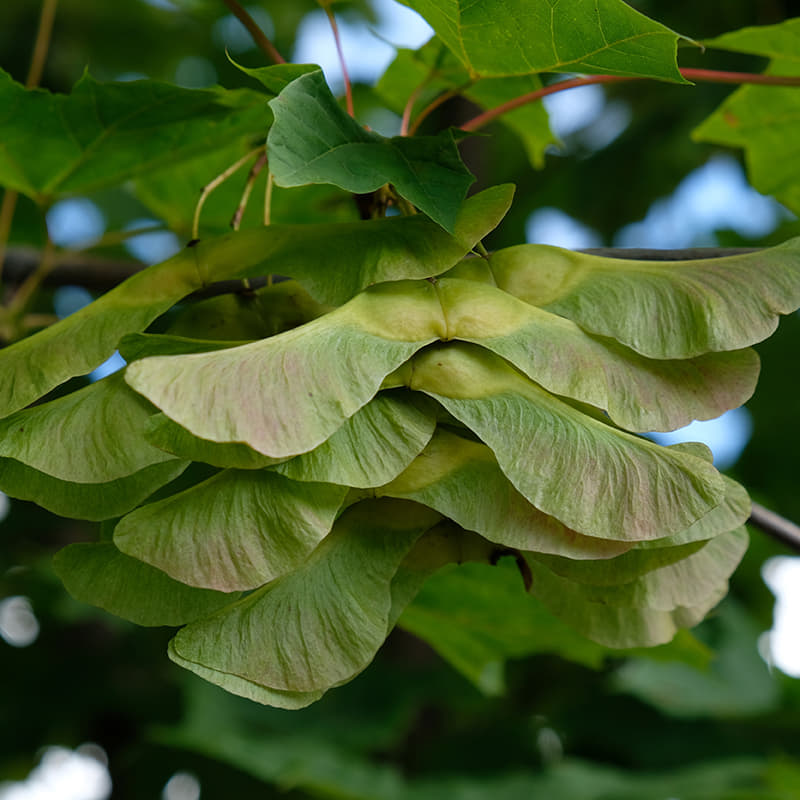
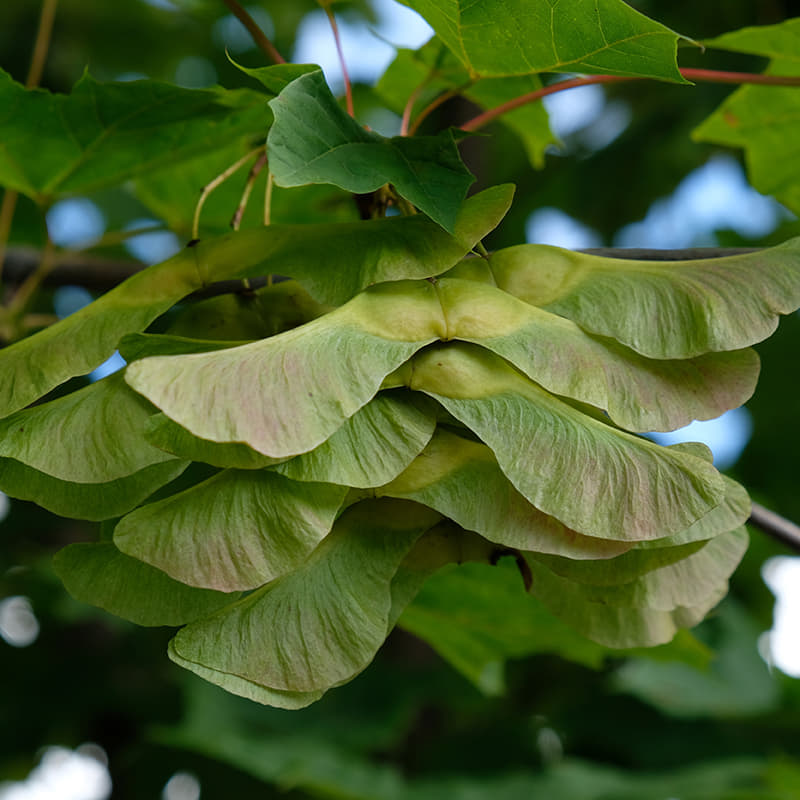 So, an interesting one to me is Norway Maple (Acer platanoides). This one was brough to North America from Europe in the 1750s and it now is dominating forests along the northern parts of the U.S. and into Canada. Originally it was planted because it is tolerant of drought, heat, air pollution, and it can thrive in a wide range of soils. Sounds like perfect conditions for a plant to become an invasive, right? Norway maple is a fast grower and it readily reseeds itself. It also has a shallow root system, so it takes up a lot of topsoil space, and it has a large canopy. This means very little can grow beneath it; it blocks the sunlight and starves understory plants for moisture, so it quickly overwhelms the habitat and creates its own forest monoculture. This also directly threatens the survival of native maple trees, because deer and other wildlife avoid eating the leaves of the Norway maple and so they eat the native species instead. Which means the Norway maple spreads even further and the already choked out native maples are further destroyed. It’s a bad combination. So, if you’re in North American and looking to plant maple trees, avoid the Norway maple and go for a sugar maple or a red maple.
Next is Japanese Honeysuckle (Lonicera japonica). Like I mentioned earlier, I have firsthand experience with this one. It looks just like one would expect of a classic honeysuckle bush with it’s white or yellow tubulur flowers. They bloom from June to October, they are lovely to look at, but they spread like crazy and I can’t overstate that. We didn’t have any when we moved to the farm and the first year I saw one I thought it was lovely and thought it was native. We used to have honeysuckle when I lived in Virginia and I actually planted a pink honeysuckle here in the backyard to remind me of those ones from my childhood. So when a yellow one popped up nearby on the farm, I thought it was cool. Until the next year when I realized there were about a dozen more scattered about. And then they tripled the next year. There isn’t a corner of the farm now that doesn’t have Japanese honeysuckle invading and yet that one pink one I planted is still just that one pink bush. The Japanese honeysuckle was initially planted in New York in 1806 and now covers vast tracks of land from the eastern seaboard all the way here to Missouri. If you want a honeysuckle bush or two, try planting Trumpet Honeysuckle or even go with a Purple Passionflower as an alternative.
There are plenty more examples of invasive decorative plants like golden bamboo, winter creeper, English ivy, all kinds of plants that are either better served as houseplants or should be substituted with something else in your landscape. The key here is to do your research before planting anything, even if you get it at a local nursery. Just because it’s for sale, doesn’t mean it won’t contribute to the undermining of your local native habitats.
More Resources:
Your friend in the garden,