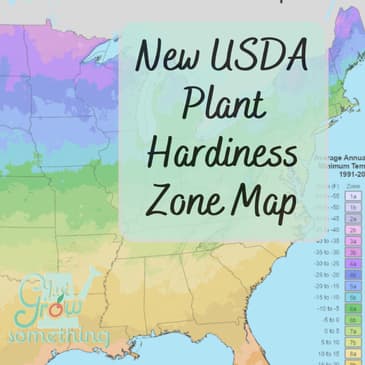
On November 17th the USDA updated the Hardiness Zone Map based on data from the past 30 years and many of us are now in new zones. So, what does that mean? Today on Just Grow Something we’re going to deep dive into the USDA Hardiness Zone Map; what the zone numbers and colors mean, how to use the map, what’s new and different with this version, what this means for perennials versus annual plants, and how it all ties into changes we may or may not want to make in our garden plans. Let's dig in!
Episode References and Resources:
2023 USDA Plant Hardiness Zone Map | USDA Plant Hardiness Zone Map
Ep. 117 - Growing Cut Flowers in the Home Garden with Kathy Gormandy
Just Grow Something Gardening Friends Facebook Group
Check out how you can become a patron on Patreon
Hosted by Simplecast, an AdsWizz company. See pcm.adswizz.com for information about our collection and use of personal data for advertising.
00:00:01
This is Positively Farming Media.
00:00:04
Back in episode 167, when we were talking about frost
00:00:08
protection measures and overwintering things in our
00:00:10
gardens, we had a brief discussion about the USDA
00:00:14
hardiness zone map. I mentioned at the time that we
00:00:19
were due for a refresh on that map and that it wouldn't
00:00:21
surprise me if things shifted just a little bit based on what
00:00:25
I've been seeing in my own gardens in recent winters and
00:00:28
what other gardeners were talking about in their areas.
00:00:31
Lo and behold, last week the USDA updated those hardiness
00:00:35
zones based on data from the past 30 years and many of us are
00:00:39
now in new zones. I have gone from zone 6A to 6B.
00:00:44
So what does that mean today on Just Grow Something, We're going
00:00:48
to deep dive into the USDA hardiness zone map, what the
00:00:53
zone numbers and colors mean, how to use the map, what's new
00:00:57
and different with this version and how it all ties into changes
00:01:00
we may or may not want to make in our garden plans.
00:01:05
Let's dig in. Hey, I'm Karen and I started
00:01:07
gardening 18 years ago in a small corner of my suburban
00:01:10
backyard when we moved to A5 acre Homestead.
00:01:13
I expanded that garden to half an acre and I found such joy and
00:01:16
purpose in feeding my family and friends.
00:01:19
This newfound love for digging in the dirt and providing for
00:01:21
others prompted my husband and I to grow our small homestead into
00:01:25
a 40 acre market farm. When I went back to school to
00:01:27
get my degree in horticulture, I discovered there is so much
00:01:30
power in food and I want to share everything I've learned
00:01:33
with as many people as possible. On this podcast we explore crop
00:01:37
information, soil health, pests and diseases, plant nutrition,
00:01:41
our own nutrition, and so much more in the world of food and
00:01:44
gardening. So grab your garden journal and
00:01:46
a cup of coffee and get ready to just grow something before we
00:01:51
get to hardiness zones. Remember back at the end of
00:01:55
August when we were talking all about storing popular garden
00:01:59
crops from the fall garden with just ambient cold storage?
00:02:03
No canning or freezing or anything.
00:02:05
That was episode 162, and I'll link to it in the show notes.
00:02:09
But at the end of that episode, in the Q&A section on Spotify, I
00:02:14
asked Are you planning to store any crops long term over the
00:02:18
winter? If so, what?
00:02:20
Well, Ashley Coats responded that she is storing winter
00:02:25
squashes, sweet potatoes, and garlic, all favorites of mine to
00:02:28
store each year, and that she hopes to try carrots next year
00:02:32
too, which is another one of my favorites.
00:02:34
But she also mentioned storing dahlias.
00:02:37
Now, of course, she's talking about the tubers of the dahlia
00:02:40
flowers, so popular in many gardens but not Hardy.
00:02:46
In many regions, including my own, they're only Hardy to Zone
00:02:50
8. So if you're in Zone 8 or
00:02:52
warmer, you can simply cut them back at the end of the season
00:02:56
and leave them in place and they'll come back naturally on
00:02:59
their own without being damaged. But for gardeners in zones that
00:03:03
are colder than that, Dahlia tubers need to be dug up at the
00:03:07
end of the season and then put into storage so they can be
00:03:10
replanted the next spring. You do this by lifting the
00:03:14
tubers out of the soil, and you have to do it before the 1st
00:03:17
frost in fall, otherwise they can actually be prone to rotting
00:03:21
and then you remove most of the soil from the tubers.
00:03:24
Some gardeners will dust the tubers with a fungicide just to
00:03:27
prevent any fungal diseases. In either case, you put the
00:03:31
tubers in a pot or a box of some sort and you cover it with dry
00:03:36
compost, and then you just store them in a cool, dark dry spot
00:03:39
indoors until it's time to plant them again in the spring.
00:03:44
And this way you can replant the same tubers over and over again
00:03:47
every year. Now, I know we generally focus
00:03:52
on food gardening on this podcast because OK, that's what
00:03:55
I'm most involved in, but it doesn't mean that I don't love
00:03:59
some good florals and other landscaping.
00:04:01
In fact, we had Kathy Gormandy from P&K Farms on as a guest
00:04:06
last year. She is a flower grower and I'm
00:04:09
thinking now would be a good time to have her back actually,
00:04:12
because I know she's doing some really fabulous things in terms
00:04:15
of opening a boutique and doing classes and stuff.
00:04:18
So I may reach out and see if we can get her back here again for
00:04:22
you. I will leave a link to her
00:04:24
episode in the show notes. And Kathy, if you're listening,
00:04:27
expect an e-mail from me. But in any case, in that regard,
00:04:32
I've been looking at expanding what we talk about a little bit
00:04:37
in terms of florals and other more decorative aspects and how
00:04:42
we can incorporate our edible plants into our landscapes so
00:04:47
that we don't have to be strictly one or the other in our
00:04:51
gardens. In our planting areas, we talk a
00:04:54
lot about companion planting and getting away from mono cropping,
00:04:59
and there's nothing that says a companion plant needs to be
00:05:02
something edible. Yes, nasturtiums and marigolds
00:05:05
can be helpful. And yes, they're pretty and
00:05:07
they're edible, and there are loads of herbs that are both
00:05:10
pretty to look at and also used culinarily.
00:05:14
But what about using strictly decorative plants in and around
00:05:19
our edible ones, and vice versa? Tucking those edibles in and
00:05:23
around our other landscape? I have a large patch of irises
00:05:29
smack dab in the middle of my kitchen garden area.
00:05:32
And even though irises are actually like my least favorite
00:05:36
flower and I really want to yank those suckers out so that the
00:05:39
daffodils and the daylilies that are in there that are currently
00:05:43
being choked out can actually come up and take over.
00:05:46
But I do appreciate the burst of color those irises give me in
00:05:50
the middle of all of my raised beds up there, and I would love
00:05:54
to have that in some more areas in and around my gardens.
00:05:59
And I really think I want more of them to be perennials.
00:06:02
There's just something wonderful about having things pop up all
00:06:06
on their own in the spring without any effort from me.
00:06:09
When I'm in the middle of planning and seed starting and
00:06:12
transplanting all of the annual vegetables that need to go in, I
00:06:16
do put annual flowers out in containers.
00:06:20
Like all over the place. But that really doesn't end up
00:06:24
happening until like late May or even early June, because there's
00:06:28
just no time for me to do it before then.
00:06:30
So some pretty perennials would be greatly appreciated.
00:06:34
So as I look at the topics to focus on for the next season of
00:06:40
this show and for the articles and emails I'll be writing and
00:06:43
sending throughout 2024, if there is a particular non edible
00:06:50
plant you'd like me to focus on or a subject you'd like more
00:06:53
information about, please let me know.
00:06:56
And this goes for the other topics for next season 2 of
00:06:58
course, whether it's a veggie or a soil question or what have
00:07:01
you. What do you want to know more
00:07:05
about? If you're in the Just Grow
00:07:07
Something Gardening Friends Facebook group, feel free to
00:07:10
post it in there or shoot me an e-mail from the for the website
00:07:14
thatsjustgrowsomethingpodcast.com. You can use the link in the
00:07:18
episode description of this episode to leave me a voice
00:07:21
message. You can send me Adm on
00:07:22
Instagram, wherever, whatever. Just reach out.
00:07:26
Let me know what you really want to learn more about in 2024.
00:07:31
So if you are a gardening friend in Canada, you have your own
00:07:37
version of the USDA hardiness zone map.
00:07:41
In fact, you actually have two. I will leave a link to those in
00:07:44
the show notes. One is a hardiness zone map that
00:07:48
combines information about a variety of climatic conditions
00:07:53
across the entire country to produce a single map.
00:07:56
It includes things like minimum temperatures in both the coldest
00:08:00
and the warmest months of the year, the amount of rainfall
00:08:03
June through November, wind gusts, snow depth, all kinds of
00:08:08
stuff that is not represented in our USDA map.
00:08:11
Really, really comprehensive stuff.
00:08:13
The other map for Canada is the Extreme Minimum Temperature
00:08:18
Zones map and that is patterned after our USDA version and it is
00:08:23
literally only concerned with the average extreme minimum
00:08:28
winter temperature for that area and it is aligned with our USDA
00:08:34
version. So when I say zone 6B, that is
00:08:38
represented in the same manner on our USDA hardiness zone map
00:08:43
as it is on the Canadian Extreme Minimum Temperature Zones map.
00:08:49
So just be aware of that when we're talking about different
00:08:53
zones, you can also find hardiness zone maps for Mexico
00:08:58
and also for other countries outside of North America.
00:09:01
And most of them are going to have very similar indices as the
00:09:05
USDA version. But in a lot of cases, this data
00:09:09
actually may not be super important most of the time when
00:09:14
we're planting our gardens. Let's talk about why.
00:09:22
According to the USDA, the plant tardiness zone map is based on
00:09:27
the average annual extreme minimum winter temperature for
00:09:32
an area displayed as 10°F zones, ranging from zone one, which is
00:09:38
the coldest, to zone 13, which is the warmest.
00:09:42
Each zone is divided into half zones, designated as A or B.
00:09:47
For example, 6A and 6B are 5°F increments, representing the
00:09:53
colder and warmer halves of Zone 6.
00:09:57
These designations serve as convenient labels and shorthand
00:10:01
for communicating and comparing the extreme winter temperatures
00:10:05
within the United States and Puerto Rico.
00:10:07
Zone numbers are typically listed with the descriptions of
00:10:11
perennial plants in catalogs and other sales information produced
00:10:16
by commercial nurseries and plant suppliers.
00:10:19
The sequence of colors assigned to the zones mimics the
00:10:22
chromatic spectrum produced by a prism red, orange, yellow,
00:10:26
green, blue, indigo, and Violet, providing A graphical
00:10:30
representation of the plant hardiness zones.
00:10:33
The overlay of colored zones on the map provides a convenient
00:10:37
tool for understanding and comparing plant cold hardiness
00:10:41
across the United States and can facilitate the selection of
00:10:45
appropriate perennial plants based on their observed
00:10:48
performance in other regions of the country.
00:10:54
Notice I said perennial plants, the plant hardiness zone maps
00:10:58
serve as general guidelines for growing perennials.
00:11:03
They are based on the average lowest temperature, not the
00:11:07
lowest temperature ever. Zones in this updated edition of
00:11:12
the map are based on 1991 to 2020 weather data.
00:11:17
This does not represent the coldest it has ever been or will
00:11:21
ever be in an area. It is the average lowest winter
00:11:26
temperatures for a given location for this particular 30
00:11:29
year span. This map was updated by the USDA
00:11:34
Agricultural Research Service Technical Plant Hardiness Zone
00:11:37
Map Review team say that five times fast and the PRISM Climate
00:11:42
Group at my alma mater, Oregon State University.
00:11:45
So the previous map was updated in 2012 and it covered the 30
00:11:50
year period from 1976 to 2005. The update that occurred before
00:11:55
that was in 1990 and then the very first version was in 1960.
00:12:01
Now to give you an example of how things have changed in that
00:12:04
first version, my area of Missouri was listed as Zone 6A.
00:12:09
In 1990 we were redesignated as Zone 5B.
00:12:14
In the 2012 version, we were pushed back into Zone 6A and
00:12:19
drumroll, please This year we have been redesignated as Zone
00:12:23
6B, which means the average low temperature in winter in my area
00:12:31
over the past 30 years is about 5 to 10°F warmer than it was
00:12:38
before. So rather than an average low
00:12:42
temperature of -10 to -5 Fahrenheit, we're now looking at
00:12:48
an average low of -5 to 0 Fahrenheit.
00:12:52
That would be -20.6 to -17.8 Celsius.
00:12:57
Now, this change may not seem significant since I'm still
00:13:02
considered Zone 6, just the warmer edge of Zone 6, But I've
00:13:07
already heard from some of you that you've moved from the warm
00:13:11
edge of one zone up into the next zone up.
00:13:15
Does this mean you should immediately start putting
00:13:17
perennials in the ground that are for a warmer zone?
00:13:21
Well, if you're growing perennial fruits or vegetables
00:13:25
or decorative plants that are sort of riding the line of the
00:13:29
coldest temperatures in your zone and an extreme cold snap
00:13:34
hits colder than usual for your area and it lasts for just a
00:13:38
full day or two, Perennials that have happily grown in your
00:13:42
garden for years could suddenly be lost if they're susceptible
00:13:46
to those colder temperatures. We as gardeners need to
00:13:49
understand that these past weather records cannot guarantee
00:13:54
a forecast for future variations in our weather.
00:13:57
So if I'm in zone 6B and I plant a fruit tree that says it's
00:14:02
Hardy to zone 6, and we have an extraordinary cold winter where
00:14:09
temperatures are regularly dipping lower than usual, will
00:14:12
that tree may not make it, especially if it's not well
00:14:15
established. If I wanted to hedge my bets, I
00:14:18
would plant a variety that's Hardy down to zone 5 to give
00:14:23
myself some wiggle room. Mother Nature is unpredictable,
00:14:26
so if you suddenly find yourself in a warmer zone than you were
00:14:30
before, air on the side of caution When it comes to
00:14:34
planting perennials, we also have to remember that there are
00:14:43
so many other factors that go into the success or failure of
00:14:48
perennial plants. The frequency and speed of the
00:14:51
wind are soil type. The level of soil, moisture,
00:14:54
humidity, and pollution are all factors.
00:14:57
Just because something says it's Hardy in your zone does not
00:15:02
automatically mean it's a great choice.
00:15:04
You may need to do a little more research.
00:15:07
Let's look at light, for example.
00:15:10
Plants need to be planted where they'll get the proper amount of
00:15:13
light during each part of the season.
00:15:16
So if you have a plant that requires partial shade and
00:15:19
you've got it planted under a tree, it may do fabulously well
00:15:22
for most of the year. But if you live in an area that
00:15:25
gets lots of sunshine in the winter and suddenly the tree
00:15:30
that plant has been relying on for shade has dropped all its
00:15:33
leaves, well, that little plant may now be getting too much sun
00:15:37
at a very inconvenient time of the year.
00:15:40
This needs to be factored in. Another factor is the soil
00:15:43
moisture. Plants have different
00:15:44
requirements for soil moisture and sometimes these requirements
00:15:48
change with the seasons. So if the soil is too moist or
00:15:52
too dry in the fall as the plant is entering dormancy, some
00:15:57
plants can suffer from that moisture stress and end up being
00:16:01
damaged. Another consideration is air
00:16:04
temperature. Most of our plants grow best
00:16:07
within a range of optimal temperatures from high to low.
00:16:11
That range might be really wide for some varieties and some
00:16:15
species, but it could also be very narrow for others.
00:16:19
Does that plants temperature range match the range for your
00:16:24
area? Zone 8 in North Carolina can be
00:16:28
very different from Zone 8 in Texas the same way that zone 5
00:16:33
in Wisconsin can be very different from Zone 5 in
00:16:36
Colorado. Take that into consideration.
00:16:40
Another consideration is duration of exposure to the
00:16:43
cold. There are a lot of plants that
00:16:45
can survive a short period of exposure to cold that may not be
00:16:50
able to tolerate longer periods of that same cold weather.
00:16:54
So just like some of our annuals can handle freezing temperatures
00:16:58
for like 2 hours, but maybe not 12, many perennials have the
00:17:02
same tolerance issues. And then the last consideration
00:17:06
would be humidity. High relative humidity limits
00:17:10
cold damage by reducing moisture loss from the plant.
00:17:13
So if you're in an area that is usually pretty humid, your
00:17:17
plants may be able to withstand colder temperatures, whereas
00:17:22
cold injury can be more severe if you're in an area where the
00:17:25
humidity is usually low. Now we've been referencing
00:17:28
perennials this whole time. What does this mean for the
00:17:31
annual plants in our gardens and landscape?
00:17:34
Does this seemingly warmer winter weather have any effect
00:17:38
on those? Likely not?
00:17:41
Frost sensitive plants are simply that, frost sensitive.
00:17:45
The date that frost appears may or may not be any later than
00:17:50
you've been experiencing. Any of you who have been
00:17:53
gardening for more than a few years, and especially those that
00:17:56
keep a garden journal, know whether or not your area has
00:18:00
been getting warmer or not. I know that on average our frost
00:18:05
dates have been within about a week or two of usual, but the
00:18:09
temperatures immediately following that first frost have
00:18:12
been getting warmer and staying warmer for longer into the late
00:18:16
fall. Now that has changed how and
00:18:19
when I have my frost protection on hand, but it's not changing
00:18:24
what I plant or when I plan for those crops to be mature.
00:18:28
And the fact that my zone has now shifted is also not an
00:18:32
indication of anything actually being any warmer.
00:18:35
In fact, the USDA has some very important points they want to
00:18:39
make when it comes to this. Climate changes are usually
00:18:48
based on trends in overall annual average temperatures that
00:18:52
are recorded over 50 to 100 years.
00:18:56
Now, because the USDA hardiness zone map represents only 30
00:19:00
years of averages of the coldest temperature of the year, the
00:19:04
USDA was very specific to say that changes in zones are not
00:19:10
reliable evidence of whether there has been global warming.
00:19:14
Yes, zone boundaries in this edition of the map have shifted
00:19:19
in many areas compared to the previous two versions.
00:19:22
The new map is generally about 1/4 zone warmer than was
00:19:28
reported on the 2012 map throughout much of the US, and
00:19:33
part of this is as a result of just having more recent
00:19:36
averaging period. So the first averaging period
00:19:39
was from 1976 to 2005 and the current averaging period is now
00:19:44
1991 to 2020. But the USDA is very quick to
00:19:49
point out that some of the changes in the zones are
00:19:52
actually the results of additional data sources and
00:19:56
improved estimation methods. These zones shifts can sometimes
00:20:01
result in locations actually being classified into a cooler
00:20:05
zone rather than a warmer one. They said the most substantial
00:20:09
changes produced by additional data sources and improved
00:20:12
interpolation methods were seen in upland areas of Alaska.
00:20:21
I will link to the USDA maps in the show notes and they are
00:20:25
really simple to use. The maps are now interactive so
00:20:30
you have two options. The 1st way is to enter your zip
00:20:34
code into the search box and find your location within the
00:20:37
map. Click on the map at that
00:20:39
location of interest and you will see the zone classification
00:20:42
there. The 2nd way is to download the
00:20:45
digital map for your state and then just find your county.
00:20:49
There is a Maps Downloads tab at the top of the page.
00:20:53
This is also the only way you can get a physical print out of
00:20:58
the maps. The USDA no longer makes any
00:21:01
physical copies. It's all digital, so if you want
00:21:04
one, you'll have to print it yourself.
00:21:07
Until next time, my gardening friends, keep on cultivating
00:21:10
that dream garden and we'll talk again soon.
00:21:12
You just finished another episode of the Just Grow
00:21:14
Something Podcast. For more information about
00:21:16
today's topic, go to justgrowsomethingpodcast.com
00:21:20
where you can find all the episodes, show notes, articles,
00:21:23
courses, newsletter, sign up, and more.
00:21:25
I'd also love for you to head to Facebook and join our gardening
00:21:28
community in the Just Grow Something Gardening Friends
00:21:31
Facebook group. Until next time, my gardening
00:21:33
friends keep learning and keep growing.