
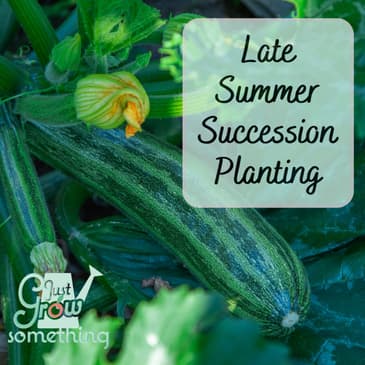
Succession planting gets a lot of attention in the early part of the season when we’re fresh and the garden is new, and we're not beat down by weather or pests or diseases or the endless pulling of weeds. But we often forget about it toward the hottest part of the year. This is why having a garden plan that goes from spring all the way through to fall and even into winter helps, because it’s laid out for us and it doesn’t require thought, just effort.
Succession planting is a really valuable technique for us to ensure a continuous harvest throughout the summer and into the fall. By staggering plantings of certain crops, we can extend the growing season and maximize our yields. Today we talk about some important things we need to know specifically about summer succession planting, what crops are most suitable to a late succession, timing, techniques, and how to use intercropping with your succession planting to make the most of the space you have. Let’s dig in!
Episode Links:
Just Grow Something Fall Garden Challenge Registration
Just Grow Something Gardening Friends Facebook Group
Check out how you can become a patron on Patreon
Merchandise | Just Grow Something
Positively Farming Media Podcast Playlist on Spotify
Hosted by Simplecast, an AdsWizz company. See pcm.adswizz.com for information about our collection and use of personal data for advertising.
00:00:01
This is positively farming media.
00:00:04
Well, welcome back my gardening friends, to another episode of
00:00:07
Just Grow Something. I am so glad that you are here.
00:00:10
If you are new here, welcome. I am your host, Karen Velez, and
00:00:14
my mission is to make you a better gardener and a better
00:00:17
eater. Not by just teaching the how of
00:00:20
gardening, but also the why behind it.
00:00:23
And today is no exception. We're talking late summer
00:00:26
succession planting. I think succession planting gets
00:00:29
a lot of attention in the early part of the season when we're
00:00:32
sort of fresh and the garden is new and we're not beat down by
00:00:36
like weather or pests or diseases or the endless pulling
00:00:40
of weeds. But we often tend to forget
00:00:43
about it toward the hottest part of the year when we're feeling
00:00:46
worn out and the garden's looking a little worn out.
00:00:49
And This is why having a garden plan that goes from the spring
00:00:52
all the way through into the fall, that is detailed out and
00:00:56
maybe even, you know, it has notes into the winter because
00:01:00
it's laid out for us and it doesn't require thought, just
00:01:04
effort. Succession planting really is a
00:01:07
really valuable technique for us to ensure a continuous harvest
00:01:12
throughout the entire summer and then into the fall.
00:01:15
By staggering plantings of certain crops, we can extend the
00:01:19
growing. Season and maximize our yields.
00:01:22
So today we'll talk about some important things we need to
00:01:25
know, specifically about summer succession planting, what crops
00:01:28
are most suitable to a late succession, timing techniques,
00:01:32
and how to use intercropping with your succession planting to
00:01:36
make the most of the space that you have.
00:01:38
Let's dig in. Hey, I'm Karen and I started
00:01:40
gardening 18 years ago in a small corner of my suburban
00:01:44
backyard when we moved to A5 acre homestead.
00:01:46
I expanded that garden to half an acre and I found such joy and
00:01:49
purpose in feeding my family and friends.
00:01:52
This newfound love for digging in the dirt and providing for
00:01:54
others prompted my husband and I to grow our small homestead into
00:01:58
a 40 acre market farm. When I went back to school to
00:02:00
get my degree in horticulture, I discovered there is so much.
00:02:03
Power in food. And I want to share everything
00:02:06
I've learned with as many people as possible.
00:02:08
On this podcast we explore crop information, soil health.
00:02:12
Pests and diseases. Plant nutrition, our own
00:02:14
nutrition, and so much more in the world of food and gardening.
00:02:18
So grab your garden. Journal and a cup of coffee and
00:02:20
get ready. To just grow something before we
00:02:24
jump into summer successions, it is not too late to sign up for
00:02:28
my Fall Garden Challenge. The first emails went out Monday
00:02:31
and we will continue with those emails for five straight days.
00:02:35
Don't worry if you're late signing up.
00:02:37
I will get them to you right away and you will start in the
00:02:40
same place as everyone else. Just go to
00:02:42
justgrowsomethingpodcast.com/fall to get signed up.
00:02:48
I will put a link to that in the show description.
00:02:50
It is absolutely free and is designed to take you from zero
00:02:54
to finished in just five days. So I think first we need to
00:03:00
understand the concept of succession planting, right?
00:03:03
Succession planting is either direct sewing or transplanting
00:03:09
new crops at regular intervals throughout the growing season.
00:03:13
So as one crop is harvested or it reaches the end of its life
00:03:18
cycle, the next match is already ready to take its place.
00:03:23
So this keeps the garden productive and means that we get
00:03:27
a continuous supply. We have a steady harvest all
00:03:30
season long. Now this of course is going to
00:03:32
change throughout the season and we often think of spring as a
00:03:37
really good time for multiple successions because you know,
00:03:40
these are cool season, usually pretty fast maturing crops,
00:03:44
things like radishes and leafy greens.
00:03:46
Those who just make themselves very easily conducive to
00:03:49
planting multiple successions. But summer crops can also be
00:03:54
planted successfully, and this is actually often a really good
00:03:58
idea in terms of things like insect pressure or if we have
00:04:03
short harvest windows. Or maybe we have issues with
00:04:07
uncooperative weather or just like a desire to get the
00:04:11
absolute most out of our summer season.
00:04:14
So of course not all crops are going to be suitable for summer
00:04:17
succession plantings. Mostly we want to focus on those
00:04:21
fast maturing vegetables that can be harvested relatively
00:04:24
quickly and that are well suited for multiple plantings during a
00:04:29
warm season. So.
00:04:31
The most common summer crops are often green beans.
00:04:34
In some areas that's only early and late successions.
00:04:38
Sometimes, especially here, it's too hot and they don't do well
00:04:40
in the middle of the summer. But things like summer squashes
00:04:43
like zucchini and yellow squash, and certain varieties of
00:04:47
cucumbers, we in this area specifically do a lot of
00:04:51
succession plantings with squashes and cucumbers because
00:04:55
we have such problems with squash vine bores and cucumber
00:04:58
beetles and squash bugs at that take out our plants fairly
00:05:02
quickly. So we've found that doing
00:05:04
succession plantings actually ensures that we continue to get
00:05:07
a harvest all season. We can also plant sweet corn in
00:05:11
succession to be sure that we're harvesting pretty regularly for
00:05:14
fresh use and then maybe having some left for freezing or
00:05:16
canning. But even determinate tomatoes
00:05:20
can be grown in succession, so determinate tomatoes generally
00:05:25
have a pretty short number of days to maturity and then
00:05:29
they're done. So if you start new ones after
00:05:33
you have planted the first ones, you will have plants that you
00:05:37
can put in the ground to overlap as far as the maturity dates are
00:05:41
concerned. So determinate tomatoes are
00:05:43
generally easier to maintain. You don't have to prune as much
00:05:47
or at all really, and they're easy to stake and keep
00:05:51
contained. So if you don't have a ton of
00:05:54
room for tomatoes. You can plant one or two,
00:05:58
determinate tomatoes and get lots of tomatoes all at once
00:06:01
over the course of a couple of weeks, and at the same time
00:06:04
you're harvesting off of those You can plant a couple more that
00:06:07
will mature later on and then once that first set is done you
00:06:11
can pull the plants and make room for other things.
00:06:14
This also often leaves less chance for like diseases to take
00:06:19
hold if you are in a high risk area for tomato diseases.
00:06:23
So since those determinate tomatoes are only going to be in
00:06:26
place for, I don't know, maybe 6570 days and then they're going
00:06:31
to be done, you have a better chance of getting them to
00:06:34
maturity and getting a harvest out of them and then just
00:06:36
planting A succession. So you know, crops that are
00:06:39
suitable for summer successions don't necessarily have to be
00:06:42
those really fast maturing ones. That's a big difference between
00:06:45
a summer succession and say a spring or fall one.
00:06:49
Of course, timing is going to be crucial.
00:06:53
For a successful summer succession planting, even more
00:06:57
so, I think, than for a spring or even a fall garden.
00:07:01
So you're going to want to plan your planting schedule based on
00:07:06
the average temperatures and weather conditions during the
00:07:09
summer for your area. You know, a lot of the time it's
00:07:12
pretty easy to give a blanket statement of, Oh well, you know,
00:07:15
spring successions, those things like radishes and leafy greens.
00:07:20
Our general recommendations for most areas, but your summer
00:07:24
successions are going to vary depending on where you are.
00:07:27
So, for example, many of our southern US gardeners have to
00:07:31
plant green bean successions very early and then delay their
00:07:37
late green beans until very late summer, almost fall because the
00:07:42
heat Midsummer is just too much for those beans to be able to be
00:07:46
productive, but conversely to that.
00:07:48
Our more northern growers in the US may be able to do multiple
00:07:52
successions all through the summer, so they have no break in
00:07:56
the harvest. But those growers likely have a
00:07:59
shorter growing season overall, which means you guys will have
00:08:03
to pay attention to the number of actual frost free days that
00:08:06
you have in your area and make sure that that last summer
00:08:10
planting isn't done so late that the temperatures are starting to
00:08:13
get too cool for them to be able to be productive.
00:08:16
So the way that we do this. Is by making a planting calendar
00:08:21
to keep track of when we are supposed to sow or transplant
00:08:25
each one of these crops during the summer and then to keep
00:08:28
track of the specific maturity dates of the crops that we're
00:08:32
sowing. So you know, yes, vast maturing
00:08:34
crops are going to be the best candidates for this.
00:08:36
If you're doing successive plantings, especially if you
00:08:40
have really extreme summer conditions on one side or the
00:08:44
other, you're really not going to plan on multiple plantings.
00:08:47
Of something like an heirloom tomato that takes like 80 days
00:08:51
to get to maturity and then we'll actually continue to keep
00:08:54
producing all the way until fall.
00:08:55
That's not what we're talking about here.
00:08:57
We're talking about things that generally are one and done or
00:09:01
you know, only can be harvested off of for a couple of weeks and
00:09:04
then those plants have reached maturity and they're just not
00:09:08
useful anymore. So they can be pulled out and
00:09:10
can be replaced by something else.
00:09:13
When we come back, I will go over some techniques for summer
00:09:16
successions, including successions that are planted all
00:09:19
at once and how to use intercropping to expand the
00:09:23
garden right after this. So there are three different
00:09:35
ways that we can do succession planting.
00:09:37
The first one is direct soaking, so for things like green beans.
00:09:43
You would want to sow small batches of those seeds every
00:09:47
couple of weeks while the weather is conducive, and again
00:09:50
paying attention to how fast those are going to get to
00:09:53
maturity and what your late summer weather is going to be
00:09:55
like now for things like. Zucchini or yellow squash or
00:09:59
cucumbers that have longer harvest periods but you know are
00:10:05
going to be taken out by insect pests or disease like we do
00:10:08
here. Then you can delay sowing those
00:10:11
seeds to maybe every four weeks. So this is how we make sure we
00:10:15
have those crops all summer long.
00:10:16
No matter what the pest problem is, we will do an initial
00:10:19
planting in the spring. That's usually transplants that
00:10:22
will go into the ground. Sometimes it's directly from
00:10:25
seed. But if I do them from
00:10:27
transplants, I can go ahead and sow seeds directly at the same
00:10:32
time that I'm planting those transplants.
00:10:34
And that way I know about a month later I'm going to have
00:10:37
more mature plants that are coming on the heels of the first
00:10:40
batch. And then since the summer heat
00:10:43
has worn that soil and there is no need for me to start them
00:10:46
indoors. I can come back in again 4 weeks
00:10:49
later and just pop those seeds in the ground and germination
00:10:52
only takes a couple of days and then I have gotten 3 successive
00:10:55
plantings of zucchini or yellow squash or cucumbers or all three
00:11:00
and insured myself a continuous harvest.
00:11:03
Now the 2nd way to do this is with doing transplants.
00:11:06
So you can do this with those other ones like zucchini or
00:11:10
yellow squash. But really what I'm thinking
00:11:12
about things are here are things that prefer to be started early
00:11:16
or indoors. So things like those determinate
00:11:19
tomatoes or maybe broccoli or other brassicas if you're in an
00:11:23
area that has fairly cool summers and you can do
00:11:26
successive plantings of cauliflower, broccoli, cabbage,
00:11:29
that sort of thing. You will need to start the new
00:11:33
seedlings indoors, start them in batches, and then transplant
00:11:38
them as space becomes available in the garden according to the
00:11:42
calendar that you've created and based on the weather.
00:11:45
And this is the other thing that's kind of important to pay
00:11:47
attention to. Don't make yourself a plan and
00:11:50
then just stick to it without taking it into consideration
00:11:53
what is going on around you. So, for example, I'm supposed to
00:11:57
be planting A succession of collard greens this week.
00:12:00
But the temperatures are supposed to be in the one
00:12:03
hundreds plus Fahrenheit, so that is not conducive for any
00:12:07
type of transplanting. So I'm going to hold off, I'm
00:12:10
going to leave them in their pots until it cools off a little
00:12:12
next week and then plant them then now a few weeks after that,
00:12:17
I'll be moving on to fall planting.
00:12:19
And there's another younger batch of collards that will
00:12:21
follow the final summer succession.
00:12:24
And so there is a little bit of a fine line sometimes between.
00:12:28
Whether it's a summer succession or a fall crop, and the way that
00:12:33
I sort of delineate that is, is late summer successions are
00:12:37
intended to be harvested well before your first frost comes in
00:12:42
or your daylight hours start to drop.
00:12:44
This is truly something that you are trying to get planted during
00:12:48
the summer, harvested during the late summer or very early fall,
00:12:53
and the whole reason for it is to just sort of extend the
00:12:56
summer season. To me, a fall crop really is
00:13:00
intended to be just that. It's grown through the fall,
00:13:04
it's harvested late in the fall, it very well may be prepared for
00:13:10
overwintering, and so it's not something that I'm going to
00:13:13
plant multiples of usually, unless it is one of those very,
00:13:17
very fast maturing things like the leafy greens.
00:13:19
But even then I don't do a whole lot of succession planting in
00:13:23
the fall. I'd use successive varieties,
00:13:28
which is sort of the 3rd way that you can do succession
00:13:31
planting. So some crops have varieties
00:13:36
with varying maturity dates, so lettuces oftentimes will have
00:13:41
some that are ready within 35 to 40 days, and then there's other
00:13:44
ones that are more of the head type lettuces that may take 55
00:13:48
to 60 days. You can choose different
00:13:51
varieties to stagger the harvest times based on how long it takes
00:13:55
them to get to maturity. And you don't have to worry
00:13:57
about starting successive plants or remembering when to plant
00:14:01
them all. You just start them all at once,
00:14:04
plant them all at the same time, and then let them mature at
00:14:07
their own pace and harvest as they come ready.
00:14:11
This is a great tactic that cuts down on the workload a little
00:14:15
bit. Generally use this as a sort of
00:14:18
spring slash summer combo when it comes to my cabbages.
00:14:23
So there are my TR cabbages which are the small mini heads
00:14:27
that mature very, very quickly. And then I will generally plant
00:14:31
at least two to three other varieties that will come to
00:14:35
maturity all throughout the late spring into the summer and even
00:14:39
into the very, very late summer. So I still have two varieties of
00:14:44
cabbages that are still forming their heads that have been in
00:14:47
those beds since the early spring.
00:14:49
As a matter of fact, I think some of them have been in the
00:14:51
beds since the beginning of March.
00:14:54
And they are just now coming to maturity.
00:14:57
So using successive varieties allows you to kind of cut down
00:15:01
on your workload, get everything planted all at once and then be
00:15:05
able to harvest in succession. And as those things are
00:15:08
harvested and pulled out of the garden, then you can replace
00:15:11
them with something else. So using those successive
00:15:14
varieties or any type of a succession planting is a really
00:15:17
good way to sort of make the most of your garden space.
00:15:20
But one other way to do this is with intercropping.
00:15:23
So intercropping involves planting 2 or more crops
00:15:28
together that have different growth habits.
00:15:32
So in the summertime, if you have things that are growing
00:15:38
tall, then you can intercrop things that grow short.
00:15:42
In between or on the outer edges of those to make the most use of
00:15:46
your space. Not only does this get you sort
00:15:49
of more crops for the space that you have, but it also is keeping
00:15:54
your soil covered, which of course is going to help with
00:15:57
shading out the soil and making sure that it stays cooler, which
00:16:00
is helping the plant growth. It's also taking advantage, the
00:16:04
best advantage of your water usage, but it's very important
00:16:09
with intercropping and just with successive planting in general
00:16:13
to make sure that you are maintaining good soil fertility.
00:16:16
This is why I prefer to use organic mulches where I can
00:16:21
because they are going to breakdown over the season and
00:16:24
that we're going to help to amend that soil as they're doing
00:16:27
their job in trapping in the moisture and keeping the weeds
00:16:30
at Bay. But after each crop is
00:16:33
harvested, you can also go ahead and just amend the soil with
00:16:36
some more compost or some sort of organic matter and let it sit
00:16:40
there. You don't even really have to
00:16:41
work this in, just let it sit there and it's going to help to
00:16:44
replenish the nutrients for the next crop you do.
00:16:48
Also, with success in planting, want to make sure that you are
00:16:53
giving the plants adequate water especially.
00:16:56
When you have young seedlings and we are in the really, really
00:17:00
hot summer months. So again, our mulch is going to
00:17:03
come in really clutch in that instance to help retain that
00:17:07
soil moisture in addition to reducing the weed growth which
00:17:11
can compete with your new plantings and compete for the
00:17:13
water and it's going to help to really maintain that soil
00:17:17
moisture. So just pay attention to your
00:17:19
watering and your mulching. Because you're putting so many
00:17:22
plants in, you want to make sure that the demand that that is
00:17:25
creating on your soil is taken into consideration and you keep
00:17:29
that fertility and that that soil moisture level up.
00:17:33
So the one thing that I could think of that might be a little
00:17:37
bit of a drawback to successive planting is managing the pests
00:17:43
and the diseases. Because you have crops that are
00:17:47
in place for an extended period of time and they are the same
00:17:50
types of crops going in the same space over and over again, we
00:17:55
really need to be vigilant about paying attention to the pests
00:17:58
and managing the disease. So inspecting your plants
00:18:01
regularly for any signs of trouble and taking the
00:18:04
appropriate measures right away is going to be important.
00:18:08
But again, intercropping here is going to help with that.
00:18:11
So we've talked about it before. When you plant multiple
00:18:14
varieties or multiple species together in a garden bed, it's
00:18:19
going to help to confuse or mask the chemical signal that most
00:18:23
insect pests use in order to find their ideal target.
00:18:28
So if you're planting onions in between your cabbages and then
00:18:33
you're planting, you know, flowers or sweet alyssum or or
00:18:36
lettuces or something on the outside of that cabbage.
00:18:39
You have three different species or more that are all planted
00:18:43
together and they are helping to confuse those things.
00:18:46
The same thing sort of goes for the diseases, although to a
00:18:48
lesser extent. So that is just a matter of
00:18:52
trying to not plant things together that are all
00:18:56
susceptible to the same types of diseases.
00:18:58
Now sometimes you can't help it. I mean with us here in the early
00:19:01
part of the summer when it's still very, very humid and it
00:19:04
hasn't really dried out a whole lot.
00:19:06
We are very susceptible to a lot of fungal diseases and it really
00:19:09
doesn't matter what it is and I'm planting together something
00:19:12
is going to get something. So that's just when it, it
00:19:15
really becomes, you know, incumbent on the gardener to
00:19:18
inspect their plants pretty regularly and just make sure
00:19:21
that we're doing what we can to to keep the pests and the
00:19:24
diseases at Bay. And of course, finally, what
00:19:28
goes along with all of this is keeping a garden journal.
00:19:32
So this is, if this is new to you, if this is something that
00:19:35
maybe you've done in the spring but you've not done in the
00:19:37
summer, or you haven't done succession planting at all, this
00:19:41
is just one more reason to keep a garden journal to record.
00:19:46
Your efforts and note the dates of the plantings.
00:19:49
And you know how quickly they matured, because, again, things
00:19:53
often tend to mature a little bit more quickly in that warm
00:19:57
summer soil and that warm sun than they might early or later
00:20:00
in the season. So how well did the harvests go?
00:20:04
Did you get as much out of the first planting as you did the
00:20:07
third planting? Any observations for why you
00:20:10
think that might have happened? This information is going to be
00:20:13
valuable for planning your future seasons.
00:20:16
And just improving your gardening skills overall and it
00:20:19
will give you an idea of what performed best in your garden
00:20:21
and what didn't. So you can change things up the
00:20:24
next season and maybe try a different variety, maybe one
00:20:27
that matures more quickly or maybe one that grows more
00:20:29
slowly. Whatever it is, it is very
00:20:32
difficult year after year to try to keep these things just in our
00:20:35
heads. So I mean, take it from me, I'm
00:20:37
turning 50 this year. My memory is not like it used to
00:20:39
be. So keeping a garden journal is
00:20:42
definitely something that is important and is going to help
00:20:46
to improve the garden year after year.
00:20:49
Now of course, if you didn't create a garden plan at the
00:20:52
beginning of the season and you don't have anything planned for
00:20:56
a succession gardening, it is not too late in the summer for
00:21:00
you to go ahead and try to do this.
00:21:02
It's just a matter of going out and looking at what you have
00:21:05
that is currently growing and see if there is anything that is
00:21:08
coming to the end of its lifespan that you would like to
00:21:10
repeat again for the summer and determining whether or not you
00:21:15
have enough time to be able to do that before you start moving
00:21:18
into the fall garden. So at this stage of the game, if
00:21:21
you were to plant something that say is a 40 day or 45 day plant
00:21:27
like a zucchini, you would absolutely have time.
00:21:31
To get plenty of harvest off of it before we start moving into
00:21:35
the fall and things start to slow down.
00:21:37
So there's there's no harm in going out there right now and
00:21:41
saying, OK, I didn't plan for this, but what can I do so by
00:21:44
incorporating succession planting into your gardening
00:21:48
practices. You can totally extend your
00:21:51
harvest throughout the summer and still be able to have room
00:21:55
in the garden and your, you know, make the most of your
00:21:58
garden space and your resources when you start moving into the
00:22:01
fall. I hope that has inspired you to
00:22:07
get out into the garden and check out what you might be able
00:22:09
to squeeze in before we get into fall plantings.
00:22:13
I really hope that you do have some time and some success in
00:22:16
this. Until next time, my gardening
00:22:18
friends. Keep on cultivating that dream
00:22:19
garden and we'll talk again soon.
00:22:21
You just finished another. Episode of the Just.
00:22:23
Grow something podcast. For more information about
00:22:26
today's. Topic go to just.
00:22:27
Growsomethingpodcast.com where you can find all the episodes,
00:22:31
show notes, articles, courses, newsletter, sign up and more.
00:22:34
I'd also love for you to. Head to Facebook and join our
00:22:37
gardening community in the Just Grow Something Gardening Friends
00:22:40
Facebook group. Until next time, my gardening
00:22:42
friends keep learning and keep growing.