
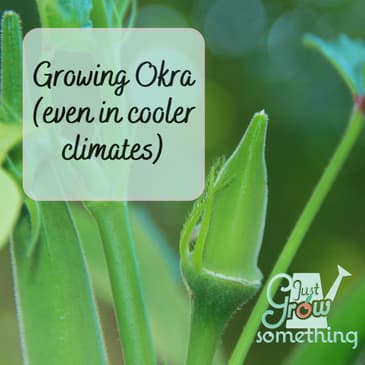
On today’s episode we go over the basics of growing okra, including preferred temperatures and conditions that are key to its success, and discuss ways to work around some of those preferences to get yourself a crop even in a short season or difficult climate. You can most certainly grow this southern favorite in a cooler climate with a shorter season with just a few tricks!
Episode Resources:
Vegetables. Wageningen, Netherlands: Backhuys. 2004. p. 21. ISBN 9057821478.
"Okra, or 'Gumbo,' from Africa". Texas AgriLife Extension Service, Texas A&M University. http://plantanswers.tamu.edu/publications/vegetabletravelers/okra.html
"Colonial Food In Philadelphia - 1883 Words | Internet Public Library".
Okra - an overview | ScienceDirect Topics
Okra: Nutrition, benefits, and recipe tips (medicalnewstoday.com)
Growing Okra Plants | How to Plant Okra and General Growing Tips
How to Plant, Grow, and Harvest Okra - Harvest to Table
Okra | Home & Garden Information Center (clemson.edu)
19 Best Okra Varieties To Grow In Your Garden Or Container (gardeningchores.com)
How to Store Okra (eatingwell.com)
Podcast Resources:
Buy One Get One Free from Elm Dirt: Use Code WOLFCREEK
Just Grow Something Gardening Friends Facebook Group
Check out how you can become a patron on Patreon
Hosted by Simplecast, an AdsWizz company. See pcm.adswizz.com for information about our collection and use of personal data for advertising.
00:00:01
This is positively farming media.
00:00:04
I think there are two types of people.
00:00:07
Those that love okra and those that absolutely can't stand it.
00:00:12
But I'm convinced that at least half of those that can't stand
00:00:15
it, just haven't ever had it cooked properly if you've only
00:00:19
ever had it in gumbo or you had an undercooked or oversized and
00:00:23
it was just slimy, well, you've not really had okra.
00:00:27
Welcome back my gardening friends to another episode of
00:00:29
just gross. Something, I'll be honest, I
00:00:31
hadn't ever even tried okra the first time I grew it.
00:00:35
We just had so many customers at the farmers market asking for
00:00:39
okra every year, I decided to give it a try.
00:00:42
It wasn't until that next summer that I tasted it and was
00:00:46
admittedly a little underwhelmed.
00:00:49
Yeah I hadn't had it cooked properly yet either.
00:00:51
What was not underwhelming though was the experience of
00:00:55
actually growing the okra those plants were amazing.
00:01:00
They were huge. They were resilient to just
00:01:02
about everything our Missouri, summer threw at them.
00:01:05
They had zero pest problems. And produced the most beautiful
00:01:09
flowers, all season long as they just produced and produced until
00:01:14
the first freeze. Finally, hit saving the seeds
00:01:16
for The Following season was super easy and I even used the
00:01:20
dried pods to create Christmas ornaments that year.
00:01:23
And as we recently discussed on a companion, planting episode
00:01:27
okra can be used to help control whiteflies.
00:01:30
In the garden. I mean, come on how many other
00:01:31
vegetables in our Gardens are that versatile and don't think
00:01:35
if you're not in the South or at least on the edge of it, like we
00:01:38
are that you can't grow okra. You can most certainly grow this
00:01:42
Southern favorite in a cooler climate with a shorter season
00:01:45
with just a few tricks. On today's episode, we'll go
00:01:48
over at the basics of growing okra including preferred
00:01:51
temperatures and conditions that are key to its success and
00:01:55
discuss ways to work around some of those preferences to get
00:01:58
yourself, a crop even in a short Or difficult climate.
00:02:01
Let's dig in. Hey I'm Karen and I started
00:02:04
gardening 18 years ago, in a small corner of my Suburban
00:02:07
backyard. When we moved to a 5-acre
00:02:09
homestead, I expanded that Garden to half an acre and I
00:02:12
found such joy and purpose in feeding my family and friends.
00:02:16
This newfound love for digging in the dirt and providing for
00:02:18
others. Prompted my husband and I to
00:02:20
grow our small Homestead into a 40-acre market farm.
00:02:23
When I went back to school to get my degree in Horticulture, I
00:02:26
discovered there is so much power in food and I want to
00:02:29
share everything. The thing I've learned with as
00:02:31
many people as possible on this podcast.
00:02:33
We explore crop information soil, Health pests, and
00:02:36
diseases, Plant Nutrition, our own nutrition.
00:02:39
And so much more in the world of food and gardening.
00:02:42
So, grab your garden journal, and a cup of coffee and get
00:02:44
ready to just grow something. Okay, so a quick thank you to
00:02:48
those who reached out and asked about my eye, after these silly
00:02:51
incident with the tomato plant, I'm fine.
00:02:53
Really the itching in the burning was temporary and I was
00:02:55
right as rain by the next morning, what I am dealing with
00:02:59
right now though. A gardening overuse injury, I
00:03:03
swear, it's the truth. I have developed gluteal
00:03:06
tendinopathy from the incessant amount of squatting bending
00:03:10
reaching and lifting that I have been doing in the gardens.
00:03:13
I think that combined with using a different vehicle for my
00:03:15
weekly deliveries which sits much lower to the ground than my
00:03:19
pickup truck has caused an overuse injury.
00:03:22
That's normally seen in athletes that play soccer.
00:03:26
And also Runners, which, of course, means, I now have to
00:03:29
take a short break from running because I can't take a break
00:03:32
from the gardening, have to modify the way that I'm doing
00:03:35
the gardening, which was really interesting while I was
00:03:37
trellising Tomatoes this morning and I need to add some strength
00:03:41
training to my routine. So I can be healed up in time to
00:03:44
start marathon training for the fall.
00:03:46
But I mean, come on, who gets tendonitis in their glutes from
00:03:50
gardening. I do.
00:03:51
Now, apparently, this whole aging thing is just for the
00:03:55
birds Good news is, I won't have to worry about bending or
00:04:02
squatting or reaching down into my okra crop okra grows, nice
00:04:07
and tall when it's healthy. And it really doesn't need much
00:04:10
in the way of Maintenance, it really has been for me a kind of
00:04:14
seed it and forget it. Kind of a crop, it's even done.
00:04:17
Well out competing all but the tallest in the strongest of
00:04:20
weeds which means I have to keep the Johnson grass out of it.
00:04:23
But nothing else has seemed to give the okra Cropper run for
00:04:27
its money. So are you ready to grow okra?
00:04:29
All right, as always, let's start with the basics.
00:04:37
The Latin name for okra is able most Gus esculenta sand.
00:04:41
It's in the malvaceae family, which is the mallos.
00:04:44
Now, if you've ever seen the flowers of an okra plant, this
00:04:46
should come as no surprise because they look very much like
00:04:49
the other species of the family, like hollyhock and hibiscus.
00:04:53
But that plant family also includes cotton and cacao.
00:04:57
The true origin of okra is a little uncertain because there
00:05:01
is no known truly wild specimens, only naturalized ones
00:05:06
the theory. Three.
00:05:07
Is that okra originated in very hot areas of Africa, and Asia
00:05:11
was cultivated in the Middle East in India.
00:05:14
And there have been carved examples of okra found in
00:05:17
Pharaoh's temples in Egypt, that seems to have made its way from
00:05:20
Egypt to Europe in the early 1200s.
00:05:23
And then was brought to South America by the slave trade, in
00:05:26
the mid, 1600s and then made it to North America in the early
00:05:30
1700s, with record of it being grown as far north as
00:05:33
Philadelphia by 1748. Now, it's important to note
00:05:37
here. That okra used in West Africa is
00:05:40
a different variety than what we typically see in the other areas
00:05:44
of the world which is part of the debate about where a
00:05:48
esculent has originated because the West African okra is able
00:05:52
mosca's Cali and it is considered a traditional food
00:05:56
there, which brings us into a great time to discuss.
00:06:00
The cultural significance and ethno Botanical uses.
00:06:02
For okra remember, ethnobotany is the study of a regions plants
00:06:06
and their Google uses through the traditional knowledge of a
00:06:09
local culture and its people, these uses are cited as a
00:06:12
historical and anthropological resource never in.
00:06:15
Just the parts of any plant without being absolutely
00:06:17
positive of its effects upon the human body.
00:06:20
Okra is a multi-purpose crop, it is very much valued for those
00:06:24
tender little pods but in West Africa leaves Buds and Flowers
00:06:29
of the okra are also consumed. The dried seeds provide, oil
00:06:34
protein, vegetable curd and it serves as a cop.
00:06:37
Substitute dried okra seeds contain 18 to 20 percent oil and
00:06:42
22, 23, % crude protein, which means it's a very important
00:06:46
food. Staple, the foliage can be used
00:06:49
for biomass in the dried stems. Serve as a source of paper pulp
00:06:53
or fuel quite literally, the entire plant is used in its
00:06:57
native regions. Now, as far as nutrition is
00:06:59
concerned according to the USDA National nutrient database, one
00:07:04
cup of raw okra at 100 grams contains 33 calories, one point,
00:07:09
nine grams of protein, which is a lot for a small amount of a
00:07:12
vegetable point, two grams of fat, seven point five grams of
00:07:16
carbohydrates, just over three grams of fiber and about a gram
00:07:20
and a half of sugar. But okra also contains a good
00:07:23
amount of vitamin K, potassium, vitamin C, magnesium and calcium
00:07:27
along with some vitamin B6. Folate vitamin A and other trace
00:07:31
minerals. It is a very healthy food for
00:07:33
us. Okra also contains a variety of
00:07:37
It compounds antimicrobials and anti-inflammatories.
00:07:41
Now, if you're an okra lover, you should be aware that eating
00:07:44
too much okra can actually cause some gastrointestinal problems
00:07:47
if you're not used to it. And if you have some existing
00:07:50
issues okra is also high in oxalates and just like, with
00:07:54
spinach folks who are prone to kidney stones, may want to avoid
00:07:58
consuming High oxalate Foods in large quantities, and okras high
00:08:02
vitamin K content. May affect those who use
00:08:05
blood-thinning drugs like warfarin, Or Coumadin because
00:08:08
vitamin K helps the blood clot. But because okra seeds can also
00:08:13
provide oil and protein in regions where food is often
00:08:17
scarce. The seeds can offer a really
00:08:19
good source of high quality protein.
00:08:22
This is also great news for vegan eaters, who may struggle
00:08:25
with getting enough plant-based protein so how do we grow?
00:08:28
It okra requires, hot weather, full sun, and well-drained soil.
00:08:34
It is very sensitive to cold temperatures.
00:08:36
So even though you will, Instructions to plant it.
00:08:38
After the last frost, or even four weeks after the last frost,
00:08:42
don't let that be your guide. You want your soil temperature
00:08:45
at at least 75 degrees Fahrenheit and overnight lows
00:08:49
staying above 50 degrees Fahrenheit.
00:08:52
Most okra varieties need a minimum of 55 to 65 frost-free
00:08:58
days with daytime temperatures. Consistently above 85 degrees
00:09:03
Fahrenheit or 29 Celsius to kind of meet its full, Potential and
00:09:08
some heirloom varieties can take up to 75 days to produce.
00:09:11
So here we generally don't even think about putting our okra in
00:09:16
until after our sweet potatoes. Have gone in the ground and
00:09:19
that's usually well after the first week in June, we just got
00:09:24
the sweet potatoes, planted over the past weekend and we're in
00:09:26
the second week of June. So now the okra seeds will go
00:09:30
into the ground if you're in zone 7 or further south in the
00:09:34
northern hemisphere that this shouldn't be any kind of a
00:09:36
problem. You it's the rest of us in zone
00:09:39
6 and further north that need to consider our varieties in our
00:09:42
timing a little bit more. So unless you're in a short
00:09:45
season area direct sowing your okra is the best path.
00:09:50
I'll talk about all the short season tricks here in a minute
00:09:52
okra just doesn't love being transplanted so it's easiest to
00:09:56
sew them in place. For the first few times that you
00:09:58
grow, it the seed should be planted about a half-inch deep
00:10:01
and about 10 to 18 inches apart, or thinned to that distance
00:10:05
apart for the best results. Now, to be honest, though, So I
00:10:07
just use my little Earth way walk-behind Cedar at whatever
00:10:11
spacing I can manage. I think it's usually like four
00:10:13
to six inches apart and I never come back and then those
00:10:16
seedlings, it really does end up as a thick stand of plants, but
00:10:20
it doesn't appear to impact my yield at all.
00:10:24
But if you have a smaller space, you may decide to adhere to that
00:10:26
proper spacing just to make the most of what you've got.
00:10:29
Now, if you are in an ideal climate for growing okra, they
00:10:32
can get as tall as 10 feet tall. So be sure you keep this.
00:10:37
This in mind when you're planning, where these are going
00:10:40
to be growing in your garden mind generally hit around the
00:10:43
six or seven foot Mark. And that's why I say there's not
00:10:46
going to be any stooping or bending with this crop.
00:10:48
I'm often actually ducking under the leaves though to get to the
00:10:51
pods. I just can't see from above when
00:10:53
they get that tall, it's a literal okra jungle and I am
00:10:56
searching for the pods. Now there are dwarf varieties of
00:11:00
okra though so if you need something more compact that so
00:11:02
that it doesn't like shade out, the other plants being grown in
00:11:05
your small area. You'll be able to find those So,
00:11:07
obviously, with most crops, the more fertile soil, the better,
00:11:10
but in my experience, okra can scavenge nutrients pretty well,
00:11:14
and it has grown in some not-so-great soils, on my place
00:11:18
I met with compost at the beginning of the Season as
00:11:20
always. And if your soil is particularly
00:11:23
void of nutrients, then use a continuous release plant food of
00:11:26
some type, or side, dress it with a balanced fertilizer.
00:11:29
You just don't want High nitrogen unless you're really
00:11:32
depleted because then you'll end up with lots of vegetation and
00:11:35
very few flowers. Now, I've not used Of the elm
00:11:37
dirt products on my okra because I've never needed to, but I can
00:11:41
imagine the bloom juice would work.
00:11:42
Well, once the plants are established and blooming and
00:11:45
fruiting, I've also noticed our okra tends to do just fine in a
00:11:49
drought. I've never seen a substantial
00:11:52
drop in yield when we've had long periods without rain and
00:11:55
I've never irrigated mine. So, if you have a challenging
00:11:59
area in your garden, this might be a good spot for okra.
00:12:02
And then another cool thing about okra is, it doesn't need
00:12:06
as an acidic. Soil as most of our other
00:12:08
garden. Plants it does best in soil with
00:12:10
a pH between 6.5 and 7.0, so pretty neutral, and it can do
00:12:15
just fine in a pH as high as 7.6.
00:12:18
Now, this is about the same as what we aim for in growing
00:12:21
asparagus. So if you have an area near an
00:12:24
amended asparagus bed, you can plant okra there and know that,
00:12:28
the soil PH will be conducive for both crops and sin.
00:12:32
So creditors, whiteflies it can be a good companion crop for the
00:12:35
asparagus. And Deterring property may just
00:12:39
be a reason to grow okra in the Garden or On the perimeter of
00:12:42
the garden. Even if you don't like to eat
00:12:44
it, we always have a white fly problem in our Tomatoes at this
00:12:48
time of the year and okra also gets along well with peppers,
00:12:50
cucumbers, basil, eggplant and melons, so you might just
00:12:55
consider it a companion, planting or a companion crop, if
00:12:58
you have a white flight issue. Now, there's really not much to
00:13:02
do with okra once it sprouts, other than keeping the weeds
00:13:05
down, it really is very hands off if you're trying to grow
00:13:16
okra in a short season or other difficult area here, are some
00:13:20
tricks to getting them to a harvest before.
00:13:22
Your first Frost choose fast. Maturing varieties.
00:13:26
There are some okra plants that are bred to mature in as little
00:13:29
as 50 days, Blondie, Alabama, red, and jambalaya are a few
00:13:34
that I know of. If you have enough Frost Days,
00:13:37
which you live in an area where the Summers can just be cooler.
00:13:41
Overall like some areas of the Pacific Northwest or mountainous
00:13:44
regions like Colorado. You can always look for
00:13:46
varieties that are specifically for cooler weather.
00:13:49
These include Annie Oakley to Jing orange and Blondie again
00:13:53
here. And that's Blondie with the, why
00:13:55
bl0ndie why? Another trick is to start your
00:13:59
seeds indoors. Now, I know I said, okra does
00:14:02
best when it's not transplanted, but if you only have a short
00:14:04
window of opportunity, you gotta do what you gotta do.
00:14:07
Do start them indoors preferably in something like a peat, pot,
00:14:11
soil block, Paper Pot or something else.
00:14:14
That won't require you taking the plant out of the container
00:14:18
before putting it into the ground.
00:14:20
If you can just pull, open the bottom of the pot and drop the
00:14:23
plant into the soil pot and all without disturbing the Taproot.
00:14:27
The plant will be better for it. And then to speed up the
00:14:30
germination, you can also soak the seeds in water overnight, to
00:14:34
get them sprouting more quickly. You want to get your okra
00:14:37
started indoors about a month before you plan to transplant
00:14:40
them. And yes, you can grow okra in
00:14:44
containers, you'll want to go for the dwarf.
00:14:47
Two varieties that don't get as big because the shorter plants
00:14:50
also tend to be more narrow which are both traits that lend
00:14:53
themselves better to container growing and okra is
00:14:56
self-pollinating. So you don't need a ton of
00:14:59
plants in order to ensure cross pollination, which means if
00:15:03
you're a short season Gardner who is desperate for okra, you
00:15:06
can go ahead and start some larger pots of okra indoors and
00:15:10
simply move. Move them outside.
00:15:12
Once the temperatures are conducive, then if an early
00:15:15
Frost threatens, you'll be able to move the containers indoors
00:15:18
to protect your plants and finish out the growing season.
00:15:21
I'm serious when I say you can grow almost anything in a
00:15:24
container. Now, right after the break,
00:15:26
we'll talk about what plagues okra, what pests and diseases?
00:15:29
Are they prone to? And we'll talk about Harvest and
00:15:31
storage. These last two may just be the
00:15:34
key to converting people from okra loaders to Okra lovers.
00:15:37
I'll be right back. As we head into the summer heat
00:15:44
our garden plants may need a little help to get through.
00:15:47
Now's the Time our start using my Bloom juice from Elm dirt as
00:15:51
a foliar. Spray in my garden for all my
00:15:53
flowering and fruiting plants Elm.
00:15:55
Dirt has a new code for friends of the podcast.
00:15:58
With a buy one, get one free offer.
00:16:00
Just go to just grow something podcast.com slash dirt and use
00:16:04
code, Wolf Creek, all caps, all one word at checkout and get
00:16:08
your second item of equal or lesser value.
00:16:11
For free. Just grow something podcast.com
00:16:14
slash dirt with code Wolf Creek. The link is in the show notes.
00:16:22
So, what Hast so want to eat our okra, as much as we do, the most
00:16:26
common ones are aphids, flea beetles spider mites and
00:16:30
root-knot nematodes. Now, in most of these, we can
00:16:33
just spray the pests off the plants, no harm, no foul with
00:16:37
the nematodes, they are soil dwellers.
00:16:39
So this is a case where marigolds are beneficial since
00:16:43
they deter those particular pests.
00:16:45
Of course if you have a spider mite problem, the marigolds tend
00:16:48
to draw those in. So they might be better suited
00:16:51
to be Away from the okra plants in that case, if you've had a
00:16:55
root-knot nematode problem before crop rotation and
00:16:58
solarizing, your soil can help and adding chitin to your soil
00:17:01
by using things. Like mealworm frass or mushroom
00:17:05
compost is another way to battle them but thankfully okra is one
00:17:09
crop that I've never had to deal with major damage from pests.
00:17:13
The aphids I've seen don't ever seem to do enough damage to make
00:17:16
a difference and eventually the ladybug swoop in and take care
00:17:19
of that problem. The flea beetles Is can be a
00:17:22
problem early on when the plants are still small and I've dusted
00:17:26
with first Saturday lime when needed there, but that's been
00:17:28
about it. Oh and if you have cutworms, use
00:17:31
collars around the plants. If you see their little heads
00:17:33
being chopped off, it's not as pest specific to Okra.
00:17:37
But just about any plant in the garden is susceptible to them.
00:17:40
And you likely already know. If you have cutworms hanging
00:17:43
around and thankfully, there aren't a lot of diseases that
00:17:47
plague okra the two notable ones are verticillium Wilt and
00:17:50
fusarium wilt These are both fungal diseases that will cause
00:17:54
the plant to wilt and dry up and die suddenly during the peak of
00:17:57
the Season, really the only thing you can do is remove
00:18:00
infected plants and dispose of them outside of the Garden area
00:18:03
to prevent the spread of the disease to other plants and
00:18:07
then, rotate your crop out of there for the next season.
00:18:09
So you don't get a fungal build up in the soil now.
00:18:11
Under nice hot conditions, it can take just four days from the
00:18:16
time you see the flowers on your okra to the time, you need to
00:18:19
pick the fruit. So unless you're a aiming for
00:18:22
extra large specimens for gumbo or for drying for crafts.
00:18:26
The best size for an okra pod is just about the to 24 inch
00:18:30
length. Trust me when I say you want to
00:18:33
check the plants daily because just like with cucumbers and
00:18:36
zucchini, you can blink and the Pod will be over side.
00:18:39
I think this is sometimes where people decide they don't like
00:18:43
okra. If it's harvested later, it can
00:18:46
be bitter and tough. It develops more of the sap in
00:18:50
the inside. That's responsible for that.
00:18:52
Slimy texture and then combine that with incorrect, cooking,
00:18:55
methods. And you've got The Perfect Storm
00:18:57
for just hating, a vegetable. So pick them while they're young
00:19:00
and tender use a knife or shears to cut the pods from the plant.
00:19:04
Otherwise you can damage the stocks.
00:19:06
You really also want to wear long sleeves and maybe gloves
00:19:11
when harvesting okra has these really prickly stems and they
00:19:15
can really cause you to itch. If you're in there for too long,
00:19:19
I have some pull on sleeves that I got from From sa company.
00:19:23
The same place that I got. My lovely son, flower garden hat
00:19:26
and they are really easy to just slip on when I go into the okra
00:19:30
without causing me to feel overheated gardeners defense, is
00:19:33
another brand of these arm sleeves?
00:19:36
I can say they're very helpful in the garden for protecting my
00:19:38
arms from Weeds or okra stems, or even when I'm working in the
00:19:41
tomatoes. Now, once you've got them
00:19:43
harvested, put your fresh cut okra in a paper bag in the
00:19:46
refrigerator or wrap it Loosely in a paper towel and put it in a
00:19:49
perforated plastic bag. Do not wash it until you are
00:19:53
ready to use it and if it happens to be damp, when you
00:19:56
pick it, be sure to dry it just by patting it dry before storing
00:19:59
it, it likes a human environment but you don't want them wet.
00:20:03
It will very quickly grow funky. Like I said, it likes a humid
00:20:06
environment but it likes the temperatures to be between 45
00:20:10
and 50 degrees which is warmer than most of us, keep our
00:20:12
fridge. So put it in the warmest place,
00:20:15
which is usually your refrigerator door, they will
00:20:18
last about a week in the fridge with no loss of quality.
00:20:22
Now, how you cook? It is entirely up to you.
00:20:25
I will tell you, I have converted even the pickiest
00:20:28
eaters to Okra by coating. It whole in olive oil and
00:20:32
Seasonings, and then roasting it at a high temperature in the
00:20:34
oven until it is super crispy, and then serving it hot with a
00:20:38
cool dipping sauce. The little stems act like a
00:20:41
little handle to hold. While you're dipping, it just
00:20:43
don't eat them after they've cooled though.
00:20:45
The texture is kind of weird that point and you really can't
00:20:48
go wrong with a properly breaded and deep-fried sliced okra Yes,
00:20:52
I love taking veggies that are really good for me and deep
00:20:55
frying them don't judge me. Now I have one other tip.
00:21:02
If you live somewhere really warm where your okra actually
00:21:05
stops producing because it gets too hot and dry or if your
00:21:09
plants get so big, you can't reach to harvest them, cut them
00:21:13
down. Yes, cut them down, prune them
00:21:17
down. So the plant is only about 6 to
00:21:19
12 inches tall above the soil Line.
00:21:22
This is called returning and it forces the plant to create new
00:21:25
growing points. If your plants have stopped
00:21:28
producing midst, Summer. This will give you a bumper fall
00:21:30
crop. If the plants have gotten too
00:21:32
tall for you to manage, they will start growing again and
00:21:35
producing again in about a month at a much more manageable
00:21:38
height. I hope this information
00:21:41
encourages. You all to give okra a try in
00:21:44
the garden this season, let me know if you give it a go, I
00:21:47
always love to see pictures of what you all are doing in your
00:21:50
Gardens. Until next time, my gardening
00:21:52
friends, keep on cultivating that dream garden and we'll talk
00:21:55
again soon. You just finished another
00:21:57
episode of the just grow. Something podcast.
00:22:00
For more information about today's topic.
00:22:01
Go to just grow something podcast.com where you can find
00:22:05
all the episodes. Show notes, articles courses
00:22:08
newsletter, signup and more. I'd also love for you to head to
00:22:11
Facebook and join our gardening community in the just grow
00:22:14
something gardening, friends, Facebook group.
00:22:17
So if you have an area near an amended asparagus asparagus
00:22:22
asparagus, we always have a white fly problem.
00:22:26
Grab a glass slow down. Until next time my gardening
00:22:31
friends, keep learning and keep growing.
00:22:26
Grab a glass slow down. Until next time my gardening
00:22:31
friends, keep learning and keep growing.