
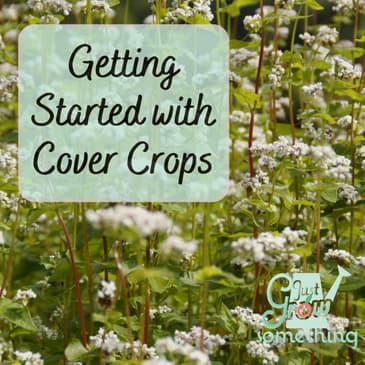
As the growing season is winding down in many areas, we may be looking at some bare empty spaces in our gardens and wondering what to do with them. Should you just mulch it over? Add fresh compost and let it sit? How about a cover crop?
Using a cover crop gives back a ton of benefits: improving soil structure, preventing erosion, acting as a living mulch, and adding nutrients back into the soil. And, yes, this can be done in both in-ground beds and raised planters. What you plant and what you do with it when it’s done all depends on what you want to get out of it, so today we’ll cover all the options to help you figure out which crops work best for your individual garden needs. Let’s dig in!
Karin's Recommendations for Cover Crops:
Preventing soil erosion and providing weed control: clover, mustard, oats, peas, daikon radish, winter rye, and vetch.
Nitrogen fixation: alfalfa, clover, chickpeas/garbanzos, field peas, soybeans, lentils, and vetch.
Green manure: buckwheat, clover, mustard, oats, peas, radish, winter rye, wheat, barley, and vetch.
Creating biomass: alfalfa, mustard, oats, peas, rye, wheat and barley.
Breaking up the soil: alfalfa, clover, and daikon radish.
Attracting beneficial insects: alfalfa, buckwheat, clover, mustard, and hairy vetch in its second year when it flowers in the spring.
Forage: Alfalfa, clover, and mustard. (Mustard is a brassica so if you have animals that are sensitive to plants in that family, like rabbits, you may want to avoid that one.)
Episode References and Resources:
Get Magic Mind: Use code JustGrow20 at checkout
Check out True Leaf Market’s Cover Crop Mix
The Great Marigold Debate: Friend or Foe?
Terminating Cover Crops | Southern Cover Crops Council
Using Cover Crops and Green Manures in the Home Vegetable Garden – Wisconsin Horticulture
Tips for Planting Cover Crops in Home Gardens (psu.edu)
Cover crops and green manures in home gardens | UMN Extension
Farm Seed & Cover Crops | Comparison Chart (PDF) | Johnny's Selected Seeds (johnnyseeds.com)
Just Grow Something Gardening Friends Facebook Group
Check out how you can become a patron on Patreon
Hosted by Simplecast, an AdsWizz company. See pcm.adswizz.com for information about our collection and use of personal data for advertising.
00:00:01
This is positively farming media as the growing season is winding
00:00:06
down in many areas. We may be looking at some bare,
00:00:08
empty spaces in our gardens and wondering what to do with them.
00:00:11
Should we just mulch it over, add fresh compost and let it
00:00:15
sit? How about a cover crop?
00:00:17
Using a cover crop gives back a ton of benefits, improving soil
00:00:20
structure, preventing erosion, acting as a living mulch, and
00:00:24
adding nutrients back into the soil.
00:00:26
And yes, this can be done in both in ground beds and raised
00:00:29
planters. What you plant and then what you
00:00:32
do with it when it's done all depends on what you want to get
00:00:35
out of it. So today we'll cover all the
00:00:37
options to help you figure out which crops work best for your
00:00:40
individual garden needs. Let's dig in.
00:00:44
Hey, I'm Karen and I started gardening 18 years ago in a
00:00:47
small corner of my suburban backyard when we moved to A5
00:00:50
acre homestead. I expanded that garden to half
00:00:52
an acre and I found such joy and purpose in feeding my family and
00:00:56
friends. This newfound love for digging
00:00:58
in the dirt and providing for others prompted my husband and I
00:01:01
to grow our small homestead into a 40 acre market farm.
00:01:04
When I went back to school to get my degree in horticulture, I
00:01:06
discovered there is so much power in food and I want to
00:01:10
share everything I've learned with as many people as possible.
00:01:13
On this podcast we explore crop information, soil health, pests
00:01:17
and diseases, plant nutrition, our own nutrition, and so much
00:01:20
more in the world of food and gardening.
00:01:22
So grab your garden journal and a cup of coffee and get ready to
00:01:26
just grow something. First of all, I want to say I
00:01:32
love you guys and I love getting messages from those of you who
00:01:35
are trying your darndest to better educate those around you
00:01:38
with the information that you're getting here.
00:01:40
And from my articles on the website and Reels and TikTok and
00:01:43
all those things, and most of all, I love that you're doing it
00:01:47
to be kind and not to be a know it all.
00:01:50
And yes, I was that kid that got accused of being a know it all
00:01:54
because when I learned something important or interesting, I
00:01:57
think everybody should know it and I want to share it.
00:02:00
And it's not coming from a place of trying to prove I know more
00:02:03
than somebody else. It's an attempt to help people.
00:02:06
And I know many of you are doing the same thing, and sometimes
00:02:10
that doesn't translate very well on the Internet because there
00:02:14
are a lot of people out there who post things just to be mean
00:02:19
or contradictory, and it's hard to tell the difference.
00:02:21
Sometimes I bring this up because a fellow farmers market
00:02:25
vendor, Shannon, who is a Baker but who's been learning to
00:02:28
garden the past couple of years, got into a discussion in an
00:02:32
online gardening group about marigolds.
00:02:34
Someone had said marigolds are great against squash bugs, but
00:02:38
Shannon, who listens to this podcast and also gets
00:02:40
information from my husband and I anytime she has something
00:02:43
going on in our garden, contradicted this person and
00:02:46
pointed out that they actually attract squash bugs.
00:02:49
I will link to the Marigold episode and the article I wrote
00:02:52
on this that has all the links to the research that shows this
00:02:54
to be accurate. The original poster argued with
00:02:58
Shannon and I guess she countered with those same links
00:03:01
that I'm going to share with you.
00:03:02
But my point is this. There are going to be a ton of
00:03:06
different opinions and advice on what works and what doesn't work
00:03:10
in the garden. 90% of this information is likely going to
00:03:14
be anecdotal. It doesn't mean that's not true.
00:03:18
It just means that someone observed something happening in
00:03:21
their garden. They made a correlation between
00:03:23
one thing and another, and over the years that correlation has
00:03:26
been passed down as fact to thousands of other gardeners.
00:03:30
Sometimes that works out really well, and lots of gardeners
00:03:33
benefit from that. And sometimes, as in the case of
00:03:36
marigolds, it's downright untrue and it's having the opposite
00:03:40
effect. I planted marigolds with
00:03:43
everything for years, thinking I was deterring pests.
00:03:47
It wasn't until I dug into the studies and started making my
00:03:50
own detailed observations that I realized I had been totally
00:03:53
incorrect in some cases, and I had passed that information on
00:03:57
to other gardeners. Nothing about growing plants in
00:04:01
a domesticated situation is an exact science.
00:04:04
Everything in the garden is affected by everything else in
00:04:07
the garden, and it's affected by the weather conditions, our
00:04:10
climate, air quality, water quality, water availability, the
00:04:14
type of soil we have, the tips of soil microbes we have, and we
00:04:18
are not gardening in a vacuum. Even if there is peer reviewed,
00:04:22
evidence based research that proves conclusively that
00:04:26
something does or doesn't work, it may be different in your
00:04:29
garden, maybe not for the reason you think, but for some reason.
00:04:34
So if you've been given advice to do something a certain way,
00:04:37
whether that's for me or somebody else, and it works
00:04:41
great, it may not be for the reason you think that it's
00:04:45
working, but keep doing it if it helps you to be successful.
00:04:49
But in the same vein, if you take a piece of advice and it
00:04:52
doesn't work, don't think that it has anything to do with your
00:04:56
abilities as a gardener. Your garden is different from
00:04:59
mine, and it's different from your neighbors, and it's
00:05:01
different from that research plot that the scientists used to
00:05:05
come up with their recommendations.
00:05:07
Try something different and try again until it works.
00:05:11
And then share that information with other gardeners by saying,
00:05:14
hey, this is what worked for me. It may not help everybody, but
00:05:19
it might help somebody. And isn't that kind of the point
00:05:23
of sharing information? So shout out to Shannon and
00:05:26
everyone else trying to steer gardeners in the right
00:05:29
direction, but without being snarky about it.
00:05:36
OK, Speaking of steering gardeners in the right
00:05:38
direction, what exactly is a cover crop and why am I steering
00:05:43
you in that direction? Cover crops are any plant that
00:05:47
has grown in the garden to improve the soil or to help our
00:05:50
local environment in some way. Now in farming, the cover crop
00:05:54
is usually planted during the time when a cash crop is not
00:05:57
growing, so this is basically just going to keep the soil in
00:06:00
place. During the winter time.
00:06:01
It may fix nitrogen into the soil, it might add biomass back
00:06:05
in, or it's acting as some sort of a living mulch.
00:06:08
Now in the home garden we can do the same thing, just on a
00:06:12
smaller scale, but for the exact same reasons.
00:06:16
We just have to decide what we want to achieve, and then we can
00:06:20
figure out what to plant in order to accomplish that goal.
00:06:24
Now, cover crops are usually grains, grasses, brassicas or
00:06:29
legumes, and oftentime. They're grown during the fall
00:06:32
and the winter, and then they're turned under in the spring.
00:06:35
Or they're cut down and they're left on the soil surface to act
00:06:38
as a mulch. They can also be planted in
00:06:42
between crops in the summertime to help keep the soil protected.
00:06:46
And you can also grow them during the gardening season as a
00:06:50
living mulch if you choose something that's low growing
00:06:53
under something that's taller. So like if you look at the Three
00:06:56
Sisters method of gardening, where we grow beans up our corn
00:07:00
stalks, the pumpkins or the winter squashes that are grown
00:07:03
at the bottom of that trio are shading the ground.
00:07:07
They're cooling the roots of the other two crops and preventing
00:07:10
weeds from popping up. Now we usually talk about this
00:07:13
in terms of being a companion planting or intercropping, but
00:07:17
this is also a type of cover crop.
00:07:19
We are covering the soil now. During their growth, cover crops
00:07:24
help reduce soil compaction. They capture excess nutrients
00:07:28
and they prevent erosion. The roots of some of these crops
00:07:32
can help loosen heavy textured soils.
00:07:35
This is what I use dicon radishes for over the winter
00:07:38
time. In our soils that have the
00:07:39
heaviest clay concentration, I plant in the late summer to
00:07:42
early fall allow those super large radishes to get
00:07:46
established which aerates the soil and then as they die off
00:07:49
over the winter, they decay in the ground in the spring, which
00:07:53
also adds those nutrients back into the soil and it's adding
00:07:56
organic matter. Now if we use legumes as a cover
00:07:59
crop, it adds nitrogen back into the soil, and most of us are
00:08:03
generally lacking good amounts of nitrogen on our gardens
00:08:06
anyway because our plants use so much of it each season.
00:08:09
And then we can also use cover crops to reduce weeds and they
00:08:13
can provide a really excellent habitat for beneficial insects.
00:08:18
Now as these cover crops grow, they also become living
00:08:22
reservoirs for nutrients and micronutrients.
00:08:26
So when we work them back into the soil or we lay them on top
00:08:30
of the soil, not only are they breaking down and making those
00:08:34
nutrients available again to your future garden crops, but
00:08:37
they're also feeding the microbiota in the soil.
00:08:40
We talk about the microbiome all the time they need to be fed.
00:08:44
And of course, at the same time, it's also increasing the soil
00:08:46
organic matter, so each type of cover crop that we use can
00:08:52
actually serve more than one purpose depending on what our
00:08:56
garden needs. Speaking of multipurpose, I have
00:09:00
been using Magic Mind for a little while now for more
00:09:03
focused, sustained level of energy throughout my day, and I
00:09:06
have been drinking it right alongside my coffee in the
00:09:09
morning and it's been working great.
00:09:10
But since my mid afternoons are the time when I generally get
00:09:15
out of the heat in the gardens and get on my computer for a
00:09:17
little while, I decided to try a different approach.
00:09:20
Now I'm taking my little green happy shot in the late morning
00:09:24
and I cannot tell you how much more focus I have in the
00:09:27
afternoon while doing my admin work or doing bookkeeping for
00:09:30
the farm. Whatever other non stimulating
00:09:33
work I have to do in front of a screen, I'm checking off my to
00:09:36
do lists left and right and getting right back out into the
00:09:38
gardens or even out for a run. Feeling super accomplished with
00:09:42
enough non jittery energy to complete my day on an upswing.
00:09:45
Instead of dragging across the finish line for a limited time
00:09:49
you can get your own little green happy shots and a discount
00:09:53
off the already discounted subscription price by going to
00:09:57
magicmind.com/just Grow and using code Just Grow 20.
00:10:03
This will save you around 50% off of the regular price.
00:10:07
magicmind.com/just grow with code.
00:10:10
Just grow 20 at checkout for your own productivity boost.
00:10:14
The link is in the show notes. So there are seven different
00:10:19
goals that we can hope to achieve with cover crops.
00:10:21
So first we have to decide what our garden needs and decide how
00:10:25
we're going to get there. So number one is prevent soil
00:10:28
erosion and provide weed control.
00:10:30
So if our soil is left bare when we're not actively growing
00:10:34
something in it, either the weather conditions are going to
00:10:37
carry away some of that topsoil or the weeds are going to jump
00:10:40
in and take hold, right. So we can use cover crops to
00:10:43
come back. Both of these things. #2 is
00:10:46
nitrogen fixation. Anytime that we grow something
00:10:48
in our garden, we are pulling nitrogen from the soil, and
00:10:52
oftentimes our soil is going to be depleted after that crop is
00:10:55
done. So we can use certain cover
00:10:58
crops to help replace that lost nitrogen. #3 is green manure and
00:11:04
mulch, so almost all of our cover crops can be used in this
00:11:08
way. You grow the crop, you chop it
00:11:10
down, you leave the roots to breakdown in the soil, which
00:11:13
feeds the soil just the same way like a composted livestock
00:11:17
manure would. And then either we turn that top
00:11:19
growth under to also breakdown, or we leave it whole on top to
00:11:23
act as a mulch. It will also eventually
00:11:26
breakdown and add those nutrients to the soil, but in
00:11:28
the meantime it's acting as a mulch in the same way a straw or
00:11:32
any other mulch would be #4. It's creating biomass.
00:11:36
Sometimes the whole goal is just to increase the soil organic
00:11:40
matter, and the bulkiest of our cover crops are grown for this
00:11:43
specific task. The bulk is usually in reference
00:11:47
to the root system, so those dicon radishes I talked about
00:11:51
are bulky in one root, but a crop like mustard has a very
00:11:55
large amount of root mass that can be left in the soil to
00:11:58
breakdown too. Not all crops are good at this,
00:12:01
so if this is a goal that we need to achieve, then we need to
00:12:05
choose specific cover. Crops #5 is breaking up the
00:12:09
soil. If you have heavy clay soil like
00:12:12
I do, you want plants that either have very thick and
00:12:16
interconnected root systems to break up that soil or that have
00:12:20
a very large tap root to loosen and aerate the soil.
00:12:23
Again, our dichon radishes and mustards are going to fall into
00:12:27
this category. Number six is attracting
00:12:30
beneficial insects. Obviously, there is a lot to say
00:12:33
to be said for any plant that's going to attract beneficials to
00:12:36
our garden. Cover crops can be used for this
00:12:39
too. This is especially true if you
00:12:41
have a bed in the garden that's not going to be used for an
00:12:43
entire season. Because, I don't know, maybe you
00:12:46
need to breakdown a disease cycle or you need to build up
00:12:48
soil nutrients. We have one entire field we did
00:12:51
this with this year. Planting a cover crop that's
00:12:53
going to flower will draw in those insects that can also
00:12:57
benefit your garden at the same time.
00:12:59
These crops are going to be chosen based on the length of
00:13:03
time that they are going to be left in place.
00:13:06
But you also want to pay attention to how easily they
00:13:09
self seed. You don't want something that
00:13:11
goes to seed really quickly and then becomes a nuisance weed in
00:13:15
your garden. So if you have a space that will
00:13:17
be cover cropped like all season long, you're going to choose
00:13:21
something like a Clover that's going to bloom but doesn't
00:13:24
become a nuisance after it's been terminated.
00:13:27
Conversely to that, if you have something that's only going to
00:13:29
be in there for a short period of time, then you can choose
00:13:32
something like a buckwheat that's going to flower, but then
00:13:34
gets terminated before it goes to seed so it doesn't become a
00:13:37
nuisance. And then #7 isn't going to apply
00:13:40
to all of us, but some of us it will, and that is forage.
00:13:45
So if you're a homesteader, or if you have livestock, or maybe
00:13:48
you have backyard chickens, or you keep rabbits to use their
00:13:53
manure or just as pets, you can grow cover crops that will also
00:13:58
act as a food for your animals. So you can put it in place and
00:14:03
then either bring the animals to the garden and allow them to
00:14:06
graze it down, or you can grow it in place and then chop it
00:14:10
down and bring it to them. But either way, it's another
00:14:13
purpose that our cover crops can serve at the same time that
00:14:16
we're using all these other benefits.
00:14:18
And you can absolutely combine any and sometimes all of these
00:14:22
based on the crop that you choose.
00:14:27
Now True Leaf Market is a sponsor of this episode and they
00:14:30
have a fantastic all-purpose garden cover crop mix that is
00:14:35
going to take the guesswork out of all of this for you.
00:14:38
These cover crops are going to boost nitrogen content in the
00:14:41
soil, provide weed suppression, erosion control, and improve the
00:14:45
soil structure. You can get your cover crop mix
00:14:48
by going to justgrowsomethingpodcast.com/cover
00:14:52
and choose from 1/5 or £25 bags depending on the size of your
00:14:57
garden. You can also access their free
00:15:01
cover crop growing guide from that same link and explore all
00:15:05
of their other cover crop seeds too.
00:15:07
Just growsomethingpodcast.com/cover
00:15:10
to get the easiest assorted cover crop mix out there from
00:15:14
true leaf market. But let's talk about some of the
00:15:18
most popular cover crops that we can use and whether or not
00:15:21
they'll winter kill in colder climates so that you know how
00:15:24
they can be used. Number one is alfalfa.
00:15:27
It is fast growing, but it is not frost tolerant.
00:15:31
It does have a really good high forage value and it does produce
00:15:34
a lot of biomass. They've got very long taproots
00:15:37
that will break up that soil and also bring up subsurface
00:15:41
minerals, so that's going to add to the soil fertility.
00:15:43
Alfalfa is a very, very popular cover crop.
00:15:47
It's also very good at fixing nitrogen and it can be used to
00:15:51
bring in pollinators like bees. A buckwheat also a very fast
00:15:55
grower, also not frost tolerant. It grows for about a month
00:16:00
before it goes to flour and then you want to terminate it so it
00:16:02
does not self seed. You do not want it to self seed
00:16:06
because it can become wheaty, but it is really good for
00:16:09
suppressing weeds between crops in the summer, which is how I
00:16:12
use it. It also attracts a ton of
00:16:14
pollinators when it is blooming. Clover is another one.
00:16:17
There are a bunch of different types of Clover.
00:16:20
Crimson Clover is Hardy just until about zone 7, but the
00:16:24
other ones are Hardy to zone 4. So in colder climates, some of
00:16:27
these are going to survive the winter and continue to act as a
00:16:31
living mulch. The growth rate ranges depending
00:16:34
on which ones you choose to. Some of them are slow, some of
00:16:36
them are very fast. It just depends on the type.
00:16:38
Mustard is another really fast growing one.
00:16:42
It's great for weed suppression. It's also very good for building
00:16:45
that soil. Again, we talked about that root
00:16:48
system. It does best in cool conditions,
00:16:51
but it winter kills in zones 7 or colder, so this needs to be
00:16:55
planted like in the spring or really as early in fall as
00:16:59
possible to really get those benefits.
00:17:01
Oats can be used as a cover crop.
00:17:03
Not only are they edible, but you can grow them as a cover
00:17:08
crop to help suppress weeds and then you can leave the stubble
00:17:11
after you cut it down to actually help hold the soil in
00:17:15
place over the winter. It has about a medium growth
00:17:19
rate. Field peas are another one great
00:17:22
for fixing nitrogen into the soil.
00:17:24
They are fast growing if you plant them thickly enough.
00:17:27
They're also very effective at crowding out weeds.
00:17:29
If you do this in the early spring, they do winter kill in
00:17:32
zones 7 and colder. There are other legumes in this
00:17:36
category that also work really well, but they are slower
00:17:39
growing things like soybeans, lentils and chickpeas or
00:17:42
garbanzo beans, and the bonus on these is that they can actually
00:17:46
provide an edible crop at the same time as being a cover crop,
00:17:50
Dikon radish, also known as forage radish or oilseed radish.
00:17:54
This one grows fairly quickly, really good for breaking up
00:17:58
compacted soils. This is what I use it for.
00:18:01
It has a huge taproot. It just drills deep down into
00:18:03
that soil to aerate it. It is an edible crop so you can
00:18:08
harvest it as an edible crop once it gets to full size and
00:18:11
you will get some of the benefits.
00:18:12
But if you leave it in place over the winter then it breaks
00:18:16
down very quickly in the spring and it starts adding those
00:18:19
nutrients into the soil and that's how I use them.
00:18:22
Winter rye. This is a very Hardy winter
00:18:25
cover crop. It is Hardy down to zone 3, so
00:18:28
if you are gardening in a much colder zone in the winter and
00:18:32
you need something to help with soil erosion and to add organic
00:18:35
matter, this is a really good choice for you.
00:18:37
Wheat and barley are also good grains for scavenging nitrogen
00:18:42
and potassium out of the soil and again it can give a
00:18:44
harvestable crop at the same time.
00:18:46
And finally we have hairy vetch as another good cover crop.
00:18:50
It is a slow growing legume, so this is another one that's good
00:18:53
for fixing nitrogen and for erosion control.
00:18:57
It is Hardy down to zone 4, so this is another one that's good
00:19:00
as a winter cover crop in most areas.
00:19:04
It will pop up in the spring and begin to grow more rapidly, so
00:19:09
it's really good for suppressing those early weeds in the garden.
00:19:13
It's also a really good green manure if you work it into the
00:19:15
soil, but just know that it might be slightly allelopathic.
00:19:20
So this means that if you are going to direct sow small seeds
00:19:25
in the garden, you might not want to use hairy vetch, or you
00:19:31
want to wait about two to three weeks after incorporating it
00:19:33
before planting, because it might prevent those small seeded
00:19:36
crops from germinating. But if you're transplanting
00:19:38
started seedlings, then it's not an issue.
00:19:42
Now keep in mind you can mix many of these together to
00:19:46
accomplish more than one goal at a time or to have a succession
00:19:49
of different cover crops that come one after another.
00:19:53
It's really common to mix field peas with oats and vetch to kind
00:19:58
of serve multiple different purposes.
00:20:01
The cover crops that I spread this past spring were a mix of
00:20:05
field peas and oats, and then that was followed by my summer
00:20:08
buckwheat. And then now we've moved into
00:20:11
those dicon radishes for the winter.
00:20:13
So let's go through our seven different goals for cover
00:20:17
cropping and then find the crops that work best for each.
00:20:20
This list will be in the episode description, and those of you on
00:20:24
the e-mail list will already have this info in your inbox for
00:20:27
easy reference. If you're not on the e-mail
00:20:29
list, This is why you want to be on the e-mail list.
00:20:33
But if you want to grab a pen and take some notes of my
00:20:36
recommendations, go ahead. I'll wait.
00:20:40
Are you ready? OK, so when we're talking about
00:20:49
preventing soil erosion and providing weed control, my
00:20:52
recommendations would be Clover, mustard, oats, peas, dikon,
00:20:56
radish, winter rye, and vets. These are all really good at
00:21:01
choking out weeds. Alfalfa and buckwheat also
00:21:05
provide weed control, but they just don't have enough mass to
00:21:09
really do much in as terms of holding the soil in place.
00:21:13
So I use those strictly for weed control and use the other ones
00:21:16
for the soil erosion problem. When we're talking nitrogen
00:21:19
fixation, always look to your legumes.
00:21:22
So alfalfa, Clover, the chickpeas and garbanzo beans,
00:21:25
field peas, soybeans, lentils, and veg.
00:21:28
All great for fixing nitrogen back into the soil.
00:21:31
Green manure wise, you're looking at buckwheat, Clover,
00:21:34
mustard, oats, peas, radish, the winter rye, wheat, barley, veg,
00:21:40
All add good amounts of nutrients back into the soil as
00:21:43
a green manure. Again, you're going to cut that
00:21:44
down and let it work its way back into the soil versus the
00:21:48
nitrogen fixation which is actually happening in the roots.
00:21:51
So that's a very good distinction I need to make here.
00:21:54
When we're talking about nitrogen fixation and we're
00:21:56
using those lagoons, the legumes have nodules that they develop
00:22:00
on their roots and that is where the nitrogen is stored.
00:22:04
So we are mostly concerned about the root systems in those.
00:22:07
So don't just pull the whole crop.
00:22:09
It's very important to cut those crops and leave that root system
00:22:13
in place. Now, yes, there is going to be
00:22:15
nitrogen in the top growth as well.
00:22:18
So if you break that down or put it back on the soil and allow it
00:22:21
to breakdown, yes, you're going to be adding nutrients back in
00:22:24
too. But the main nitrogen fixation
00:22:25
is happening in the roots. When we're talking a green
00:22:28
manure like the buckwheat and the Clover and other things we
00:22:31
just talked about, that's when we're talking about working it
00:22:34
back into the soil and getting that top growth to go ahead and
00:22:37
reincorporate. So a little bit different
00:22:39
between those two when we're looking to create biomass,
00:22:42
alfalfa, mustard, oats, peas, rye, wheat and barley, all
00:22:46
really good for that. Breaking up the soil.
00:22:49
Alfalfa, Clover, Dichon radish, You really can't beat those.
00:22:54
Those forage radishes really are the gold standard in our clay
00:22:57
soils here, but alfalfa is a close second, and it actually
00:23:00
can sometimes be easier to get the alfalfa in larger quantities
00:23:03
if you're working with a larger area, and then for attracting
00:23:07
beneficial insects. Alfalfa, buckwheat, Clover,
00:23:10
mustard, all of those are great for attracting beneficials when
00:23:13
they go to flower. Hairy veges in this category
00:23:16
also, but only in its second season, because it doesn't
00:23:19
flower the first year and only flowers the second year in the
00:23:23
spring. So this is only a good one if
00:23:26
you're in zone 4 or warmer and it doesn't winter kill on you.
00:23:29
The key once again to all of these in this category is to not
00:23:34
let them set seed because you don't want them to come back on
00:23:37
their own and become a nuisance. So allow them to flower, then
00:23:40
terminate them, mow them down so they can't spread the seed, and
00:23:45
then finally, if you're looking to get something in the way of
00:23:47
forage, alfalfa, Clover, and mustard are typically your best
00:23:50
ones. Just keep in mind, if you're
00:23:53
feeding chickens and other livestock, any of these is good.
00:23:55
But if you have animals that are sensitive to plants in the
00:23:59
Brassica family, like rabbits, then you might want to avoid the
00:24:03
mustard because it is in the Brassica family.
00:24:07
And then finally, what's the best way to plant these?
00:24:11
Broadcast seeding is definitely the easiest way.
00:24:14
Literally throwing the seeds in sort of a broadcast manner
00:24:17
across the soil and then just watering it in really well.
00:24:21
If you want to get a harvestable crop out of some of these
00:24:24
though, you can use a cedar and just plant them in rows.
00:24:26
Just pay attention to what's called the seeding rate on the
00:24:30
package. Whatever you buy should tell you
00:24:34
how many seeds you need for a specific area.
00:24:37
As a cover crop, you want them sewn thickly enough to do the
00:24:41
job, like choking out the weeds, but not so thick that they
00:24:45
compete with each other and they don't germinate properly or they
00:24:48
don't grow well. Then once it's time to terminate
00:24:52
the crop, the method you use is up to you.
00:24:54
For larger areas you can simply just mow them down with a lawn
00:24:57
mower or use a weed whacker or whipper Snipper as some of my
00:25:01
Canadian friends call it. I love that term just to cut the
00:25:05
drop down and leave it laying there.
00:25:07
For smaller planter boxes you can actually use a pair of hand
00:25:11
shears to chop it down or just roll a heavy object across the
00:25:15
top of them a couple of times just to crimp it over and stop
00:25:17
that growth. Now whether you decide to till
00:25:20
the residue into the soil is up to you and your style of
00:25:24
gardening. I prefer to leave the roots
00:25:27
intact in the soil to breakdown and then use what I've cut down
00:25:31
as a mulch on top of the soil. This works pretty well with most
00:25:37
things, but sometimes, like in the case of Clover, it's better
00:25:41
to turn it under just due to the way that it grows.
00:25:44
You'll need to experiment a little bit and see what works
00:25:47
best for you in your situation. Just like everything else in
00:25:51
Gardening, I hope this episode gave you the inspiration to jump
00:25:58
in and get started with cover cropping.
00:26:00
There are so many benefits, I can't think of a single reason
00:26:05
not to incorporate them into your garden in whatever blank
00:26:08
spaces you have, Either it's during the winter or even during
00:26:12
the growing season. I will leave some links in the
00:26:14
show notes where you can find more information, and a couple
00:26:17
of articles all about this over on the website.
00:26:21
Until next time, my gardening friends.
00:26:22
Keep on cultivating that dream garden and we'll talk again
00:26:25
soon. You just finished another
00:26:26
episode of the Just Grow Something podcast.
00:26:29
For more information about today's topic, go to
00:26:31
justgrowsomethingpodcast.com where you can find all the
00:26:34
episodes, show notes, articles, courses, newsletter, sign up and
00:26:38
more. I'd also love for you to head to
00:26:40
Facebook and join our gardening community in the Just Grow
00:26:43
Something Gardening Friends Facebook group.
00:26:45
Until next time, my gardening friends keep learning and keep
00:26:48
growing.