
Urban, suburban, and rural gardeners alike often have to share the harvest with the animals that we live in conjunction with. All manner of critters want to dine on the things we are growing for ourselves: voles and moles, squirrels and chipmunks, deer, rabbits, groundhogs, and more! There are a few approaches to keeping these animals out of our gardens.
 Companion Plants
There are many plants that mammals don’t like the smell or taste of. Surrounding your edible garden plants with plants that are unappealing to your most common invader can help deter them.
Alliums, for example, are a deterrent to voles. Planting a row of spring onions or chives or garlic around your beds can help keep them out.
Deer tend to stay away from things that are dangerous to eat, like daffodils and foxgloves, or those that are particularly aromatic, like sage, mint, lavender, sage, rosemary, lemon balm, and feverfew.
Squirrels, rabbits, and chipmunks are often deterred by strong scents, too, like onions, garlic, and Galanthus. They also shy away from lavender, scented geraniums and daffodils.
Physical Barriers
Aside from fencing in your entire gardening area and putting a lid on the whole thing, there are other physical barriers you can use for keeping animals out of your garden.
My most frequently used option is insect netting. This is the one I use.
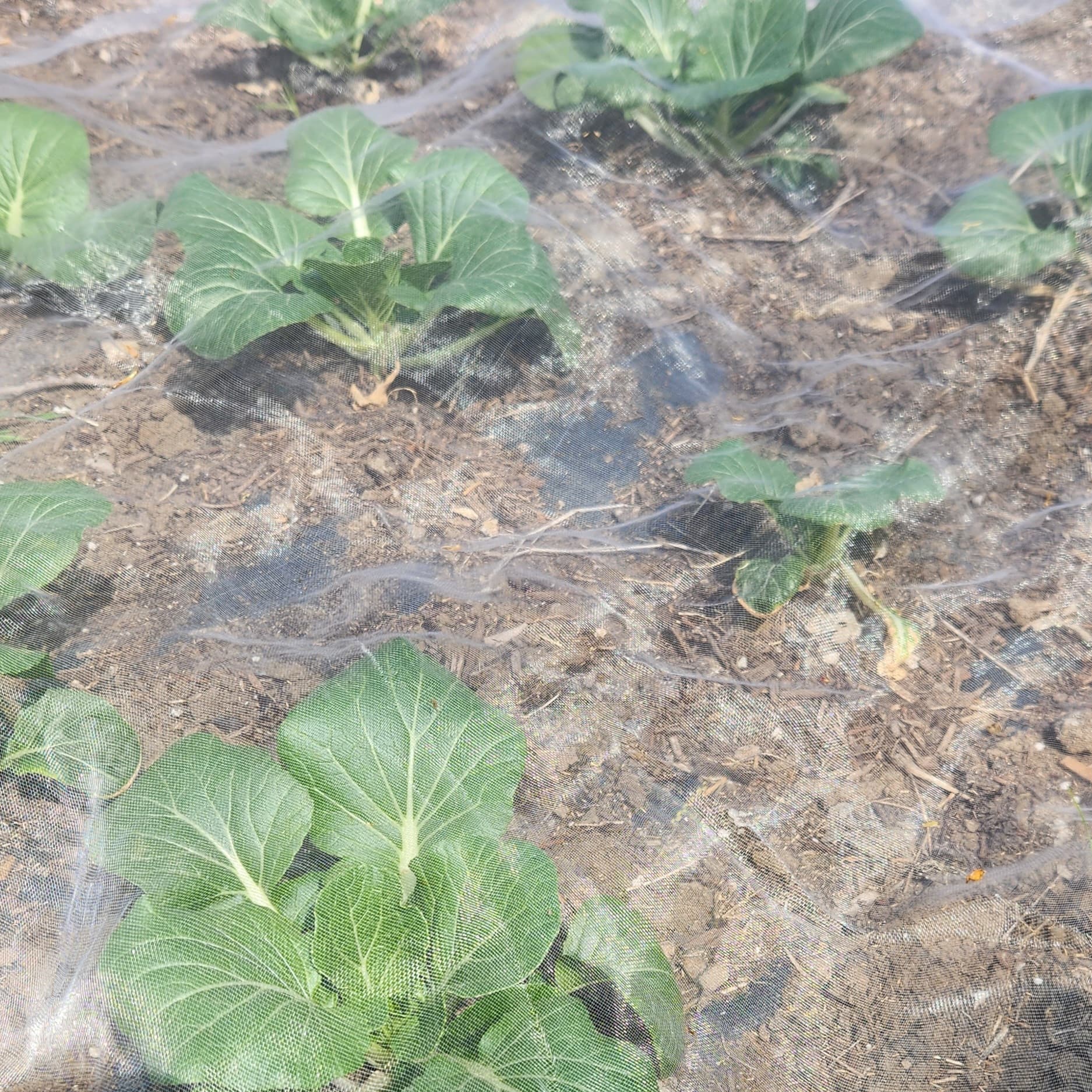
I simply float the netting over top of the crops I want to protect, either directly on top of the plants or using a hoop made of PVC, and stake it down into the ground with these stakes.
Not only does it protect from insect pests, but the rabbits and deer that plague my garden are unable to get to the plants underneath. Mammals that have more dexterity, like raccoons and groundhogs, are also deterred unless they are truly desperate to get at what’s under there. In that case, they can pull on the coverings and eventually gain access, so be aware of that.
If your plants need insects for pollination, though, the barrier I use is bird netting, like this one. The netting is strong enough to keep the animals out but the openings are large enough for the pollinators to gain access. Here is the netting over top of our strawberries:
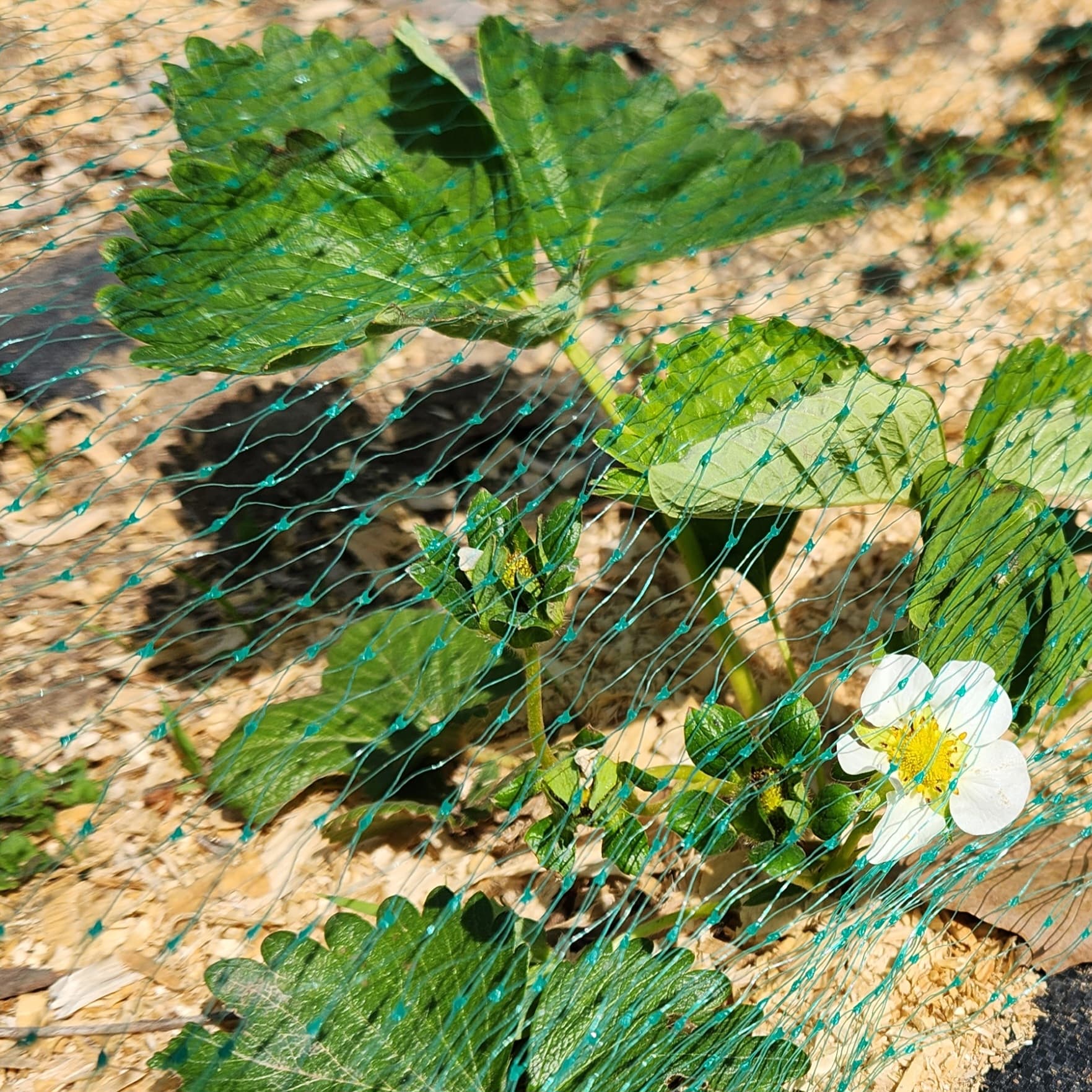
pollinators in but keeps deer and rabbits out.
I use the same ground stakes as what I use with my insect netting.
If gardening in smaller spaces or in raised beds and containers, using hardware cloth to create a “cage” around the entire bed is also effective. Your choice of materials just depends on your particular aesthetics, budget, and the area you need to protect.
Sprays
There are a LOT of sprays on the market to deter squirrels, deer, rabbits, etc. Some of them are made from things like hot peppers, others of putrescent egg solids (ewww), and still others of the urine of predatory mammals like wolves (double ewww).
Some of these solutions may make it unpleasant for the gardener to be in the garden, though! But when you’re desperate to find a solution, you may try anything. Be sure if choosing any sprays that are chemical repellents that you are not using them on anything you plan to eat.
Be Picky
Sometimes it comes down to modifying what it is we grow based on what our most common intruder likes to eat. If deer are the biggest problem, choosing to grow mostly plants that are unattractive to them may be the way to go. The same thing goes for squirrels, rabbits, and any other critter.
Controlling pests in the garden can be a challenge. Sometimes it take a little ingenuity, a lot of patience, and trial and error to get through it.
Your friend in the garden,
