
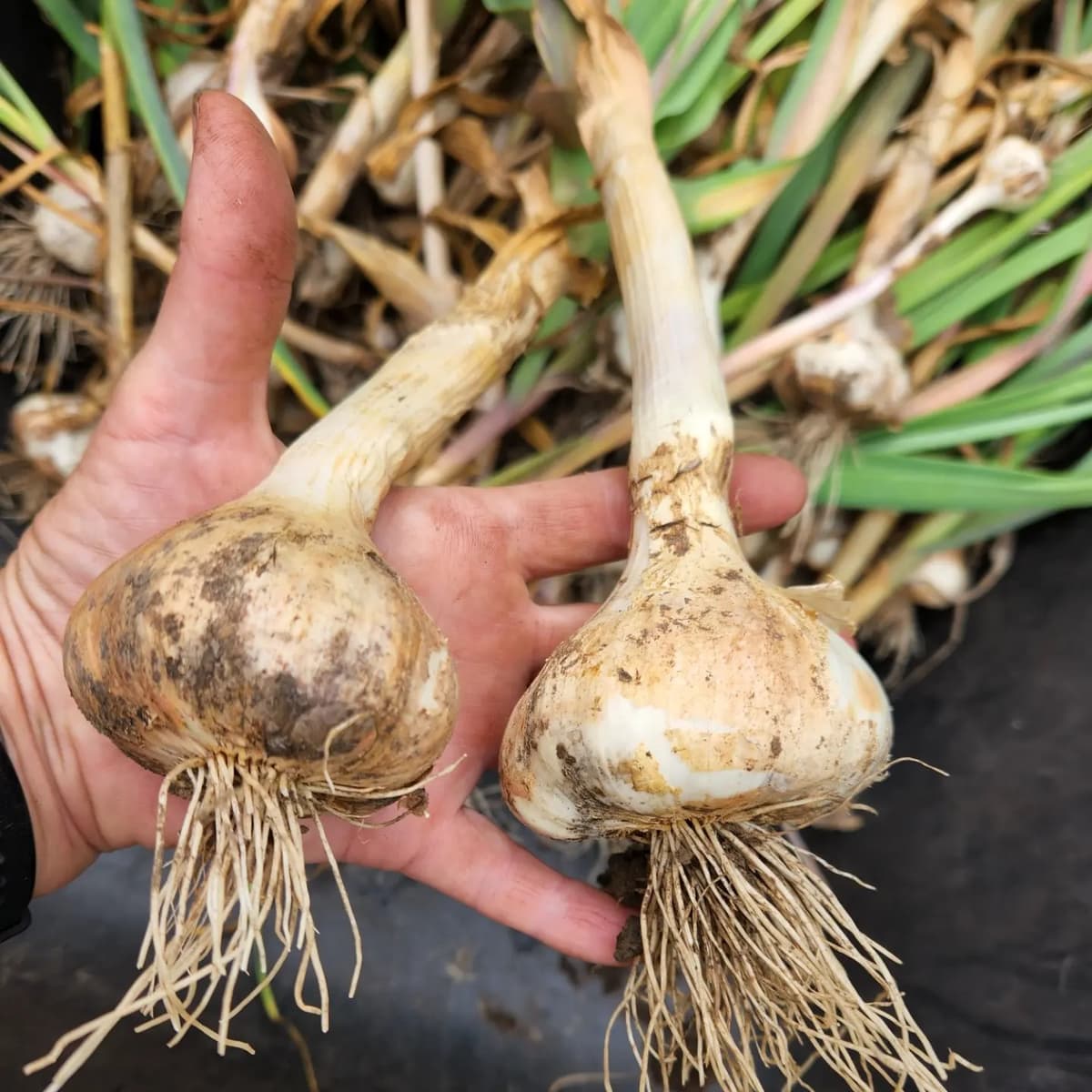
You planted your garlic way back in the late fall, mulched it, protected it, and watched it grow. But, how do you know when your garlic is ready to harvest? This is a pretty important thing to know if you’re growing garlic. It’s not that big of a deal if you harvest those bulbs a little immature, but they won't be as big as they could be, and they may not cure as well which means they may not last as long in storage.
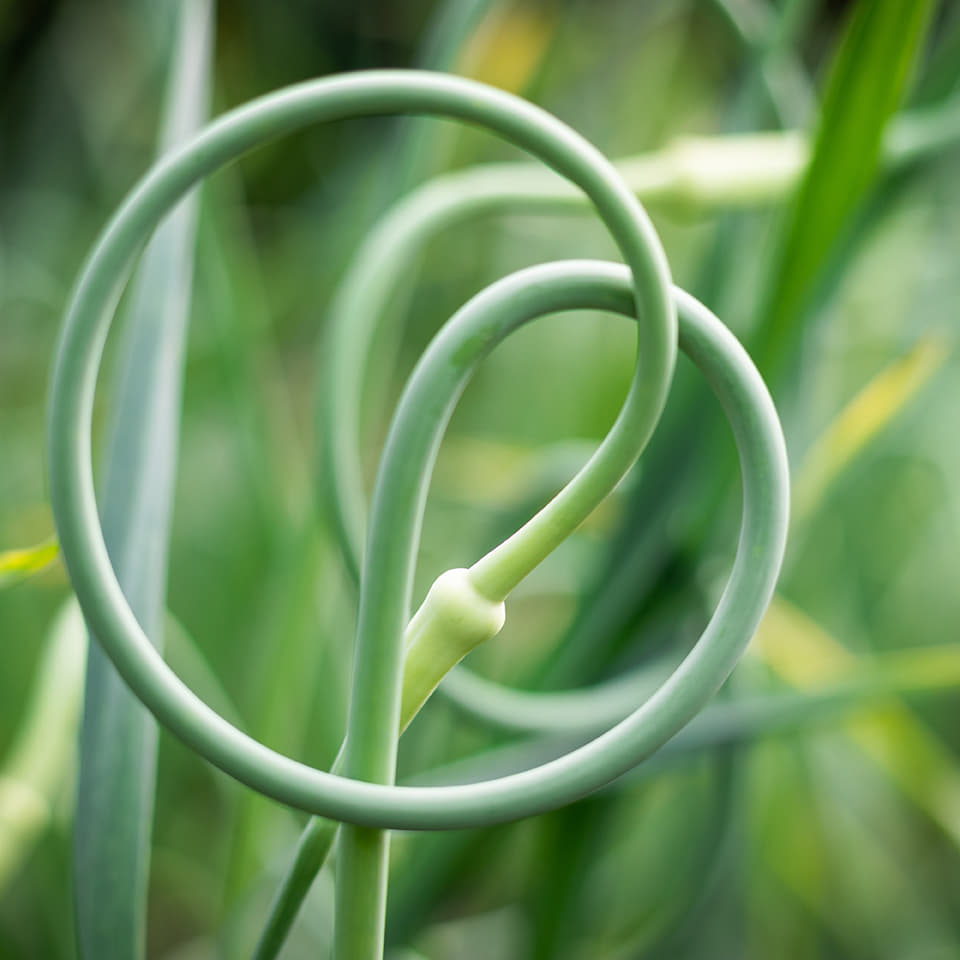 There are two different types of garlic, soft neck and hard neck. The most obvious difference between hard neck and soft neck garlic is their appearance. Hard necks have a long flowering stem growing through the center of the bulb called a scape and this usually starts to sprout up about a month or so before the garlic is fully mature. Generally, the scape is removed from the bulb to force energy into the bulb growth, rather than put energy into flowering. These scapes are edible and we use them just like a chive or a garlicky green onion. Garlic scape pesto is one of my favorite spring treats! So, if you have hard neck garlic, look for that scape to start growing, let it grow about 8 to 12” long and start to curl around on itself, then snap it off and use it in the kitchen. This is a good sign your garlic is close to being ready.
For soft neck, you’re going to have to keep an eye on their conditions. If you’re growing both hard neck and soft neck, those scapes on the hard neck will also signal to you that you should start keeping an eye on your soft neck. Those will tend to be ready a couple weeks before the hard neck does.
You will know when to harvest garlic when the tips of most of the leaves have started to turn brown and the bottom leaves have started to completely die back. The timing for this is going to depend on your climate. For me in west central Missouri this is around the middle of June for soft neck and then another couple of weeks for the hard neck. A good rule of thumb is to harvest when two to three of the lower leaves have browned and died back but no more than half of the leaves. If the bulbs are left in the ground too long, they may separate and they will not store well. Each one of those leaves represents a layer of skin on those cloves. The more leaves that die off, the more of the layers are disintegrating under the ground, and so the less protected those bulbs will be.
Once you see the leaves dying back, dig the bulbs up being careful not to bruise them. Don’t just grab the stalk and pull. That’s a surefire way to damage your beautiful garlic bulbs, so gently dig around them and pull them from the soil. Lay the garlic plants out to dry for 3 to 4 weeks in a cool area out of direct sunlight with good air circulation. Do not wash them, just allow whatever dirt is on them to stay on until they’re fully dry. You can lay them on open shelves, drying racks, just flat on a table (not piled up please), or hung up. I use my seedling room because it’s nice and cool and I have fans circulating the air. I just bunch about 10 plants together and hang them or lay them flat on the shelves and have the fans blowing toward them. You can use a basement or a garage or a barn. Any cool area will do. I especially recommend fans if you are in a very humid area and you may want to skip the bunching if air circulation is a problem because the excess moisture trapped in the bunches may cause them to rot.
Your garlic is cured when the stalk is completely dry. They should be bone dry and papery right at the neck above the bulb and the roots should also be brittle and dry. At this point, cut off the stems above the bulb, rub off the roots from the bottom or trim them if they’re stubborn, along with rubbing off any loose dirt, and store them in a cool, dry, dark location. Do not rinse your bulbs, just leave any extra dirt on them until you’re ready to use. You don’t want to invite any moisture to this party. And if you want to use any of these for your next round of planting in the fall, save the biggest and the best for planting. You want to perpetuate the genes from the most beautiful specimens from your harvest so you get those same big, beautiful bulbs from your next harvest. So, save the best and eat the rest!
Your Friend in the Garden,