
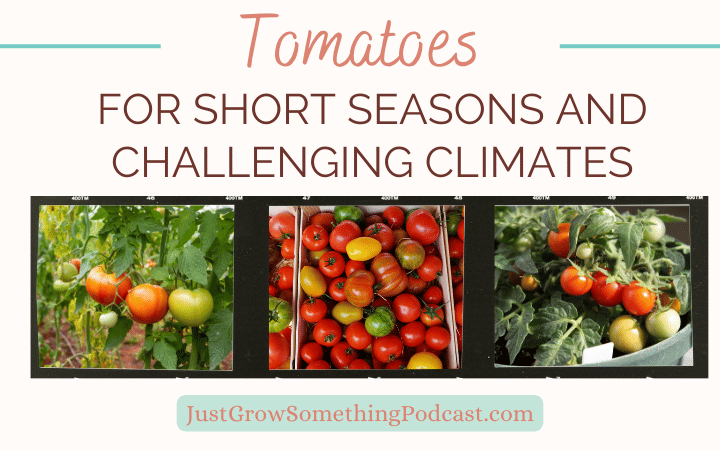
For many gardeners the ultimate vegetable to grow is the tomato. There really is something special about the flavor of a fully ripe tomato picked from the vine and brought straight to your plate. Unfortunately, growing tomatoes can be a challenge if you live in an area with a short season.
For those of you living in colder regions your growing season for warm-weather crops may be very short between frost-free days. Those in very warm climates have the opposite problem; you may need to get a quick crop in before the days turn so hot you can’t grow anything! And even if neither of these applies to you, you might be in an area that is plagued by heavy pest pressure or foliar diseases that take out your plants fairly early in the season. In any of these cases, you need a tomato plant that will produce quickly and reliably.
This article will review what traits you should look for in a tomato variety if you need them to produce quickly and go over varieties that not only match those traits but many that can actually perform well under cool-weather conditions. If you’ve ever struggled with getting tomatoes to produce in your garden before the first frost of the season hits or before the sun tries to cook them on the vine or before the insects and diseases completely destroy your plants, this article is for you.
What are the key things we want to look for in varieties grown in a short-season or otherwise challenging tomato-growing climate?
Days to maturity. Less than 60 days from transplant is ideal. Remember, this is often dependent on the day length in your area during the growing season, the intensity of daylight, and average daily temperatures, so adjust your expectations accordingly.
Often times this means planting determinate plants that set their fruit early and all at once, but there are indeterminates that fit this bill. This often also means they are smaller tomatoes. Cherry, grape, and salad-sized varieties tend to start producing earlier than full-sized beefsteak tomatoes.
Varieties developed for specific climates or conditions. If you are in a short-season climate due to a limited number of frost-free days, you’re going to look for varieties that either come from regions with colder climates (often indicated in the name, like my Moskvich tomatoes, or anything that references Siberia) or that have been bred by universities specifically for this challenge. Often the names match the development. San Francisco Fog is a tomato variety aptly named for the weather conditions it can tolerate.
Conversely to this, if you are in a climate that faces heat challenges early in the season you want varieties that tend to set fruit even when it’s hot or when the air is so humid the pollen sticks and pollination is difficult. Look for varieties developed by plant breeders or universities located in these climates.
Bred-in Tolerance. If it’s specific pests and diseases you’re concerned with, the fastest maturing varieties, specifically those that are determinate so all the fruit sets within a few weeks of each other would be the first consideration. Then also look for varieties that have specifically been bred to be tolerant of those diseases. This doesn’t mean the plant won’t get it, it just means it will be able to continue to produce while battling the disease. If you can combine that trait with one that matures quickly and all at once, you have a better chance of getting more fruit to maturity than if you pick an indeterminate heirloom variety that takes 80 days to mature and has zero resistance to any of the pests or diseases in your area.
The Fastest Maturing Varieties
The top two in this category are the speedsters in the world of tomatoes, both maturing in 45 days or less AND both being very tolerant of colder temperatures.
The first is Quedlinburger Frühe Liebe, a German salad-sized heirloom tomato variety that’s ready to harvest in just 40 days after transplant and originally developed for cool rainy weather in and around Quedlinburg, Germany. (Look for the names!). The fruits have a great flavor and acid level, are round red, 1 to 2" fruits sets in cluster of 4 to 6 on potato leaf plants (we often see this in the old Brandywine varieties).
The next one is the Chilly Willie, aka Sub-Arctic Plenty. This one was bred in Alberta, Canada in the 1970s. It is a determinate tomato plant. It is also salad sized, at 5-8 cm (2-3”) fruits so slightly larger than the Quedlinburger Fruhe Liebe. Since this is a determinate this is a good choice, too, for growers in hot climates to be able to get a good flush of tomatoes before the heat kicks in, since Chilly Willie matures in just 42 days.
Determinate tomato varieties that mature in 60 days or less (give or take)
- Amber (60 days) – yellow-orange salad tomatoes
- Aurora (59 days) – 4- to 6-ounce red slicing tomatoes
- Beaverlodge (54 days) – 2- to 3-ounce red salad tomatoes
- Bush Early Girl (50 days) – 6 to 7-ounce red slicing tomato, determinate version of Early Girl
- Early Annie (60 days) – 4-ounce red slicing tomatoes
- Early Boy (60 days) – 5-ounce red slicing tomatoes
- Early Doll (59 days) – 4- to 5-ounce red slicing tomatoes
- Early Wonder (54 days) – 6-ounce red slicing tomatoes
- Gold Nugget (60 days) – 1-ounce yellow-orange cherry tomatoes
- Latah (55 days) – 2- to 3-ounce red slicing tomatoes
- Manitoba (58 days) – 6-ounce red slicing tomatoes
- Orange Pixie (52 days) – 4-ounce yellow-orange salad tomatoes
- Oregon Spring (58 days) – 4- to 6-ounce red slicing tomatoes (does really well in cool, wet weather but also does well in the heat, so great for southern gardeners growing on the shoulder seasons)
- Polar Baby (60 days) – 2-ounce red salad tomatoes
- Red Robin (54 days) – 1-ounce red cherry tomatoes
- Santiam (60 days) – 3- to 5-ounce red slicing tomatoes (not to be confused with Santiam Sunrise)
- Sasha’s Altai (60 days) – 4- to 6-ounce red slicing tomatoes
- Scotia (60 days) – 4-ounce red slicing tomatoes
- Shoshone (60 days) – 2- to 3-ounce red slicing tomatoes
- Siberia (50 days) – 3- to 5-ounce red slicing tomatoes
- Silvery Fir Tree (55 days) – 4- to 10-ounce red slicing tomatoes
- Sophie’s Choice (54 days) – 6- to 8-ounce red slicing tomatoes
- Sugar Baby (54 days) – 1- to 2-ounce red salad tomatoes
- Tiny Tim (50 days) – 1-ounce red cherry tomatoes (great option for a hanging basket)
- Washington Cherry (60 days) – 1-ounce tomato
Semi-determinate tomato varieties, initially mature in less than 60 days then sporadically after that
- Alaskan Fancy (54 days) – 1- to 2-ounce red salad tomatoes
- Beliy Naliv (54 days) – 3- to 6-ounce red slicing tomatoes
- Glacier (55 days) – 2- to 3-ounce red slicing tomatoes
Indeterminate tomato varieties, those that start to produce in less than 60 days and will continue to produce until it’s too hot or they get killed by a frost.
These might be an option if your first frost dates in the fall are very unpredictable, you might combine growing a few of the determinates and then a few of these indeterminates to get a continues set of fruit for as long as you can. For very hot climates, these may hang on for you through the summer. They’ll likely get their first flush of fruit, then pause during the hottest part of the season but if you can keep them well-watered and shaded in the afternoon, they’ll pick up production again in the fall when the weather cools. The other option is to just do one early set of determinates, then plant these in the late summer so they begin fruiting in the fall and can continue to produce until your first frost or the daylight hours drop below 10 hours per day.
- Black Cherry (64 days) – 1-ounce dark purple cherry tomatoes
- Bloody Butcher (54 days) – 4-ounce red slicing tomatoes
- Early Girl (52 days) – 6- to 8-ounce red slicing tomatoes
- Moskvich (60 days) – 4- to 6-ounce red slicing tomatoes, heirloom, The name 'Moskvich' in Russian loosely translates to, "a person living in Moscow." Developed in the early 1970s at the famous N. I. Vavilov Institute of Plant Industry, Moscow
- Northern Lights (55 days) – 8- to 16-ounce yellow and orange bicolored tomatoes
- Nova (60 days) – 1-ounce orange or red grape tomatoes
- Stupice (55 days) – 3- to 6-ounce red slicing tomatoes
- Zarnitza (60 days) – 6- to 8-ounce red slicing tomatoes
There are plenty of other varieties out there that mature in less than 70 days if your season is just slightly longer, but I like to err on the side of caution with these things because, like we mentioned, the days to maturity could be longer for you if you’re in an area with shorter daylight hours or your further from the equator and your daylight isn’t as strong. So, if your goal is fast maturing plants sticking with varieties that mature in less than 60 days from transplant, I think is your best bet to getting a good harvest.
Your Friend in the Garden,

Resources: Tomato Varieties for Short-Season Areas and Challenging Climates - Ep. 148