
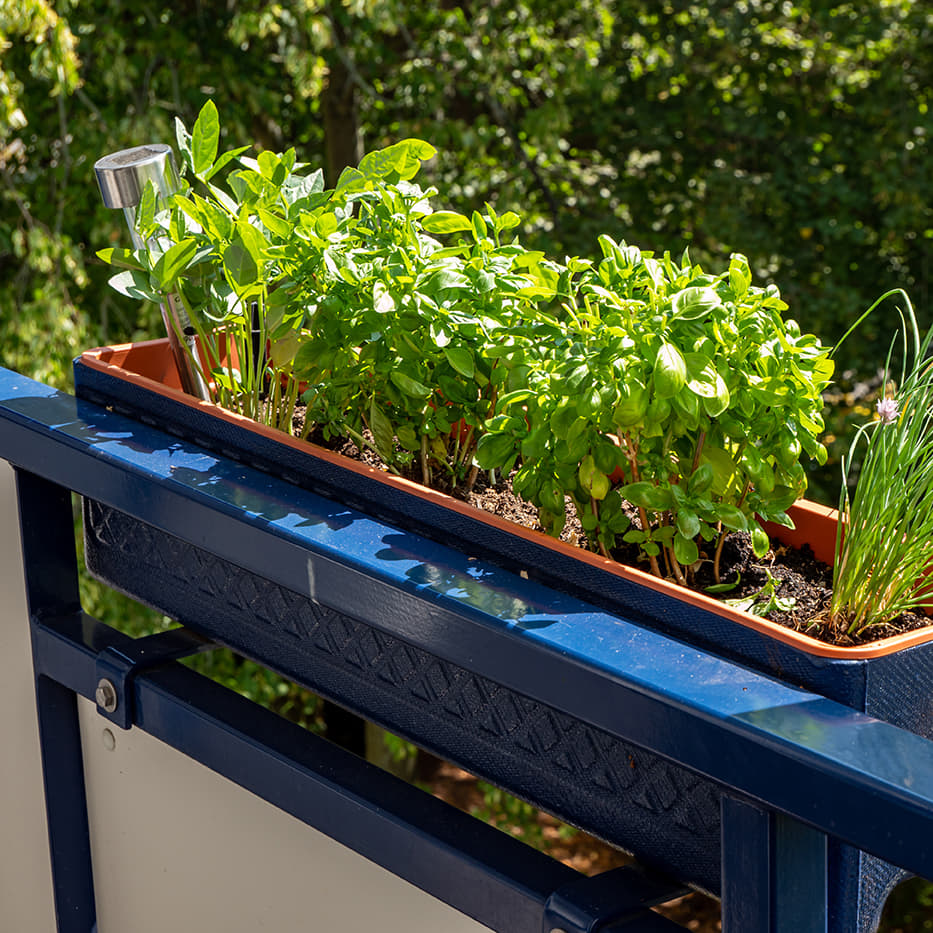
I love herbal tea. I grow the ingredients for my tea blends every season and dry them for my own use and to sell at farmer's markets. I also add many of these ingredients into organic black tea that I source from India to change up the flavor profile and add a caffeine boost (you know, when I'm not drinking coffee!).
Here are eight of my favorite ingredients to grow in the garden for my herbal tea blends.
Let’s start with Lemon Balm. This is my go-to “filler” for adding volume to my teas without overpowering the other flavors. It smells very strongly of lemon when it’s fresh, but I don’t find that that scent translates into a strong lemon flavor in the tea when the herb is dried. So, it’s a great base for other flavors. Lemon Balm is in the mint family. And like others in the mint family, it can tend to take over an area if planted in the ground. I grow mine in a raised bed and it has that bed all to itself. I just take care to keep anything from jumping out and over the sides and rooting outside the bed and that keeps it pretty well contained. This is one of the few garden herbs that actually does okay in part sun.
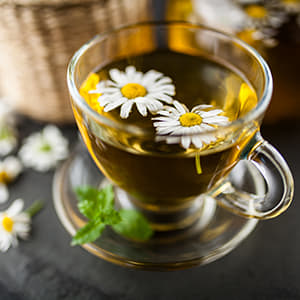 Next on my list is Chamomile. I love chamomile by itself or mixed with other herbs or with fruits. It’s a very aromatic plant in the daisy family, with white and yellow flowers. There are two different types of chamomiles used for tea: The perennial Roman chamomile and the annual German chamomile. I usually opt for a perennial herb in most cases if I have a choice but, in this instance, I actually prefer the annual. The flavor compounds of the German chamomile seem stronger to me, and you get more flowers from them. The Roman chamomile is a single-stem flowering plant where the German has multiple stems. And since you mainly use the flower heads to pinch off to dry for tea, the more the better. Plus, even though the German version is an annual, it readily self-seeds so it generally is going to come back year after year anyway. As a side note, Roman chamomile’s foliage is fine and feathery. It is used as an earth-friendly lawn substitute in England. Just like the lemon balm, I give my chamomile its own little area to reseed itself and let it do its thing.
Next on the list is lemongrass. Now, unlike lemon balm, lemongrass does retain much of its lemony flavor when steeped and can take the place of or be in addition to dried lemon peel in teas. Unfortunately, it’s not going to be a perennial in most places, only zones 10 and 11. But you can grow it as an annual and, if you have a bigger pot you can bring inside, you’ll be able to keep it year round if you keep it cut back. These plants like to get big in their ideal climate. Be forewarned it can be toxic to dogs and cats so keep out of reach of the family pet, please. Lemongrass is native to Sri Lanka and India and, in addition to making a wonderful tea ingredient, it’s also good in soups and stir-frys.
One of the most common herbal tea ingredients is mint. There’s spearmint and peppermint and they both have uniquely different flavors, and then there’s curly mint which smells like spearmint but the flavor isn’t nearly as strong. In addition to these, there are all kinds of hybridized versions of peppermint that make fabulous flavor combinations. There’s chocolate mint, orange mint, pineapple mint, grapefruit mint, and apple mint. Any one of these or combination of these is going to change the flavor of your tea and they are super fun to experiment with. You can use mint by itself, or you can combine it with other herbs and flavors to make any number of combinations. No matter which you plant, keep them separate from each other and from other plants because they tend to take over and can even become invasive. This is more likely with the base spearmint and peppermint plants, but even the hybridized versions can get a little unruly in the right climate. Most folks just plant them in containers and I’ve had pots of mint sitting on my back porch that have come back year after year with no attention whatsoever. Mint definitely does best in full sun and can get very leggy if grown in less than 6 hours of sun and has less of a chance of coming back the next year in those conditions, so be aware.
Another lemony ingredient is lemon verbena. It’s native to Argentina and Chile, so if you’re in zones 8 to 11 this can be grown as a perennial shrub, otherwise it’s an annual plant that gets planted out around the same time you put out your tomatoes and other heat lovers. Another good substitute for dried lemon peel in your teas, lemon verbena has the most intense oil concentration per square inch of plant material. Be aware this one is also toxic to cats and dogs and this one also adversely affects horses. For teas you can use both the leaves and the flowers, and the leaves are also good for infusing sauces, oil, and sugar with the lemony goodness.
One herb often overlooked in tea is thyme. It’s also in the mint family and just like mint, thyme has been hybridized to have some citrusy undertones in both lemon thyme and orange thyme. Unlike mint, however, thyme doesn’t tend to take over the area it’s been planted in. Mine have typically had a bush-type habit and gotten larger each year but only above ground and not in a spreading habit. Instead of the citrusy hybrids, I go for the classic version, either a wispy English thyme or the stockier German thyme. Both have very small leaves that are packed with flavor, but the German seems hardier to me while the English tends to be more low-growing and less woody. I usually have multiple versions of these around. The flavor of thyme in a tea by itself can take some getting used to. It leans toward the grassy/earthy side and can get bitter if steeped too long. But, it does well when it’s part of a blend, so don’t be afraid to play around with it a little bit. And of course, there are so many other culinary uses for thyme it can’t hurt to have a plant or two tucked in somewhere in the garden.
Another tea component to grow at home is lavender. The component of the lavender plant used for tea is the flower buds, not the leaves. It is also in the mint family (look, Lamiaceae is a huge plant family, okay?) but lavender doesn’t spread invasively like mint can. Of course it has that very distinctive scent that you either love or hate, and the flavor of lavender tea is also hit-or-miss with most folks. It’s very floral with a minty finish. Typically you can do a blend of lavender and chamomile and get the best of both worlds in terms of flavor but also in benefits. Lavender is known for its calming properties and is often used as a sleep aid, just like chamomile, so the two are often used together. It is a tender perennial in zones 5 through 9 and there are larger bush versions and smaller dwarf varieties, depending on your gardening preference. I say tender perennial because it can be temperamental and one colder-than-normal winter or wetter-than-normal summer could mean you’ll lose a couple plants and have to start over. And even if they do just fine, they usually start to decline after about 8 to 10 years or so and need to be replanted anyway. If you’re in an area colder than zone 5, the dwarf varieties can be grown in pots and overwintered indoors. Otherwise, you can look for a fast-growing variety that blooms in its first year to allow you to collect the buds to dry and use for tea. Once again, this one can be toxic to cats and dogs so keep an eye out for that.
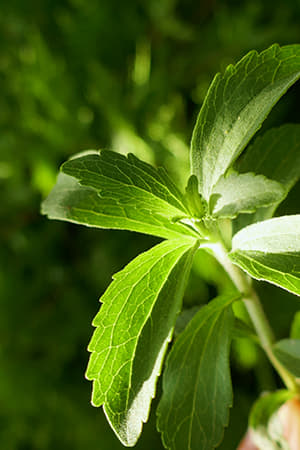 Lastly, there is a super sweet component you can grow for your teas and that is stevia. Stevia is native to Brazil and Paraguay and is grown for its very sweet leaves, like 200 times sweeter than cane sugar. It grows wild with a bush-like habit in very hot and humid regions, but in most other places we grow it as an annual. It doesn’t like temperatures below 40 degrees F, so plant it out at the same time you’re planting tomatoes and peppers and such. It does really well in raised beds because the roots appreciate good drainage. Stevia, like basil, does not like it’s feet to stay wet. The fun thing about stevia is it makes a good houseplant. So, plant it in a pot and keep it outside all summer then bring it in before your first frost and enjoy it all winter long. The leaves can actually be enjoyed raw, just munched on, and can be used in tea while whole and fresh. Most commonly, the leaves are dried and then crumbled as a component to sweeten tea as it steeps, or crushed into a powder and used as a sugar substitute. A little bit goes a long way and using too much actually leaves a bitter aftertaste. It’s a great way to add a little sweetness to your tea blend without using sugar or honey and it’s already in the mix when you steep it. I love it and I grow it every year.
Of course, there are other things you can grow in your garden that aren’t herbs that can be added to your tea blends. Ginger, turmeric, raspberry leaf, chrysanthemums, roses, honeysuckle, any of your berries or fruits like apples, plums, or pears. All of these components can be dried and used as flavorful additions to your herbal teas. Dehydrating can be done in the oven on low temperatures or with an actual dehydrating machine. Just be sure you dry the components enough that there’s no chance of them going moldy. If you’re unsure, then store the dried fruits in their own container in the fridge and just add them to your teas when you steep them. You can also add other components like cinnamon, cloves, and other spices that you may not be able to grow but that you can find in your spice cabinet to add some depth to your blends.
Play around with your favorite herbs, fruits, and other garden favorites to come up with tea blends you'll love!
Lots more info on the podcast, Episode 84: Grow Your Own Tea Garden.
Your friend in the garden,