
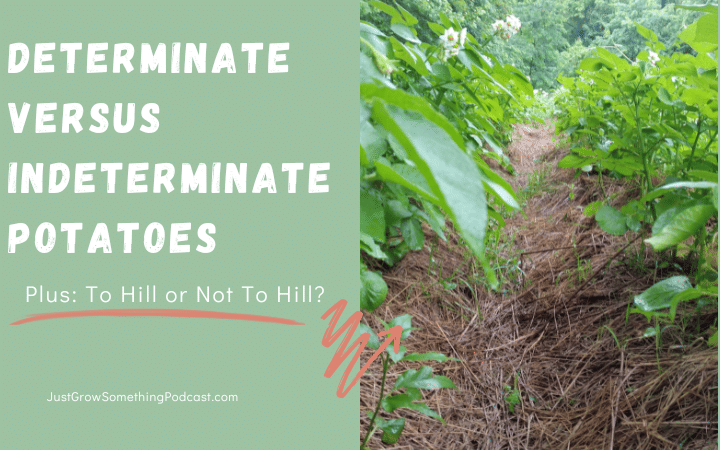
Did you know that whether or not you mound your potatoes has less to do with growing more potatoes and more to do with protecting the tubers? You may not need to mound them at all!
I was taught that you mounded the soil up around your potato plants to encourage more tubers. Turns out, this may only be true if you’re working with indeterminate potato plants. Just like there are determinate and indeterminate tomato varieties, the same goes for potatoes. But, unlike what I was led to believe, whether a potato is determinate or indeterminate and whether it needs to be hilled has a lot more to do with how the foliage, flowers, and berries grow than with the actual tubers themselves.
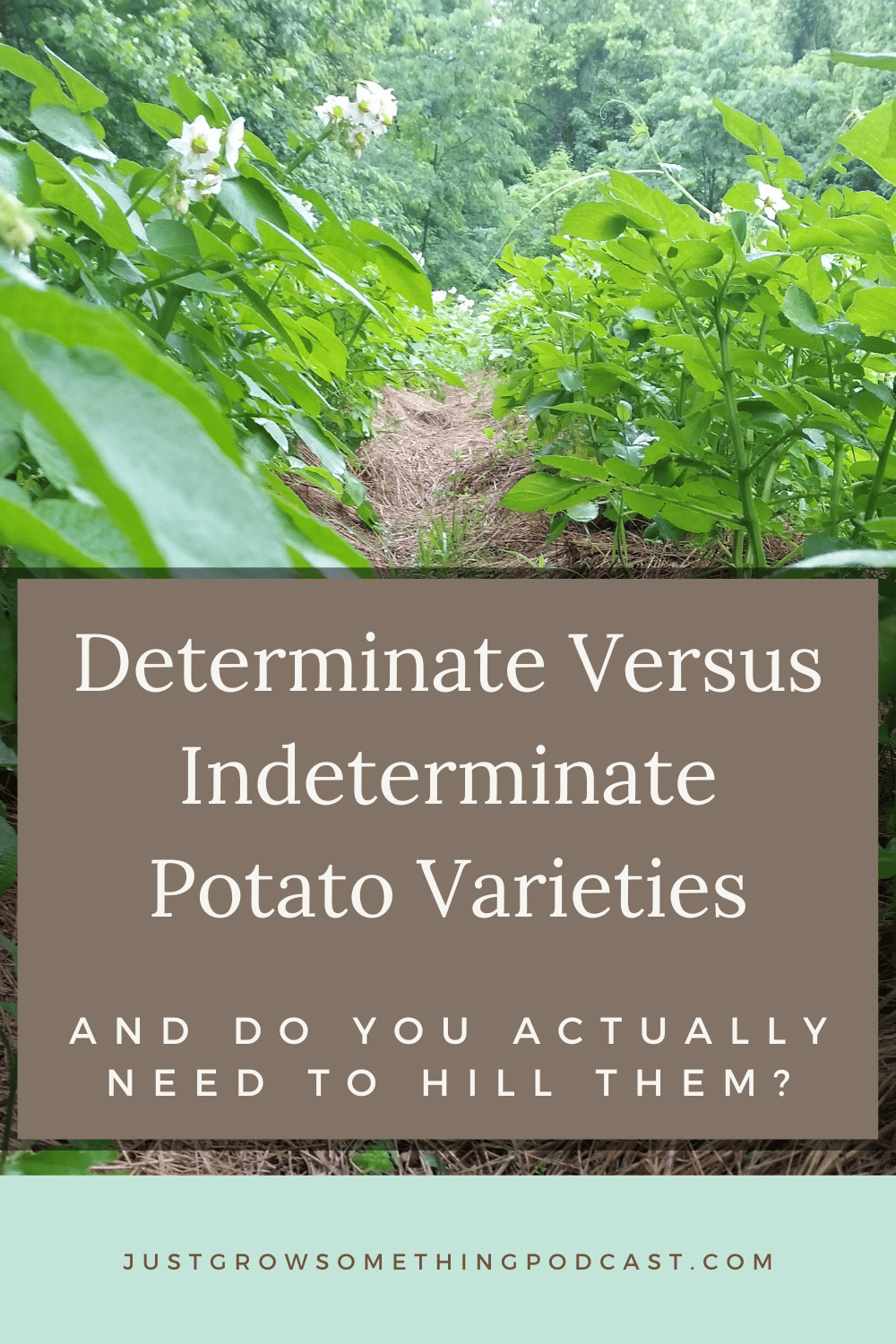 Indeterminate potatoes can produce a slightly larger yield, but the real difference is that determinate potatoes just mature more quickly. They are our early- to mid-season varieties: the plants are fairly short, and they produce most of their flowers all at one time. Indeterminate potatoes are the late-season varieties: they take longer to mature, and the plants continue to grow bigger with longer stems and lots of flowers as the season progresses.
New potato tubers form on stolons, thin stems that emerge from the main stems. Think of strawberry runners – those are above-ground stolons. The potato stolons form underground, above the seed potato piece. Traditional wisdom says the longer the underground portion of the plant, the more stolons the plant should grow. So, if you have an indeterminate potato plant that will put out growth over a longer time frame, you might be able to increase your yield by increasing the amount of stem that is underground. But you can get away with not hilling them at all, determinate or indeterminate!
To Hill or Not to Hill
If you plant your seed potato deeply enough from the beginning, you may not need to mound around your potato plants as they grow. Planting at a depth of 4 to 6 inches will protect the new tubers as they grow. Adding a thick layer of straw once the plants are out of the soil by about 4” will also give you more protection and a deeper bed for the tubers to grow in, no hilling needed.
If you need to plant shallowly, though, because you live you in a colder area with a short season and need the sun to warm those seed potatoes, then you’ll need to hill or mound in some way. Once the plants are up out of the soil by about 4-6 " (10 to 15cm) use a hand hoe or a good rake to mound the soil up around the base of the stem. You can do this just once really good or continue to build a nice big hill as the season progresses, mounding up soil from between the rows or even just adding fresh layers of compost a couple of times if you don’t want to dig or rake. Another way to do this is to, again, just add a heavy layer of straw mulch and call it good.
Hilling potato plants as they grow may not be necessary to get a bigger yield, but it does help to protect the stems of the plant as they grow and covers the potato tubers as they develop. Potatoes may turn green if they’re exposed to too much daylight which can cause dangerous toxins to develop. Peeling back any green skin can make the potato safe to consume, so long as the green isn’t in the meat of the potato. But that over exposure to the sun can actually make your potatoes bitter. Plus, the more they’re exposed the more possibility of them being damaged before you get a chance to harvest. So, either plant deeply from the start or mound or mulch enough to protect the developing tubers.
Determinate vs. Indeterminate Potato Varieties
Your seed supplier may not always list whether a variety is determinate or indeterminate. Plus, if you’re planting potatoes you bought at the store that sprouted in your pantry, you’re not going to know what type it is (see the Disease section of this article to know why you might not want to do this and how to take precautions if you do).
Many varieties actually share traits of both determinate and indeterminate. We call those intermediate and they can be treated as either type. Here are some of the most popular varieties and whether they are known to be determinate or indeterminate.
Determinate Potatoes
Determinate potatoes generally grow shorter than indeterminate, around 3 feet tall. They generally put on all their blooms all at once, if they flower at all, and the plant stops growing after flowering. These are generally early- to mid-season varieties: Adirondack Blue, Adirondack Red, Caribe, Cranberry Red, Fingerling types, Gold Rush, Norland, Onaway, Red Norland, Russet Norkotah, Sierra Gold, Sierra Rose, Superior, Viking, Yukon Gold.
I’m sure there are others out there, but these are the ones I’ve found.
Indeterminate Potatoes
Indeterminate potato varieties grow taller and have more of a vining habit. They will put on blooms for a much longer time and don’t stop growing once they’ve bloomed. This why the lore is they will produce more potatoes if you continue to hill them up. This is not the case, though. Just because the plant continues to grow new lateral branches above ground does not mean a new layer of tubers is growing underneath. They do have the natural tendency to produce larger tubers, though, and have the potential to allow the younger tubers to reach maturity because the plant doesn’t die as early as determinate varieties. This is the real reason why they may have a slightly higher yield. These types are late-season varieties, but they can be harvested as younger, smaller, new potatoes by digging some of the dirt away early in the season to harvest, then covering the developing tubers back up again: Alturas, Butte, Carola, Century Russet, Desiree, Elba, German Butterball, Kennebec, Lehigh, Nicola, Ranger Russet, Red Pontiac, Russet Burbank, Russet Nugget, Russian Blue.
Again, I’m sure there are others out there, but these are the ones I’ve found.
Which One Should You Grow?
Does it really matter whether you grow determinate or indeterminate? Not really. The way you grow them is the same, no matter what. This article gives you the lowdown on how to grow potatoes. So does this podcast episode.
What it comes down to is what you like in a potato as far as taste and texture and how long your season is. If you have a short growing season because your area heats up really quickly and potatoes don’t tend to do well after a certain date, you’ll likely be better of growing faster-maturing determinate varieties. But, if you have a long, cool growing season you can get larger potatoes by planting late-maturing indeterminate varieties. Even the intermediate varieties can be grown just about anywhere, with little to no fuss.
So, base whether or not you hill your plants on the amount of effort you want to put into it and how deeply you plant to start with, and base your choice of variety on taste, texture, and days to maturity. Determinate or indeterminate really makes no difference when choosing a potato variety.
Your Friend in the Garden,
